
Reading Time: mins
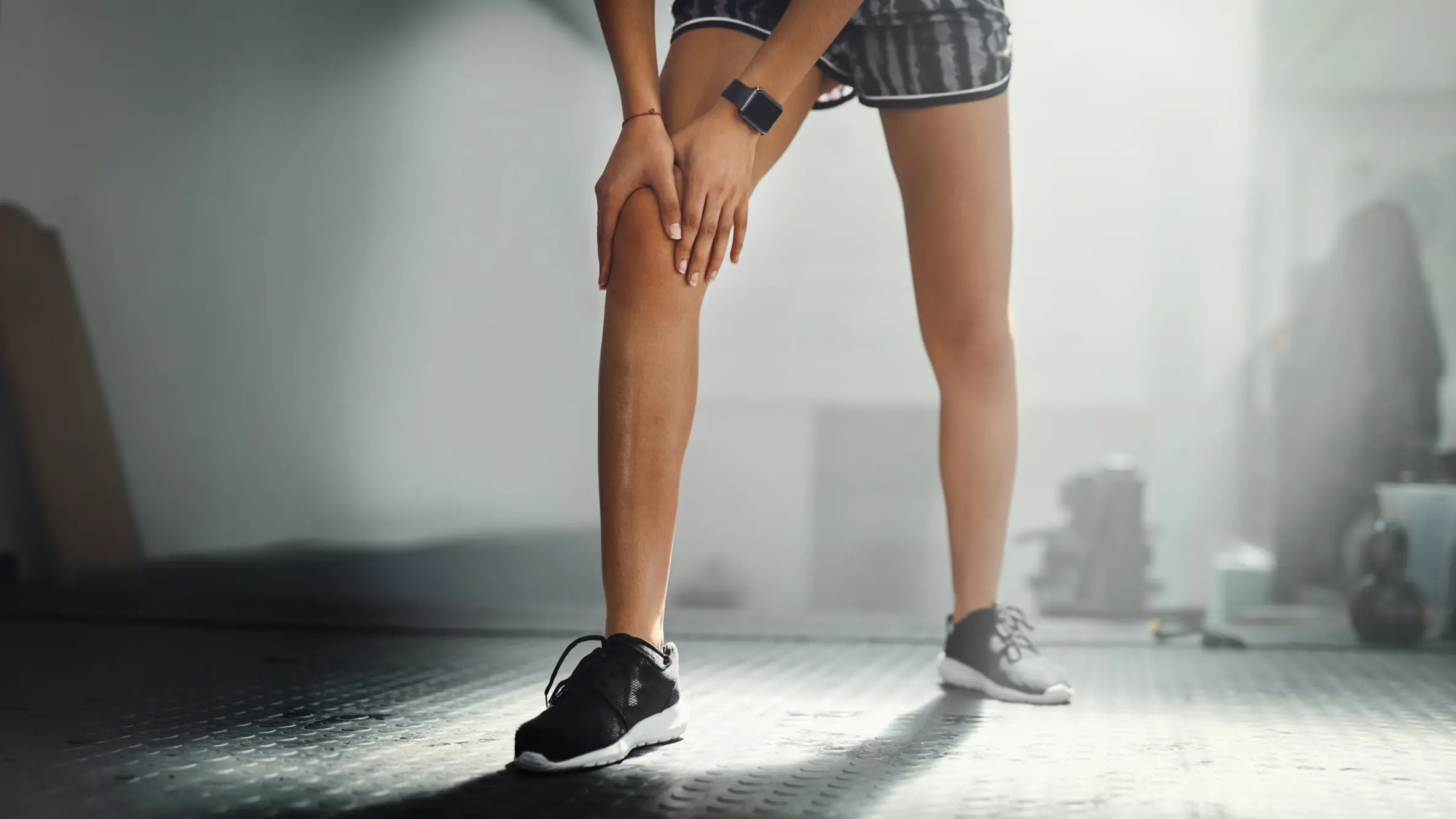
Jumper’s knee is pain in the patellar tendon, the strong cord that links your kneecap to your shin bone. It builds up when the tendon is loaded harder than it can cope with, which is why it is common in jumping and running sports. Most people improve with a well-planned loading programme, but some do not, and that is where a specialist assessment makes a difference. At RRMG, we start by working out exactly which part of the tendon is affected, then match the treatment to what we find.
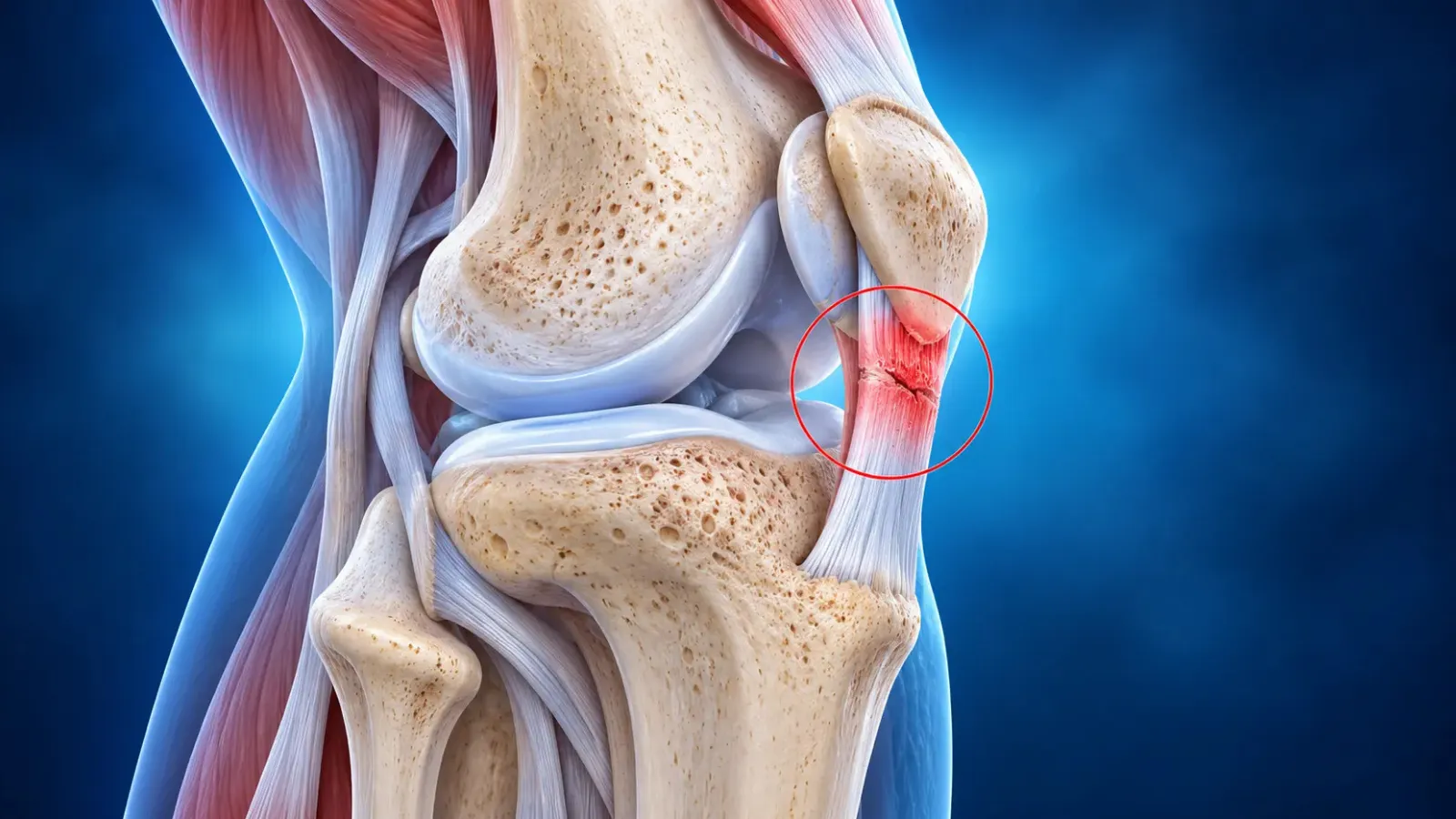
The patellar tendon runs from the lower edge of your kneecap to the top of your shin. Every jump, squat and stair climb pulls on it. When the load rises faster than the tendon can adapt, small areas of it stop coping, and repeated tiny strains build up over time.
That is why many clinicians now prefer the term patellar tendinopathy to tendonitis. The problem is often wear within the tendon rather than simple inflammation. It is one of several tendon injuries we assess in athletes and active adults.
The condition is most often linked with jumping sports such as basketball and volleyball, which is where the name comes from. It is not limited to athletes, though. Runners, gym-goers and people in physical jobs can develop it, and it is seen more often between the teenage years and the thirties.
Pain is usually felt at the point where the tendon attaches to the lower edge of the kneecap. This pattern is called proximal patellar tendinopathy. Knowing exactly where it sits helps us plan treatment and pick the right spot for any image-guided procedure.
Patellar tendonitis usually feels like a localised ache just below your kneecap that builds gradually. It often starts after activity, then appears during it, and in time can show up in everyday tasks such as walking downstairs. In the early weeks, many people only notice it once they have finished training. As it settles in, it starts to appear partway through activity, and later it can be present from the first jump or squat. Typical signs include:
Some people notice mild patellar tendonitis swelling, or a thickened area over the tendon. A patellar tendonitis lump of this kind is usually firm and tender to press. Swelling of the whole knee points more towards another cause, such as arthritis, which our article on knee swelling after walking explains.
Patellar tendonitis is an overuse problem. The tendon takes on more load than it has adapted to, and it falls behind. The cause of jumper’s knee is rarely one single thing, and even specialists do not fully understand why some tendons struggle and others do not. Several factors seem to raise the risk:
Having these does not mean you will develop it. Your pattern of pain and your training history tell us more than any single risk factor. A tendon adapts to load slowly, over weeks, so a sudden change in volume or intensity is often the point where the trouble starts. We ask about your training week in detail for that reason.
Front-of-knee pain has several sources, and each is managed differently. Where you feel it is the most useful clue.
| Condition | Where you usually feel it |
|---|---|
| Jumper’s knee | Just below the kneecap, over the tendon |
| Runner’s knee | Around or behind the kneecap |
| Quadriceps tendon pain | Just above the kneecap |
Knee arthritis and meniscus problems can also cause pain at the front of the knee, and they overlap with tendon pain more often than people expect. You can have more than one problem at once, which is one reason we examine the whole leg rather than the sore spot alone.
Diagnosis starts with listening and examining. We ask where it hurts, what sets it off and how your training has changed. We then press along the tendon and check your hip and thigh strength. Where it helps, we use ultrasound during your appointment, drawing on founder Dr Ralph Rogers’s MSc in musculoskeletal ultrasound. A scan is arranged only when the result will change your plan. It helps to bring details of any previous scans, injections and your usual training week. Most patients leave the first visit knowing which structure is sore, what is driving it and what the options are.
MRI patellar tendonitis scans can show changes in the tendon and help when we suspect another structure, such as the meniscus. Ultrasound shows the tendon in real time, can be done in clinic, and lets us see exactly where it is sore. Scan findings do not always match pain levels, so we read them alongside your symptoms. Our article on ultrasound-guided knee injections explains how we use it.
Jumper’s knee treatment starts with the least invasive step that fits your tendon. Jumper’s knee pain treatment also depends on how long the tendon has been sore and how much you ask of it. Options we may discuss include:
How to treat patellar tendonitis usually begins with reducing the activities that provoke it and starting structured loading under a physiotherapist. One NHS hospital programme builds from double-leg squats to single-leg and then decline single-leg squats, and it works best when a physiotherapist adjusts it to your pain. Most people improve with this approach. Around 1 to 3 in 10 do not respond, according to Oxford University Hospitals guidance. If that sounds like you, our article on physio not working covers the next steps. We are cautious with steroid injections in this tendon, because they are not routinely used and may weaken it.
Jumper’s knee rehabilitation remains central whatever else we add. Jumper’s knee physical therapy builds the tendon’s ability to cope with load, and a procedure on its own does not replace that work. Typical work includes strengthening the thigh, hip and calf muscles and pacing your return to jumping and running in steps. We build a plan around your sport and your week, then work alongside your physiotherapist so everyone follows the same programme.
Tenex treatment is an ultrasound-guided procedure that uses a fine ultrasonic needle to remove scar tissue and worn tendon tissue. It is done under local anaesthetic, typically takes 20 to 30 minutes, and needs no stitches. Some patients return to light activity within days and notice pain relief within 4 to 8 weeks, though responses vary. It suits adults whose pain has not responded to conservative care, and a rehabilitation plan follows it, because the tendon still needs to be loaded back up gradually.
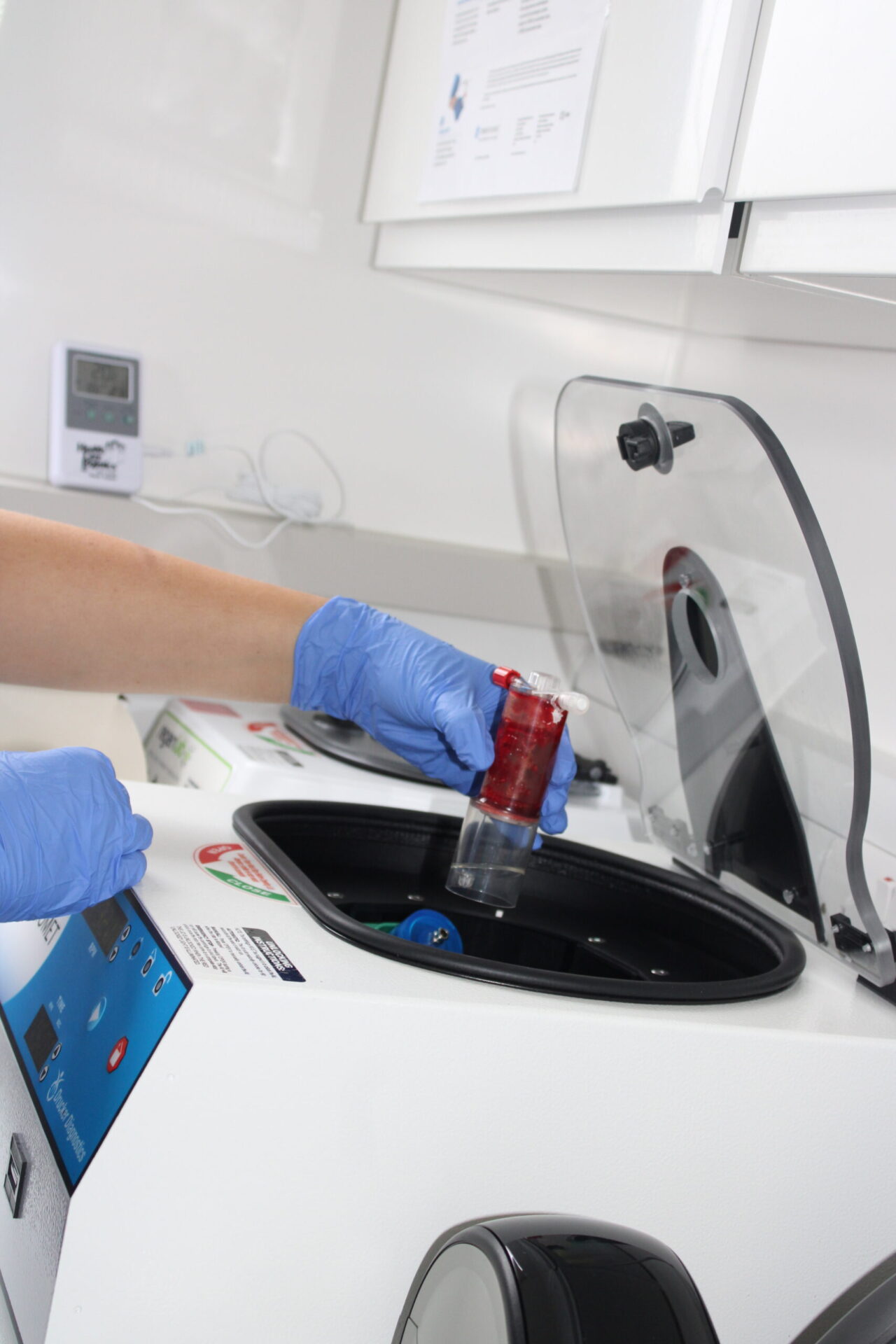
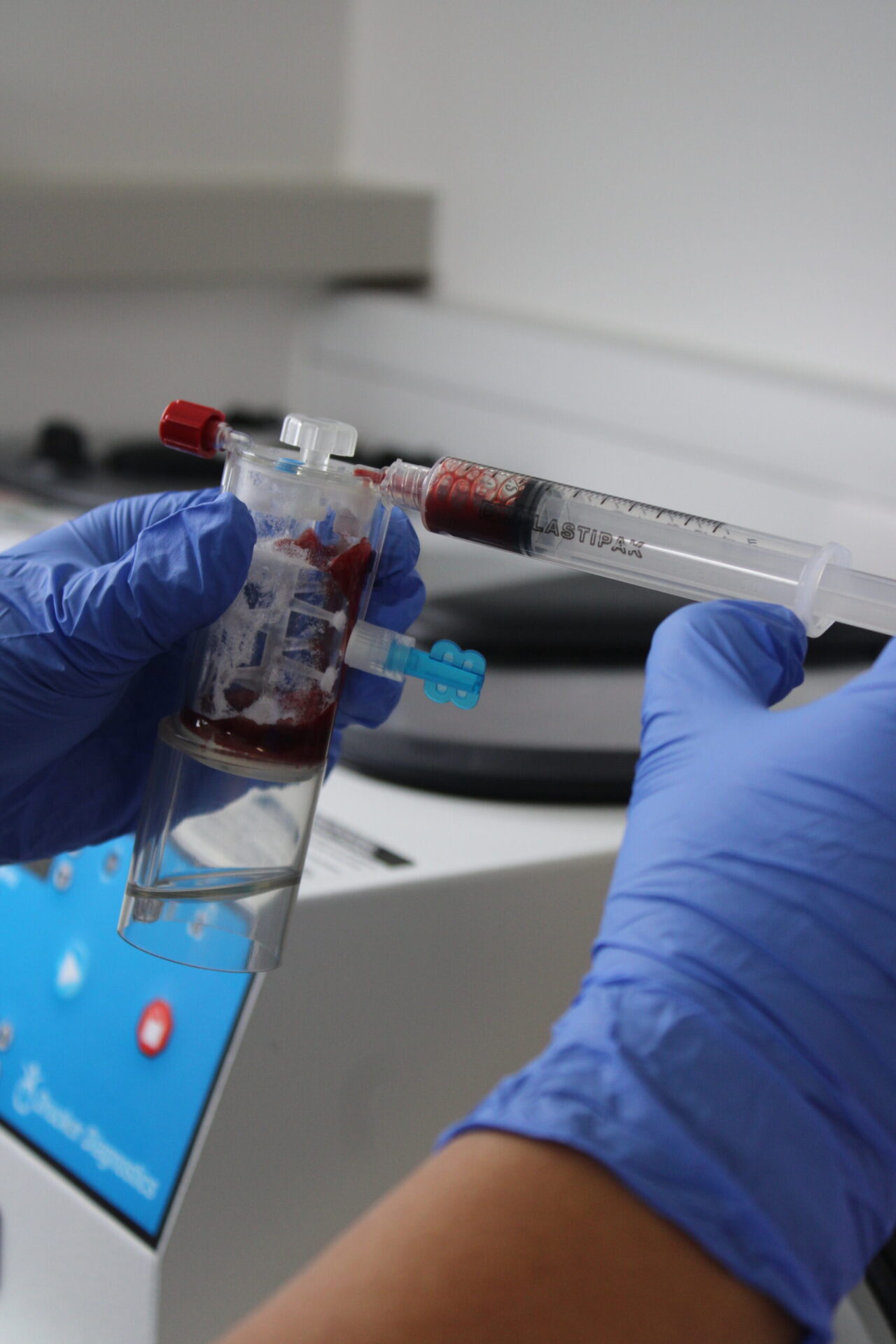
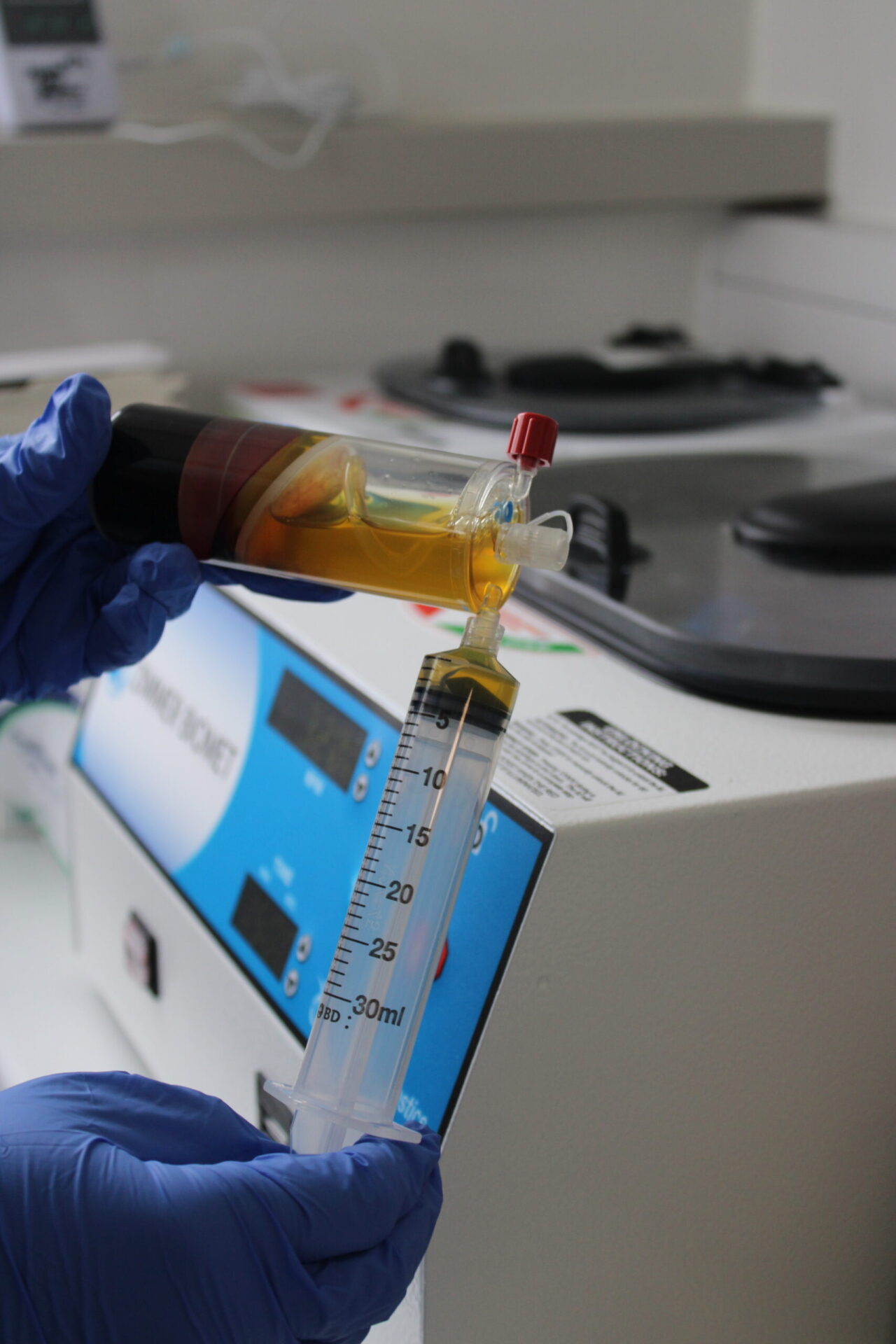
PRP therapy uses a concentrate of your own platelets, injected under ultrasound guidance. A 2025 review of nine trials in Pain Medicine found a modest pain benefit at 6 and 12 months, with results varying between studies. We therefore discuss it as an option for selected patients, not a promise. Shockwave therapy is used for stubborn tendon pain too, and we explain where its evidence is thinner. Whichever route you choose, the same rehabilitation plan follows, so the loading work never drops away.
Most people with this condition do not need surgery. Jumper’s knee surgery is usually considered only when other treatment has failed after several months, typically around 3 to 6 months, according to Bupa. The same guidance calls it a last resort that is not guaranteed to relieve symptoms. Bupa lists arthroscopic tendon repair as the usual operation. We are a non-surgical clinic, so if your assessment suggests surgery, we will say so plainly and explain why. For most people, though, the better question is whether a different non-surgical step has been tried properly first.
Jumper’s knee recovery is rarely quick. The Oxford guidance advises about 1 to 2 months of relative rest from sport, followed by a loading programme of at least 12 weeks. It can take 3 to 6 months to improve symptoms, and about 7 in 10 people return to sport at around 3 months. That guidance dates from 2019, so we treat the figures as a guide, not a promise. In practice, the first weeks are about calming the tendon and holding back aggravating sport. The middle weeks are about progressive loading, and the final stage is a gradual return to jumping and running once the tendon tolerates it. Patellar tendinopathy recovery also depends on how well your load is built back up, which is covered in our article on Tenex return to sport.
Patellar tendonitis treatment time varies with how long the tendon has been sore, how hard your sport loads it, and how well your programme is followed. Bupa notes that earlier treatment is linked with quicker recovery. Noting your pain during sessions and the morning after gives us useful detail at your appointment. If you are no better after about three months, it is a good time to have the tendon properly assessed instead of repeating the same plan.

We are a private regenerative orthopaedics and sports medicine clinic at 1 Blythe Road, London, and we personally run every case, drawing on founder Dr Ralph Rogers’s years in sports medicine. You can read more about our clinic. We work with a wide range of insurance providers, as well as self-funding patients.
Booking privately means no long wait, and we see patients from across London, including Kensington, Chelsea and Chiswick. At your first visit, we aim to give you a clear diagnosis rather than more guesswork, answer your concerns directly, and explain what we would do next and why. If a procedure is right for you, we explain which of our non-surgical treatments suit you. You can also see the wider range of conditions we treat. The sooner the tendon is assessed, the more options you tend to have, because earlier treatment is linked with quicker recovery. To book, request an appointment or contact us directly:
Patellar tendonitis often takes several months to improve, and a structured loading programme alone runs for at least 12 weeks. Some people need longer. Duration depends on how long the tendon has been sore, how hard your sport loads it and how consistently the programme is followed. Earlier assessment tends to help.
Jumper’s knee can ease when the load on the tendon is managed well, but it often returns if you restart sport without a plan. Without a clear approach, symptoms can linger for months. If yours has lasted several weeks or keeps coming back, an assessment shows what the tendon needs.
Largely, yes. Jumper’s knee is the everyday name for pain in the patellar tendon, and patellar tendinopathy is the term clinicians prefer because it describes changes within the tendon. Patellar tendonitis is an older label that is still widely used. All three usually point to the same part of the knee.
Not always. Jumper’s knee is often diagnosed from your symptoms and an examination alone. A scan, such as ultrasound or MRI, helps when the picture is unclear, when another structure such as the meniscus may be involved, or when treatment is not working as expected.
Dr Rogers has had a rich and illustrious career so far, which is continuing to grow and develop. Everything Ralph has been involved in since qualifying has added value to his knowledge and experience, but there have been some impressive highlights to note:
2018 – Present Founder Medical Director: Rogers Regenerative Medical Group (RRMG)
2012 – 2024 Medical Advisor – National Basketball Association
2008 – 2018 Medical Director: The London Sports Injury Clinic London
2010-2011 First Team Doctor, Chelsea Football Club
2007- 2010 The Football Association (Team Physician for England under 19 and development squads)
2005-2006 Medical Advisor: Trinidad & Tobago World Cup Football Team
2002 – 2008 Club Doctor: Walsall Football Club, West Midlands England
1998 – 2009 Medical Director: Medical & Orthopaedic Sports Therapy,
2000 – 2005 Sports Physician: Warwickshire County Cricket Club, Birmingham