
Reading Time: mins
If you have had a diagnostic medial branch block for back or neck pain, you may have been told the result was “borderline”, or that a second block is needed before radiofrequency ablation can be considered. That can feel frustrating. You have already been through one injection, so it is natural to wonder why another is needed.
The short answer is that a repeat diagnostic medial branch block is usually advised only when the first result does not give a clear answer. Doctors look at how much relief you felt, whether that relief matched how long the anaesthetic should last, whether anything on the day could have blurred the result, and how long ago the block was done. If the first block gave strong, well-recorded relief that fits the expected pattern, most clinicians move straight on to planning treatment. If the result was weak, confusing or out of date, a second block can help avoid two costly mistakes: treating the wrong pain source, or ruling out a treatment that could have helped.
In this guide we explain how that decision is made, in plain language, so you know what to expect and what to ask at your next appointment.
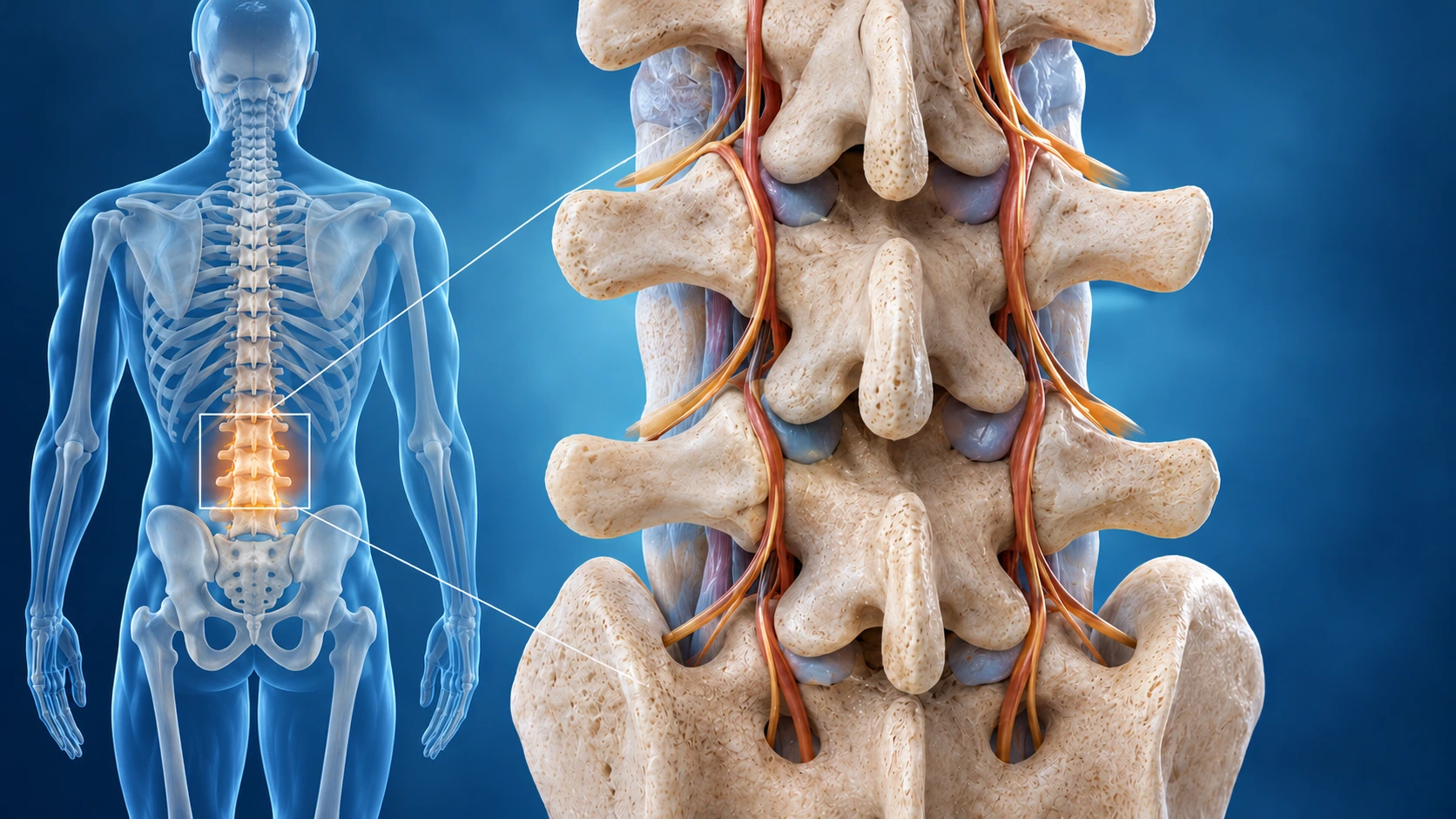
Your spine has small paired joints at the back of each level, called facet joints. They help guide movement when you bend, twist and lean back. When they become worn or irritated, they can cause a deep ache in the lower back or neck, often worse with standing, arching backwards or turning. Each facet joint sends its pain signals through tiny nerves called medial branches.
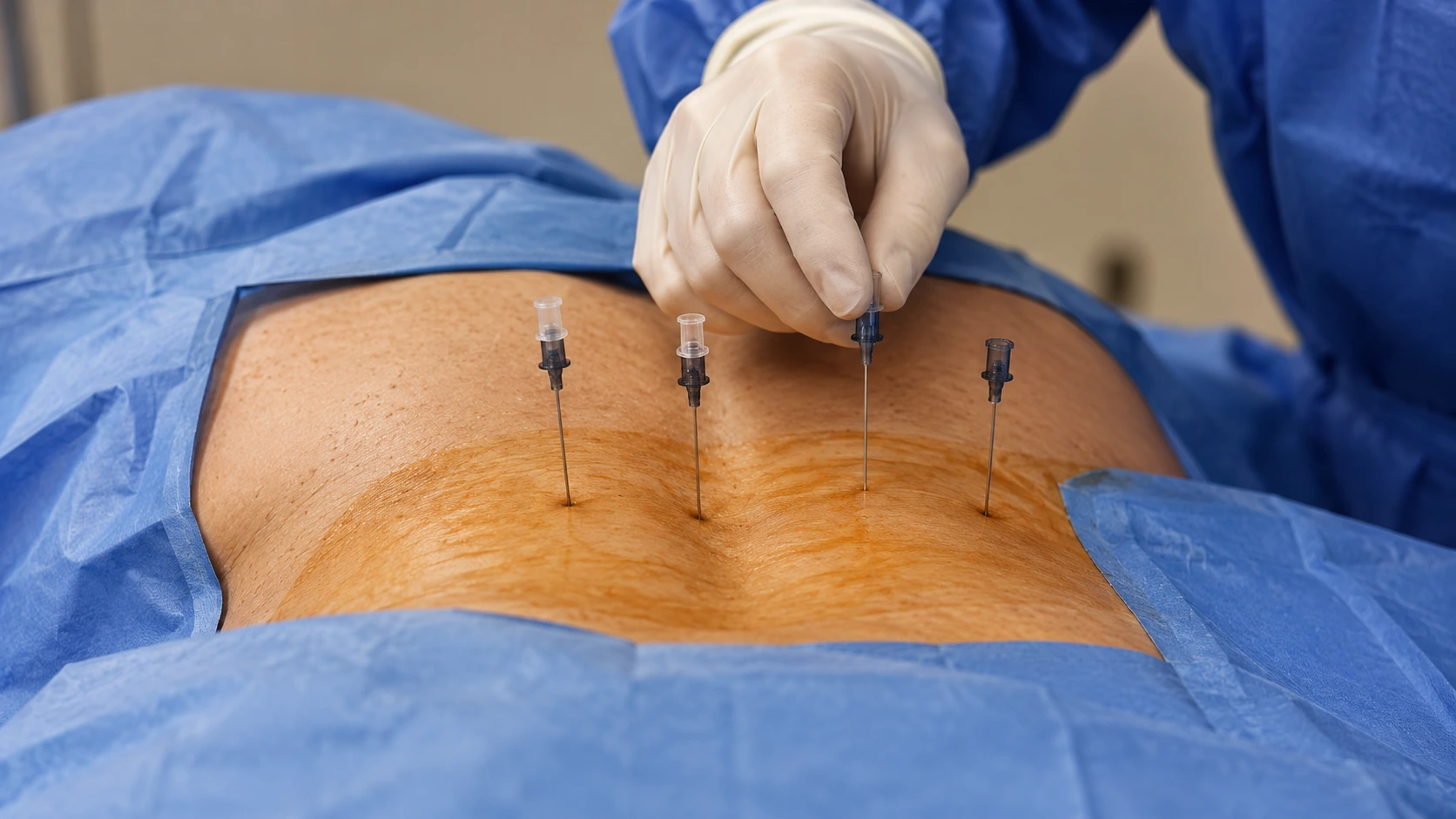
A medial branch block places a very small amount of local anaesthetic next to those nerves, using image guidance to find the right spot. For a few hours, the nerves go quiet. If your usual pain drops noticeably during that window, it suggests the facet joints are a meaningful part of the problem. If nothing changes, the pain is more likely to be coming from somewhere else, such as a disc, a nerve root or the sacroiliac joint.
It helps to think of the block as a test, not a treatment. Its main job is to answer one question: would switching off these nerves for longer be worth trying? That longer-lasting option is radiofrequency ablation, where gentle heat is used to interrupt the same nerves for many months. In the UK, NICE advises that radiofrequency denervation for chronic low back pain should only be offered after a positive response to a diagnostic medial branch block. That is why the block result carries so much weight, and why it needs to be reliable. At RRMG, the diagnostic block is one step within our wider range of lower back spinal injections, alongside facet, sacroiliac joint and nerve root procedures.
The tricky part of any diagnostic block is that it relies on you reporting how your pain changed, over a few short hours, on what may be an unusual day. There is no scan or blood test that confirms facet joint pain on its own, so the block result is the best guide doctors have. That makes it worth understanding the two ways it can go wrong.
A false positive means you felt good relief, but not because the facet nerves were numbed. Common reasons include the natural placebo response to any procedure, anaesthetic spreading slightly into nearby back muscles, numbing medicine used in the skin, sedation given during the procedure, and simply resting for the rest of the day instead of doing the things that normally hurt. None of this means the pain is imaginary. It just means the test picked up relief from more than one source.
A false negative is the opposite: the facet joints really are a pain source, but the block did not show it. The same guidelines describe several causes. Anaesthetic can be absorbed into a tiny blood vessel instead of bathing the nerve, which happens in roughly 4% to 19% of injections. Around 1 in 9 people may have a facet joint that is supplied by an extra nerve the block does not reach. Soreness from the needle itself can also mask the relief, and stopping regular painkillers abruptly on the day can make pain feel worse.
Because both errors are possible, doctors do not treat a single number as the final word. They look at the whole picture before deciding whether the first block has answered the question.
A second diagnostic block is not routine for everyone. It is usually suggested when the first one leaves a genuine doubt that would change what happens next. These are the situations where that doubt most often arises.
Local anaesthetics wear off on a fairly predictable timetable. If your relief started much later than expected, or lasted for days after a short-acting medicine, it is harder to say the block caused it. Interestingly, some people with this kind of “delayed” response still do well after nerve treatment, so an unusual pattern is not a reason to give up. It is often a reason to repeat the test under clearer conditions.
A repeat block may be suggested if you had sedation, took extra painkillers afterwards, could not test your usual painful movements, had a lot of needle soreness, or did not record your pain scores. Each of these makes the result harder to read, in either direction.
Back pain changes over time. Some NHS commissioning policies only fund radiofrequency denervation if the positive block was done within the previous six months. Even in private care, if many months have passed, your symptoms have shifted, or a new level or side is now involved, a fresh block gives a more up-to-date answer.
Radiofrequency ablation also affects small spinal muscles supplied by the same nerves. For a younger, very active person, or someone with a heart device or other medical factors, doctors may want more certainty before going ahead. The 2020 consensus guidelines give exactly this example: a young athlete with an unclear picture and only 50% relief might reasonably have a confirmatory block first.
If you are unsure how to read your own result, we can go through your pain diary and procedure notes with you and explain whether a second block would genuinely add anything.
Just as important is knowing when a second block is unlikely to help. Every injection takes time, carries a small risk and has a cost, so it should only be done when it can change the plan.
The clearest case is a strong, well-documented positive result. If your usual pain dropped substantially, the relief matched the anaesthetic’s expected duration, you tested your normal activities and you did not need extra painkillers, the 2020 consensus guidelines support treating that as a positive block. Their recommended threshold is more than 50% pain reduction, chosen partly so that people who would benefit are not denied treatment by an overly strict rule.
A clearly negative block done under good conditions is the other case. If the technique was sound, there was no sedation and you recorded your pain carefully, repeating the same test is unlikely to give a different answer. It usually makes more sense to look again at other possible sources of your pain, such as a disc, a trapped nerve or the sacroiliac joint.
A repeat block is also not usually needed before repeating radiofrequency ablation that previously worked well. If an earlier treatment gave you good relief for a long period and the same pain has returned as the nerves regrow, many clinicians proceed to repeat ablation without a new test block. Some NHS commissioning policies say this directly and only fund repeat ablation after a set interval, often at least 16 months, since the previous one.
Finally, a diagnostic block should not be repeated simply in the hope that it will act as a treatment. Its effect is designed to be short, and the 2020 guidelines recommend against routine use of facet injections as an ongoing therapy.
Whether a block needs repeating often comes down to how well the first one was recorded. Memory is unreliable, especially a day or two later, so the most useful evidence is a simple pain diary kept in real time. The 2020 guidelines describe real-time diaries as the most objective way to judge a block, provided they also capture activity and painkiller use.
After a diagnostic block, doctors typically want to know:
Different organisations set different bars for a positive result. The international consensus group recommends more than 50% relief. The Spine Intervention Society uses a much stricter standard, expecting complete relief in the area being tested, and the American Society of Interventional Pain Physicians points to stronger evidence for a 75% cut-off. These stricter groups also pair their thresholds with two blocks rather than one.
One detail matters in every approach. Relief that comes from resting, lingering sedation or extra medication does not count. A 50% drop in pain while you spent the afternoon lying down tells your doctor much less than a 50% drop while you walked, sat and bent as you normally would. Going into the block with a plan for how you will test it is one of the simplest ways to avoid needing a second one.
There is no single rule that every specialist follows. The 2020 consensus guidelines were approved by multiple pain societies, but one society dissented specifically on how many blocks should be done and what counts as positive. That honest disagreement is why your doctor’s reasoning matters more than a fixed protocol.
| Approach | How it works | Main strength | Main drawback |
|---|---|---|---|
| Single block, more than 50% relief | One block; a clear positive result leads to an RFA discussion | Fewer injections, lower cost, fewer people wrongly ruled out | More chance of a false positive |
| Dual comparative blocks | Two blocks on separate days with anaesthetics of different lengths; relief must match each one | Filters out some placebo responses | More procedures and cost; can rule out people who would have benefited |
| Single block, second only if borderline | One block; a confirmatory block only for grey-zone or unclear results | Adds certainty where it is most needed | Depends on careful recording of the first result |
The main argument for two blocks is accuracy: if relief happens twice, and lasts longer with the longer-acting medicine, it is less likely to be chance. The main argument against is that comparative blocks miss a meaningful number of real responders. The 2020 guidelines note that comparative blocks have a sensitivity below 60%, meaning many people with genuine facet pain would fail the test. A 2024 ASRA Pain Medicine review concluded that a single set of blocks with at least 50% relief is a reasonable way to select people for radiofrequency ablation.
Once the block has given a clear answer, the conversation moves from testing to treatment.
If the result is positive, the next step is usually a discussion about radiofrequency ablation for facet joint pain. Using image guidance, a fine needle delivers controlled heat to the same medial branch nerves, interrupting their pain signals for much longer than an anaesthetic can. Relief commonly lasts from several months to a year or more, although this varies from person to person, and because nerves slowly regrow, pain can return and treatment may need repeating. It is fair to say the evidence is mixed. A large Dutch trial, MINT, found little added benefit over exercise alone, although the NIHR has pointed out that the technique used differed from common UK practice. Careful patient selection, which is exactly what the diagnostic block is for, is one of the main reasons results vary between studies.
If the result is negative, that is still useful information. It suggests facet joints are not the main driver of your pain, and it saves you from a nerve treatment that is unlikely to help. Your doctor will then look more closely at other causes, which may involve further examination, a review of your scans or a different targeted injection.
Either way, injections work best as part of a wider plan. Exercise, physiotherapy and strategies for staying active remain central to managing long-term back pain, and our back pain service brings these elements together rather than relying on any one procedure.
A repeat medial branch block is the same procedure as the first, so the risks are similar and generally low. The most common effects are brief soreness or bruising where the needle went in, and a temporary increase in your usual ache once the anaesthetic wears off. Less commonly, people notice short-lived numbness or a vasovagal reaction, where they feel faint during or after the injection. Infection, bleeding and nerve injury are rare but possible, and the risk can be higher if you take blood-thinning medication, so always tell your doctor about every medicine you take.
There are practical points too. A second block means another appointment and another recovery day, so it should never be booked without a clear reason, and we publish our procedure fees so the cost is known before you agree to it. If you are using private medical insurance, it is worth checking in advance, because some insurers have their own rules on how many diagnostic blocks they will cover before radiofrequency ablation.
To get the most from a repeat block, plan the day around testing it. Arrange a lift home, avoid sedation unless it is genuinely needed, keep your diary close by and set aside time to try the activities that usually bring on your pain. The 2020 guidelines specifically advise against routine sedation for these blocks because it can produce misleading relief.
It is worth speaking to a specialist if you have had a diagnostic block and are not sure what the result means, if you have been told you need a second block and would like the reasoning explained, or if your pain has changed since your first block. A second opinion can also help if you were told the block was negative but your symptoms still strongly suggest facet joint pain, or if the block was positive but you are unsure whether radiofrequency ablation is right for you.
Some symptoms need prompt medical attention rather than a routine appointment. Seek urgent help if back pain comes with new numbness around the groin or buttocks, changes in bladder or bowel control, weakness in your legs that is getting worse, a fever, or unexplained weight loss. These are not typical of facet joint pain and should be checked straight away.

Deciding whether to repeat a diagnostic medial branch block is not about following a checklist. It is about asking whether a second test would genuinely change what happens next for you. A clear, well-recorded result usually speaks for itself. An unclear one deserves a careful second look before anyone recommends nerve treatment or rules it out.
At RRMG, consultations are led by Dr Ralph Rogers, and we take the time to review your symptoms, your scans and any previous block results together with you. We can explain what your result is really telling us, whether a repeat block is worthwhile, and which next steps, from rehabilitation to radiofrequency ablation, might suit your situation. Not every patient needs another procedure, and a consultation does not commit you to one.
If you would like a clear plan for your back or neck pain, book a consultation with RRMG or call our team on +44 (0) 207 112 5400.
The technique is the same, but the conditions may be adjusted to make the result clearer. In a comparative approach, a different length of anaesthetic may be used so your doctor can check that the relief matches each medicine.
There is no single fixed interval. The first block’s effect needs to have fully worn off and your pain needs to be back at its usual level, so the second block is usually scheduled on a separate day, often days to a few weeks later.
Follow your doctor’s instructions. Many specialists prefer you to continue regular medicines rather than stopping them suddenly, but to avoid taking anything extra after the block, so that any relief can be put down to the block itself.
Usually not, if a previous ablation gave you good, long-lasting relief and the same pain has come back. A new block is more likely to be suggested if your pain pattern has changed or a long time has passed.
No. It simply means the facet joints are unlikely to be the main source. Other causes, such as disc, nerve or sacroiliac joint problems, have their own assessments and treatment options.
Dr Rogers has had a rich and illustrious career so far, which is continuing to grow and develop. Everything Ralph has been involved in since qualifying has added value to his knowledge and experience, but there have been some impressive highlights to note:
2018 – Present Founder Medical Director: Rogers Regenerative Medical Group (RRMG)
2012 – 2024 Medical Advisor – National Basketball Association
2008 – 2018 Medical Director: The London Sports Injury Clinic London
2010-2011 First Team Doctor, Chelsea Football Club
2007- 2010 The Football Association (Team Physician for England under 19 and development squads)
2005-2006 Medical Advisor: Trinidad & Tobago World Cup Football Team
2002 – 2008 Club Doctor: Walsall Football Club, West Midlands England
1998 – 2009 Medical Director: Medical & Orthopaedic Sports Therapy,
2000 – 2005 Sports Physician: Warwickshire County Cricket Club, Birmingham