
Reading Time: mins
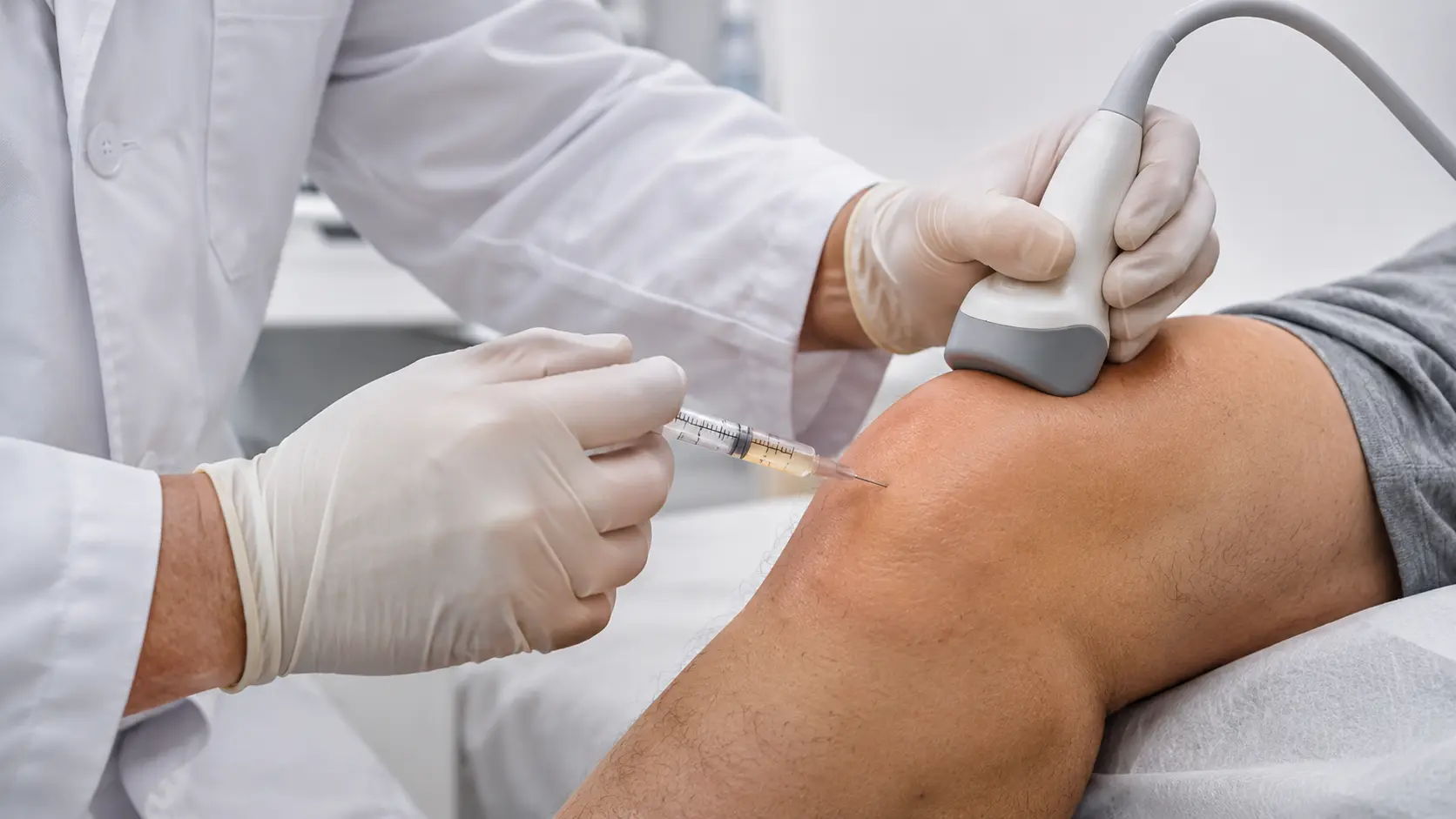
An ultrasound guided knee injection can relieve knee pain in the right person, but it is not the best first step for everybody. Whether it suits you depends on what a thorough knee pain assessment finds: the cause of the pain, whether the joint is inflamed or holding fluid, and whether anything makes an injection unsafe at the moment. At RRMG, we assess first and inject second. This guide covers what the assessment should establish, which tests may help, when an injection is a poor fit, and what to ask before you agree to one.
Before any knee injection, a knee pain assessment should identify what is causing your pain, whether the joint is inflamed or holding fluid, and whether infection or crystal arthritis has been ruled out. It should also review your past injections, your general health and what you hope to get back to doing.
Without those answers, an injection is little more than a guess. Knee pain can come from the joint itself, a tendon, a bursa, the meniscus or even the hip or lower back, and a steroid placed in the joint will not help a problem that lies elsewhere. We look at the full picture of your knee joint pain before deciding whether a needle has a place in the plan.
By the end of the assessment, you and your clinician should have a clear view of:
A knee pain assessment at RRMG combines a detailed conversation, a hands-on examination and, where it adds value, an ultrasound scan of the knee during the same appointment. Together these show us whether the pain is coming from inside the joint, which largely decides whether an injection is worth considering.
A knee pain assessment starts with your story. We ask when the pain began, what triggers it, how long morning stiffness lasts, whether the knee swells, clicks or locks, and what you have already tried, including physiotherapy and medication. We then examine the knee for warmth, swelling, range of movement, tenderness and stability, and compare it with the other side. This stage can narrow down the cause more than any scan can.
Where it helps, we scan the knee during the consultation. Ultrasound shows joint fluid, a thickened joint lining, bursitis and tendon problems in real time, without radiation. Scanning sits at the centre of our approach, drawing on founder Dr Ralph Rogers’s MSc in musculoskeletal ultrasound imaging. It also reveals when the pain is coming from outside the joint, which may point to one of the other conditions we treat rather than an injection.
An ultrasound guided knee injection is usually appropriate when the assessment shows pain arising inside the joint, most often from osteoarthritis or an inflammatory flare, and when exercise, physiotherapy and medicines have not brought enough relief. It works best as one part of a plan that keeps you moving rather than as a stand-alone fix.
A knee injection for arthritis tends to make sense when a flare is stopping you from walking, sleeping or keeping up with your exercises. NICE, the body that sets clinical guidance in England, suggests considering a steroid injection when other medicines have not worked or are unsuitable, or when short-term relief would help you continue therapeutic exercise. The ultrasound guided injection we use for knee arthritis follows the same principle: settle the flare, then use that window to build strength and get the knee moving again.
Steroid injection knee treatment places a corticosteroid, mixed with local anaesthetic, inside the joint to calm inflammation. The anaesthetic can ease pain within hours, while the steroid usually takes two to five days to work. A cortisone injection is the same treatment under an older name. For most people the relief is short term, often lasting weeks rather than months, and it varies from person to person. We give all of our ultrasound guided steroid injections with the scan running throughout, so we can see where the medicine is going.
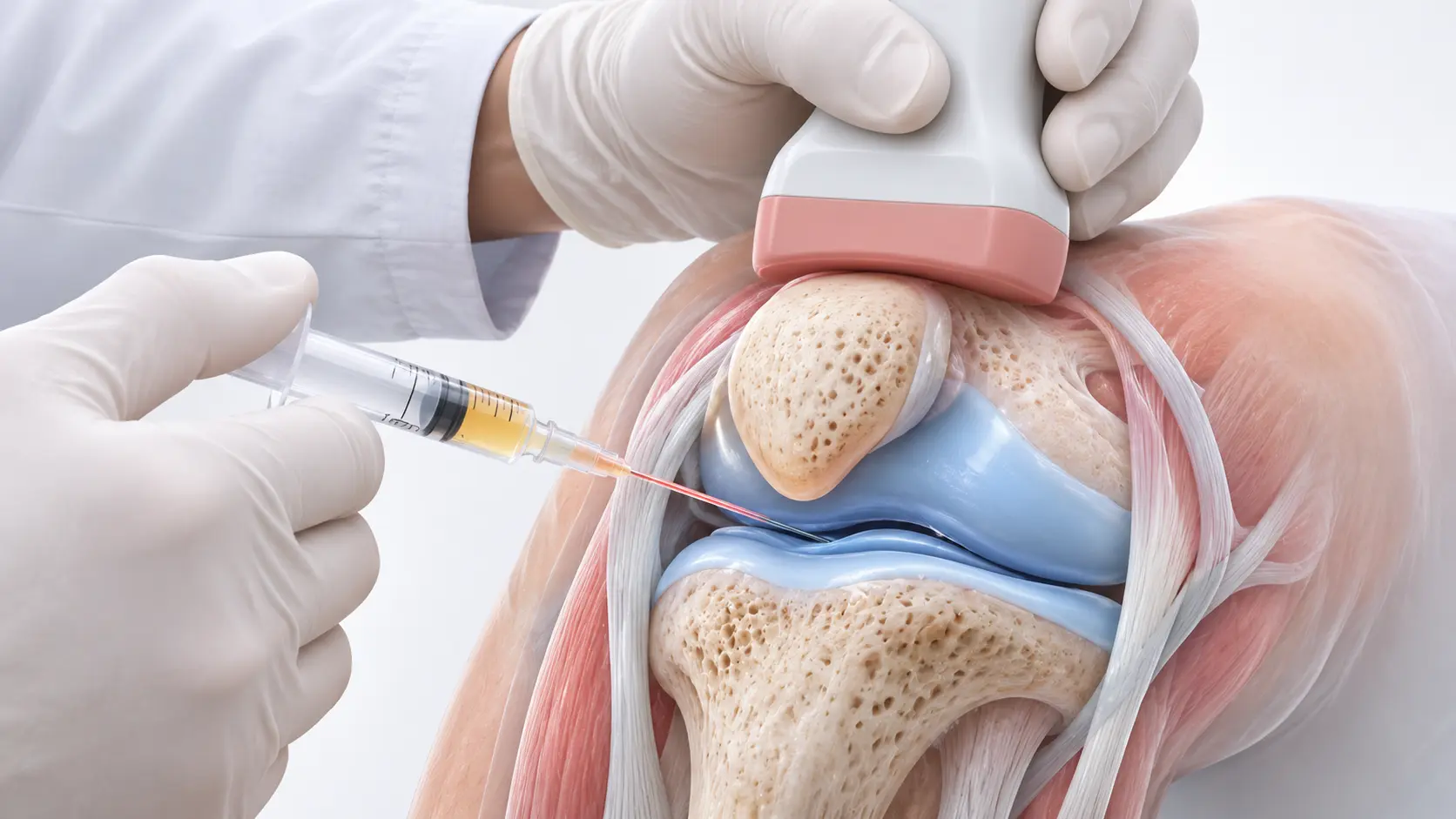
A landmark injection is placed by feeling for the bony points around the knee. An image guided knee injection uses live ultrasound, so we can watch the needle reach the joint space. Earlier research reviews found that ultrasound-guided knee injections landed in the joint around 96% of the time, against about 78% for landmark injections. A 2024 meta-analysis of four trials in knee osteoarthritis also found less pain during the procedure, plus better pain and function scores afterwards, with ultrasound. The authors described the evidence as preliminary, so we see it as encouraging rather than settled.
Most people need fewer tests than they expect. Which tests are right depends on what the history and examination show, and the aim is to rule out anything that would change the plan, not to collect scans for the sake of it.
The most useful tests before knee injection treatment tend to be simple ones carried out in clinic. Depending on your symptoms, they may include:
Often, no. NICE osteoarthritis guidance states that osteoarthritis can be diagnosed clinically, without imaging, in people aged 45 or over who have activity-related joint pain and morning stiffness lasting no more than 30 minutes. Imaging is reserved for unusual features, or for cases where another cause is suspected.
If you already have an X-ray or MRI, please bring it along. We review it together with the examination rather than ordering a repeat by default.
An injection is not the right option when the pain is not coming from the joint, when infection has not been ruled out, or when your health or injection history means the risks outweigh the benefit. In those situations we talk you through our other non-surgical treatments instead.
Most people can have a steroid injection safely, but some should wait or follow a different route. When patients ask who should not have a knee injection, the answer usually includes anyone with:
Blood thinners do not always rule out an injection, but let us know beforehand so we can plan around them.
A knee that turns hot, red and swollen needs a diagnosis before any steroid goes in. Infection and gout can both look like this, and a steroid can make an infected joint worse. If you are considering a knee injection when the knee is swollen and hot, the usual approach is to draw fluid from the joint first and send it for testing. Our joint aspiration service does this under ultrasound, and an injection is only considered once infection has been excluded. Our guide to infected bursitis describes similar warning signs at the elbow.
A good consultation leaves room for your questions. Before agreeing to an injection, ask what the assessment showed, what the injection is expected to achieve, how long relief may last, what happens afterwards, and what the alternatives are, including waiting for now.
It also helps to bring a list of your medicines, details of any past injections or scans, and a note of what you have already tried. With that in front of us, we can give you a clear recommendation rather than a general one and explain our reasoning.
Knee injection side effects are usually mild and short-lived, but you should hear about them before the needle goes in, not after. Around 1 in 10 people feel more pain straight after a steroid injection. Some experience a steroid flare, a temporary rise in soreness during the first 24 to 48 hours. Less often, the skin at the injection site can thin, dimple or change colour, and infection is a rare risk with any injection. Repeated steroid injections can also affect cartilage and tendons, which is one reason the number per year is limited.
Having a knee injection with diabetes is possible for most people, though it needs planning. A steroid injection can raise blood sugar for a few days afterwards. Beforehand, we ask about your recent control and medication, and suggest checking your levels more often for those few days, so we can decide together whether now is the right time.

We are a private regenerative orthopaedics and sports medicine clinic on Blythe Road in London, and we personally run every case, drawing on founder Dr Ralph Rogers’s years as Chelsea FC’s first-team doctor and as a medical advisor to the NBA. We work with a wide range of insurers as well as self-funding patients.
As a knee pain specialist in London offering appointments without a long wait, we aim to give you a clear answer from the first appointment: what is causing the pain, whether an injection is likely to help and what else might work better. If an ultrasound guided knee injection is the right call, see and treat at that first visit may be possible. We see patients from Kensington, Chelsea, Hammersmith, Chiswick and Notting Hill, and you can read more about our work as a knee pain specialist in Chelsea.
A private knee consultation with us in London includes a full history, an examination and, where useful, an ultrasound scan, so you leave with a diagnosis and a plan.
| Service | Indicative Price |
| Initial consultation | From £300 |
| Limb or joint diagnostic ultrasound | From £360 |
| Image guided injection (unilateral) | From £600 |
| Aspiration under ultrasound | From £650 |
Prices can change, so please check our current fees for exact figures.
To book a knee pain assessment or a knee injection appointment in London, request an appointment online or get in touch with us directly:
An ultrasound guided knee injection is highly accurate. Research reviews report that ultrasound-guided knee injections reach the joint space around 96% of the time, compared with roughly 78% for injections placed by feel. Because we watch the needle on screen throughout, we can also adjust its position before any medicine is given.
If you searched for “what to expect knee injection,” here is the short version. We review your assessment, scan the knee, clean and numb the skin, then guide a fine needle into the joint on screen. The injection itself takes a few minutes, and most people go home soon afterwards.
A knee steroid injection tends to start working within two to five days, and for most people the relief is short term, typically a matter of weeks. How long it lasts depends on the cause of the pain and how you use the pain-free spell, which is why we pair injections with an exercise plan.
NHS advice is to leave at least three months between steroid injections in the same area and to have no more than four in 12 months. Needing injections that often suggests the plan needs reviewing, and we would explore other options with you.
Most people walk out straight after a knee injection, though it is wise to avoid strenuous activity for a short while. The local anaesthetic can leave the leg feeling numb or heavy for a few hours, so arranging a lift home is safer than driving yourself.
Dr Rogers has had a rich and illustrious career so far, which is continuing to grow and develop. Everything Ralph has been involved in since qualifying has added value to his knowledge and experience, but there have been some impressive highlights to note:
2018 – Present Founder Medical Director: Rogers Regenerative Medical Group (RRMG)
2012 – 2024 Medical Advisor – National Basketball Association
2008 – 2018 Medical Director: The London Sports Injury Clinic London
2010-2011 First Team Doctor, Chelsea Football Club
2007- 2010 The Football Association (Team Physician for England under 19 and development squads)
2005-2006 Medical Advisor: Trinidad & Tobago World Cup Football Team
2002 – 2008 Club Doctor: Walsall Football Club, West Midlands England
1998 – 2009 Medical Director: Medical & Orthopaedic Sports Therapy,
2000 – 2005 Sports Physician: Warwickshire County Cricket Club, Birmingham