
Reading Time: mins
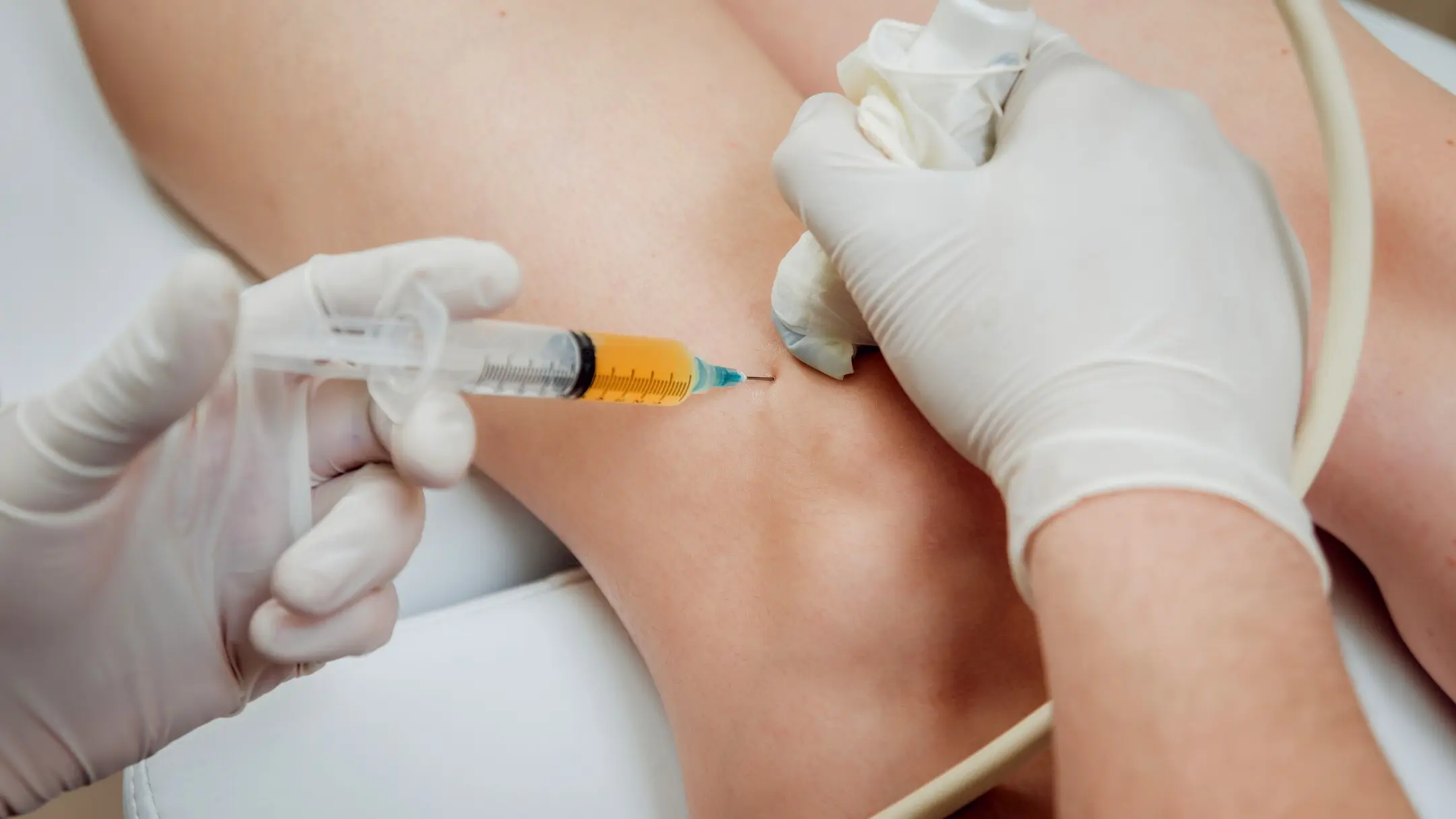
Stem cell injections for arthritis may suit some adults with osteoarthritis whose joint pain has lasted despite sensible first steps. They are not a cure, and the research is mixed. The people we are most likely to consider have mild to moderate arthritis, pain that clearly comes from the joint and goals centred on less pain and easier movement.
This guide is mainly about osteoarthritis, the wear-related type, because that is where most of the research sits. We explain what the evidence shows, who we would and would not consider for treatment, what the alternatives are and what to expect at RRMG. We are open about the limits, because that helps you decide whether treatment is right for you.
Stem cell injections for arthritis are injections of cell-containing material, usually processed from your own fat or bone marrow, into a painful joint. The aim is to ease pain and support the tissue around the joint. They are meant to help symptoms, not to rebuild a worn joint. That is why we describe them as one option that may help certain patients, and never as a way to avoid surgery. If you want the basics first, our guide to what stem cell injections are explains the terms, the sources of cells and the UK rules.
Arthritis is also an umbrella word. Osteoarthritis is the wear-related type, where cartilage thins and the joint becomes stiff and sore. Inflammatory types, such as rheumatoid and psoriatic arthritis, are driven by the immune system and are managed by rheumatologists. This post is about osteoarthritis. If you have an inflammatory type, stem cell injections are not a substitute for that specialist care.
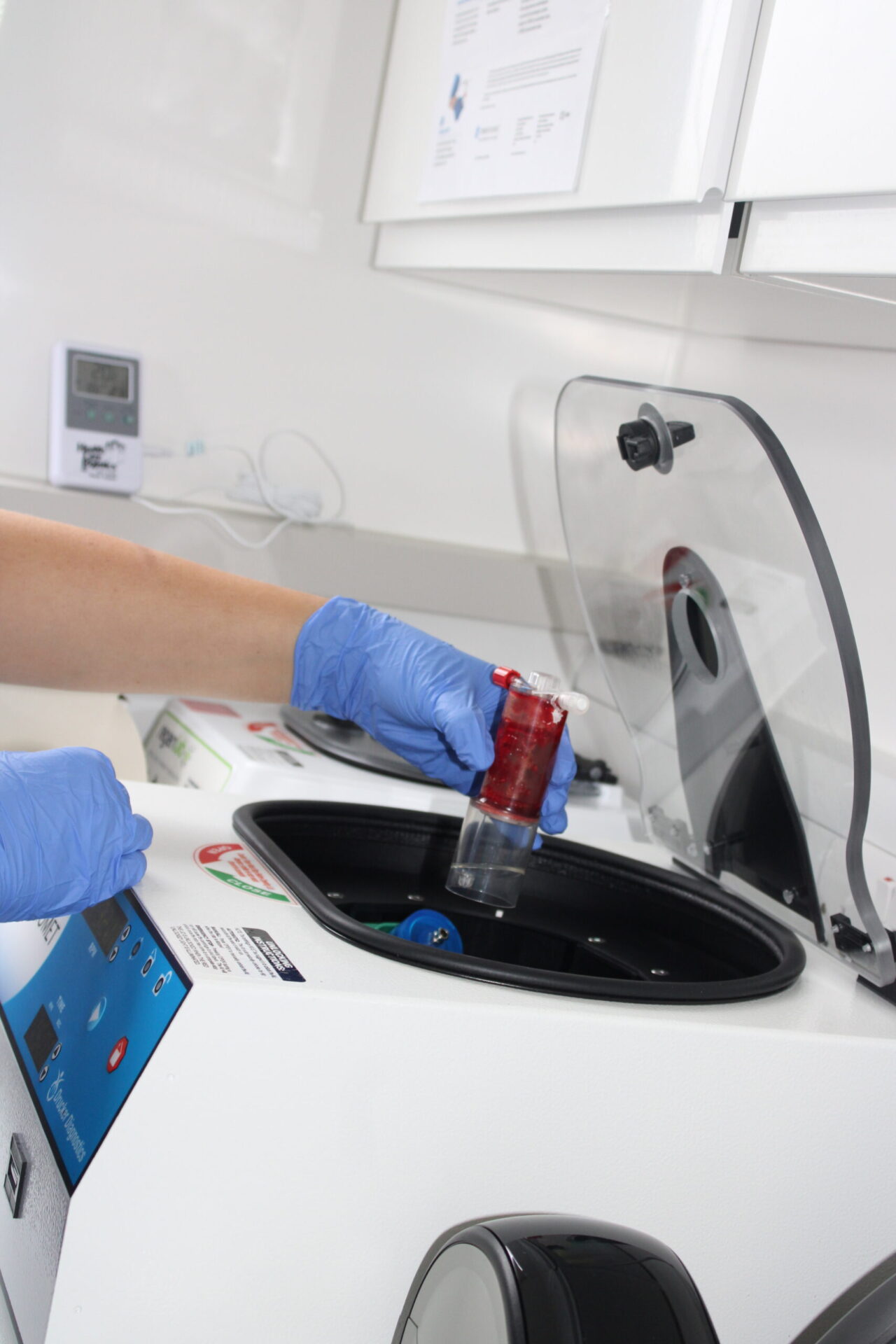
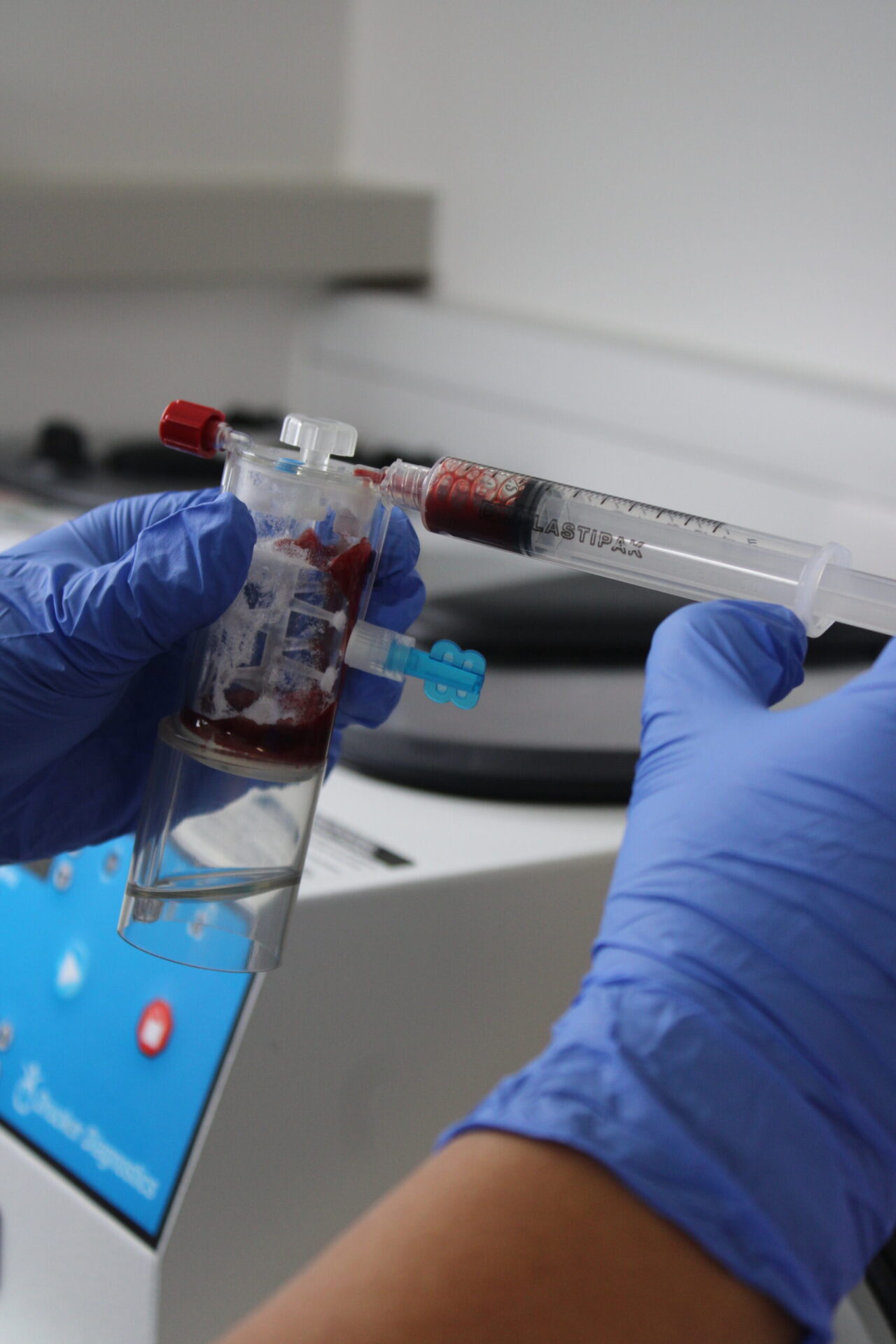
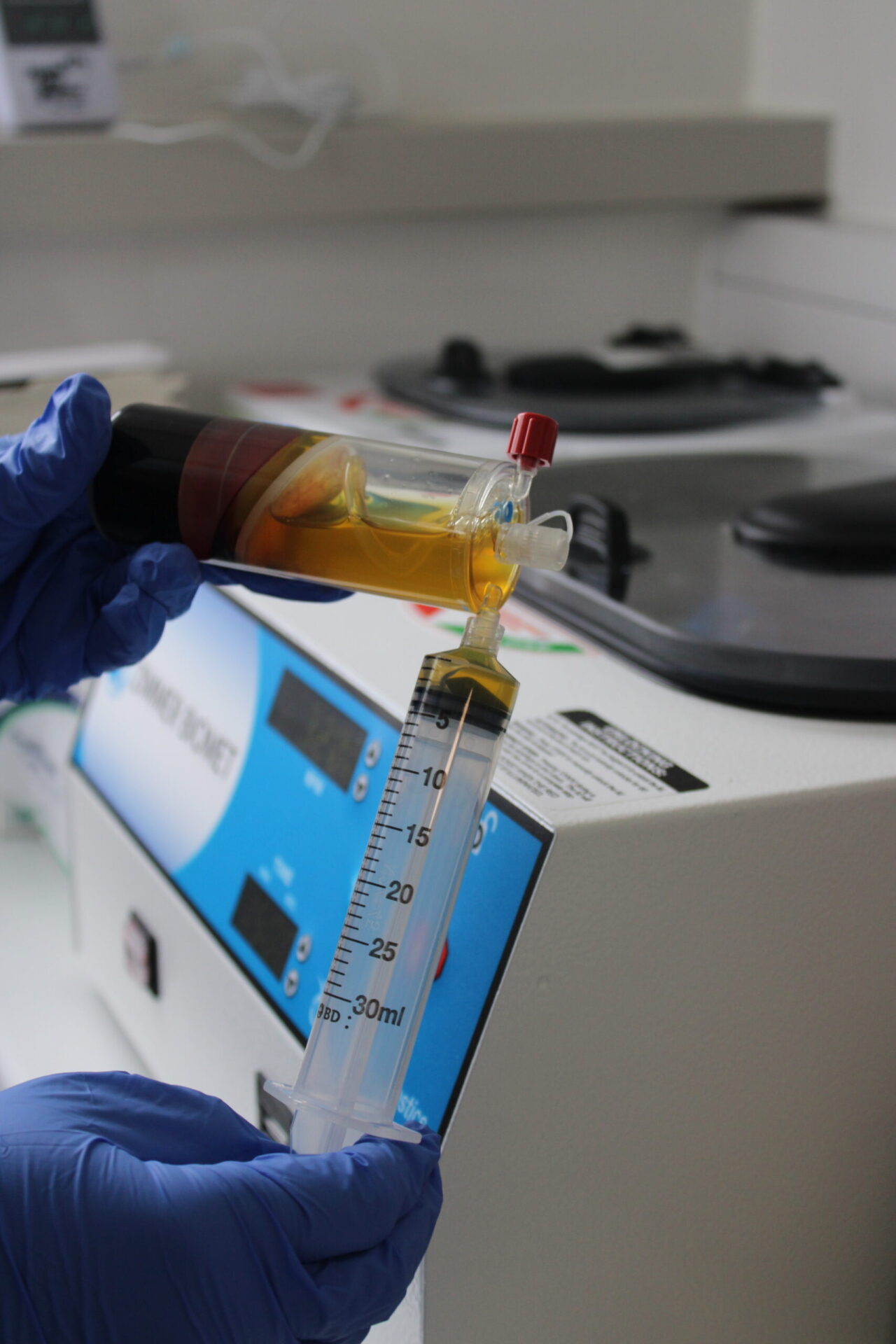
At RRMG, our Lipogems treatment uses a small amount of your own fat, processed with the Lipogems system without enzymes and injected into the joint. Our PRP and Cellular Matrix treatments are different. Both are made from your blood, so neither is a stem cell treatment, and we say so plainly.
Can stem cell treatment help arthritis? For some people with knee osteoarthritis it may slightly improve pain and function for up to six months, but the evidence is low in certainty and results vary. No injection has been shown to cure arthritis or rebuild worn cartilage, and we do not promise any particular outcome.
The most reliable summary is a 2025 Cochrane review of 25 randomised trials. It covered 1,341 people with knee osteoarthritis. Compared with a placebo injection, stem cell injections may slightly improve pain and function for up to six months. On a 0 to 10 pain scale, people given placebo averaged 4.5, and the stem cell group scored about 1.2 points better. The authors rated this as low-certainty evidence. In four trials, about 68 in every 100 people given stem cells reported treatment success, against 53 in every 100 given placebo. The certainty of that finding was very low.
They were uncertain whether quality of life improves, and uncertain about effects on the joint itself, because none of the studies measured changes on X-ray. Serious side effects were rarely reported, but harms could not be ruled out, including the small risk of joint infection that comes with any joint injection. The trials were mostly small, and up to three larger ones were withdrawn before reporting, which raises the possibility of publication bias.
A blinded randomised trial published in the British Journal of Sports Medicine followed 120 adults with grade 2 to 3 knee osteoarthritis for two years. Half received a single injection of their own micro-fragmented fat and half received saline. Both groups improved, but the fat injection did not do better than saline at any point. Each injection held roughly a million stem cells. This is one trial in one group of patients, so it does not settle the question, but it shows why we are careful about what we promise. We explain how this shapes our selection in our post on Lipogems treatment planning.
The knee has far more research than any other joint. For the hip, shoulder and hand, there is much less. Products, preparation methods and cell doses differ between studies, so results from one product do not automatically apply to another. The Cochrane review looked at outcomes up to six months, so we know little about what happens after that. Case series, which follow patients without a comparison group, often report improvement, but a placebo response and the natural ups and downs of arthritis can account for part of that gain. That is why we treat any promise of a guaranteed result with caution, and so should you.
Suitability depends on the whole picture, not one scan. At assessment we look at your symptoms, your examination, your imaging and what you have already tried. We will tell you plainly if another route looks better for you. Our page on the conditions we treat shows the wider range of problems we assess. A consultation also lets us explain the research in plain terms, including the results that did not favour treatment, so your decision rests on the full picture.
We may consider treatment when most of the following apply:
These features generally point towards a good fit, but they are not guarantees. The two-year trial above enrolled people with grade 2 to 3 disease, so that is the group where the evidence is most relevant to the decision.
We are more cautious, or advise a different route, when:
None of these automatically rules treatment out, but they change how we plan or whether we advise something else. Never stop a prescribed medicine without medical guidance.
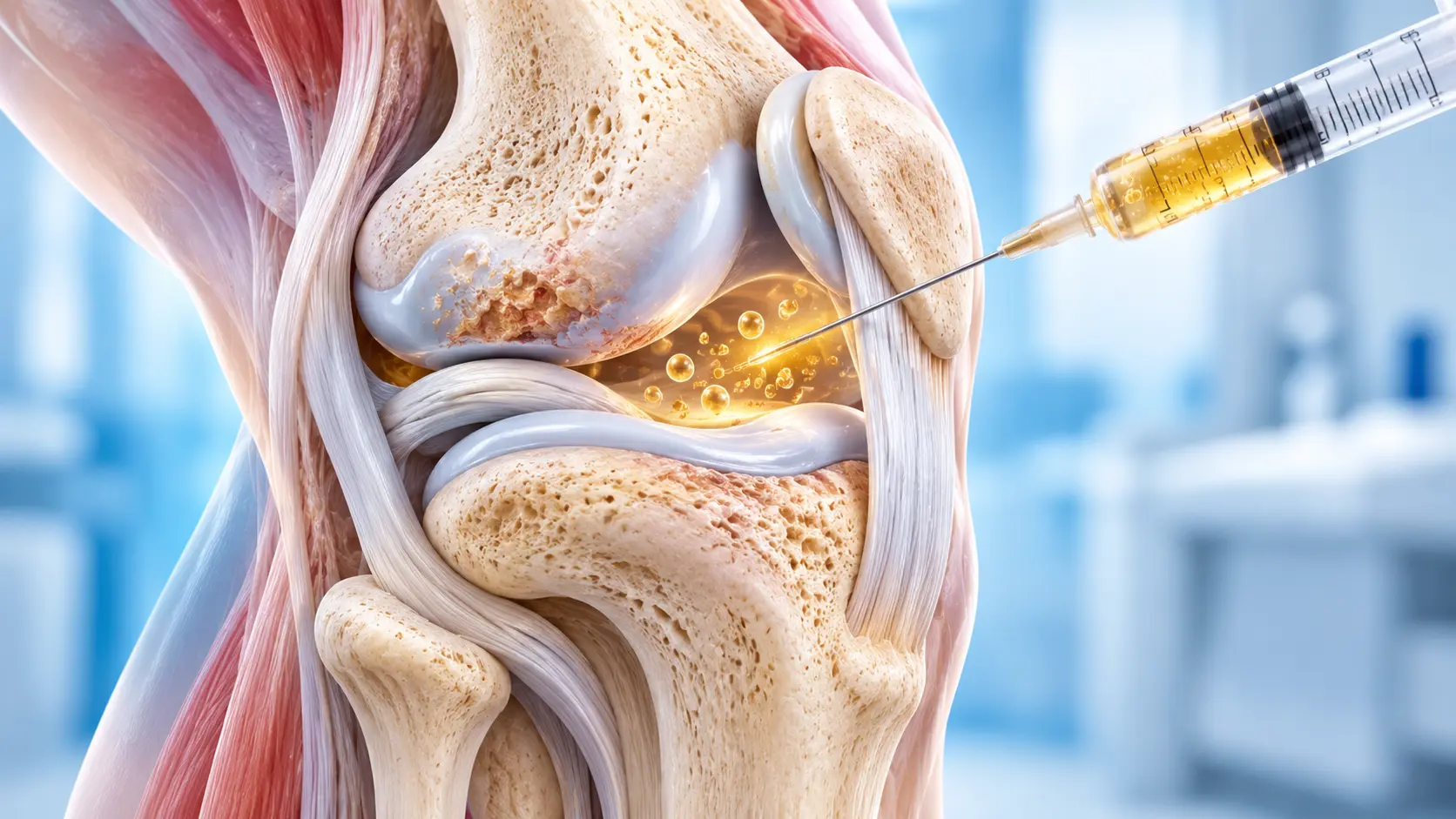
Stem cell injections for osteoarthritis are judged by how worn the joint is and which joint is involved. Doctors usually grade knee arthritis on X-ray from grade 1 (very mild) to grade 4 (severe). We use that grading, along with ultrasound or MRI where needed, to judge whether an injection is a sensible next step or whether another approach is more reliable.
The knee is the best-studied joint, so it is where we can say the most. In practice, stem cell therapy knee arthritis treatment means a single injection of processed fat or marrow tissue into the joint, usually guided by ultrasound. For stem cell therapy knee osteoarthritis research covers a range of severity, and the patients we are most likely to consider have mild to moderate wear. First we confirm that the pain is coming from the joint, because knee pain can also be referred from the hip or back, or come from a tendon or a meniscal tear. Alignment matters too, because a knee that is badly bowed or unstable is under uneven load, and an injection does not correct that. Our knee osteoarthritis care page explains how we assess it.
Can stem cell injections regrow knee cartilage? This has not been shown. The Cochrane review found no study that measured joint changes on X-ray, so nobody can say these injections rebuild cartilage. Treat any clinic that implies they do with caution. What the injections aim to do is calm the joint environment and ease symptoms, which is a more modest goal and the one we discuss with you.
For stem cell injections hip research is more limited than for the knee, and the Cochrane review did not cover it. The hip sits deep in the body, so we use image guidance to place the injection accurately. We also check that the hip is the true source of pain, because problems in the lower back or around the hip tendons can feel similar. As with the knee, the aim is to ease symptoms in a worn joint, not to reverse the wear. If your hip pain turns out to come from somewhere else, we will say so and explain what we would suggest instead. More detail is on our hip arthritis care page.
Evidence for stem cell injections in the shoulder, and in small joints such as the hands, is even sparser. For the shoulder we examine the joint, use ultrasound to look at the tendons and then decide whether an injection or another approach makes more sense. In the hands we are cautious about recommending injections where the evidence is this limited, and we say so. Our shoulder pain care page covers how we assess shoulder problems.
Stem cell injections are one option among several, and never the first step for everyone. Depending on your joint and goals, we may discuss PRP injections, which are made from your own blood and are less invasive, or Cellular Matrix, which combines PRP with hyaluronic acid. Ostenil is a hyaluronic acid injection given to help the joint move more comfortably. Steroid injections can calm a painful flare, although NICE notes the relief is short-term, around 2 to 10 weeks.
How we choose between these depends on how worn the joint is, how long you have had symptoms, what you have already tried and how much recovery time you can accept. We explain the benefits, risks and costs of each option, so you can compare them side by side before deciding. Exercise, weight management and physiotherapy remain part of good arthritis care alongside any injection. Where a joint is badly worn, a surgical opinion may be the more reliable route. Our comparison of PRP versus stem cell therapy sets out how the two compare, and you can see the wider range of non-surgical treatments we offer on our website.
Our London clinic is on Blythe Road, and we use image guidance for every injection. Your first visit is an assessment, not a procedure. Please bring any previous scans, X-ray reports and a list of your medicines. We review your history and imaging, examine the joint and talk through whether treatment makes sense, including costs, before anything goes ahead. If treatment is not right for you, we will tell you, and we will explain what we would suggest instead. Our approach draws on founder Dr Ralph Rogers’s years of image-guided musculoskeletal work, and you can read more about RRMG on our website.
If Lipogems is appropriate, it is done as a day case under local anaesthetic. A small amount of fat is taken, processed and injected, and the procedure takes around an hour. Expect some soreness, swelling or bruising for a few days. Most people return to normal daily activity within one to two weeks, and improvement is usually noticed over the following two to eight weeks, although this varies. We explain aftercare in detail at the time and arrange a follow-up so we can see how you are responding.
Whichever clinic you choose, ask five questions before you decide: what exactly will be injected, where it comes from, what evidence supports it for your joint, what the total cost is including follow-up, and what happens if it does not help. We are happy to answer all five.

If arthritis pain is limiting what you can do, a consultation is the way to find out whether a stem cell injection makes sense for you. It does not commit you to treatment.
RRMG is a private regenerative orthopaedics and sports medicine clinic on Blythe Road, London, and we personally run every case, drawing on founder Dr Ralph Rogers’s image-guided experience. We work with a wide range of insurance providers as well as self-funding patients, although some treatments, including Lipogems, are not covered by insurers.
With us, you get fast access to a specialist assessment without joining a long waiting list, a clear diagnosis instead of continued guesswork, and a plain explanation of what treatment can and cannot do. Booking is simple: call, email or use our contact form, and we will arrange your first visit. Our aim is to match the right option to you, whatever that turns out to be.
| Service | Indicative Price |
|---|---|
| Initial consultation | From £300 |
| Lipogems, one joint | From £6,500 |
| Lipogems, two joints | From £9,500 |
Please visit our fees page for current, exact pricing.
You can book a consultation with us today:
Lipogems at RRMG starts from £6,500 for one joint and from £9,500 for two, and includes one follow-up telemedicine consultation. Your initial consultation starts from £300. These are guide prices for self-funding patients, and we confirm your exact cost before treatment begins. Please check our fees page for current figures.
In the UK, stem cell injections for joint pain are mainly offered by private clinics, and the MHRA regulates some cell-based products as advanced therapy medicinal products. We offer Lipogems in London. Whoever you choose, ask what is injected, where it comes from and which UK rules apply.
There is no fixed answer. Some people notice benefit for many months, while for others it fades sooner or never appears. The Cochrane review looked at effects up to six months, and long-term evidence is limited. We discuss what is sensible for you if symptoms return.
How often is not established, because research on repeat injections is limited. We do not follow a fixed schedule. After a Lipogems procedure we review your response at follow-up, and any decision about further treatment depends on how your joint and symptoms are doing at that point.
Insurers do not cover Lipogems, as our fees page explains, so most patients pay privately. Cover for other treatments, such as PRP for some injuries, depends on your policy and insurer. We can explain what to check with your insurer before you book, so there are no surprises on the day.
Dr Rogers has had a rich and illustrious career so far, which is continuing to grow and develop. Everything Ralph has been involved in since qualifying has added value to his knowledge and experience, but there have been some impressive highlights to note:
2018 – Present Founder Medical Director: Rogers Regenerative Medical Group (RRMG)
2012 – 2024 Medical Advisor – National Basketball Association
2008 – 2018 Medical Director: The London Sports Injury Clinic London
2010-2011 First Team Doctor, Chelsea Football Club
2007- 2010 The Football Association (Team Physician for England under 19 and development squads)
2005-2006 Medical Advisor: Trinidad & Tobago World Cup Football Team
2002 – 2008 Club Doctor: Walsall Football Club, West Midlands England
1998 – 2009 Medical Director: Medical & Orthopaedic Sports Therapy,
2000 – 2005 Sports Physician: Warwickshire County Cricket Club, Birmingham