
Reading Time: mins
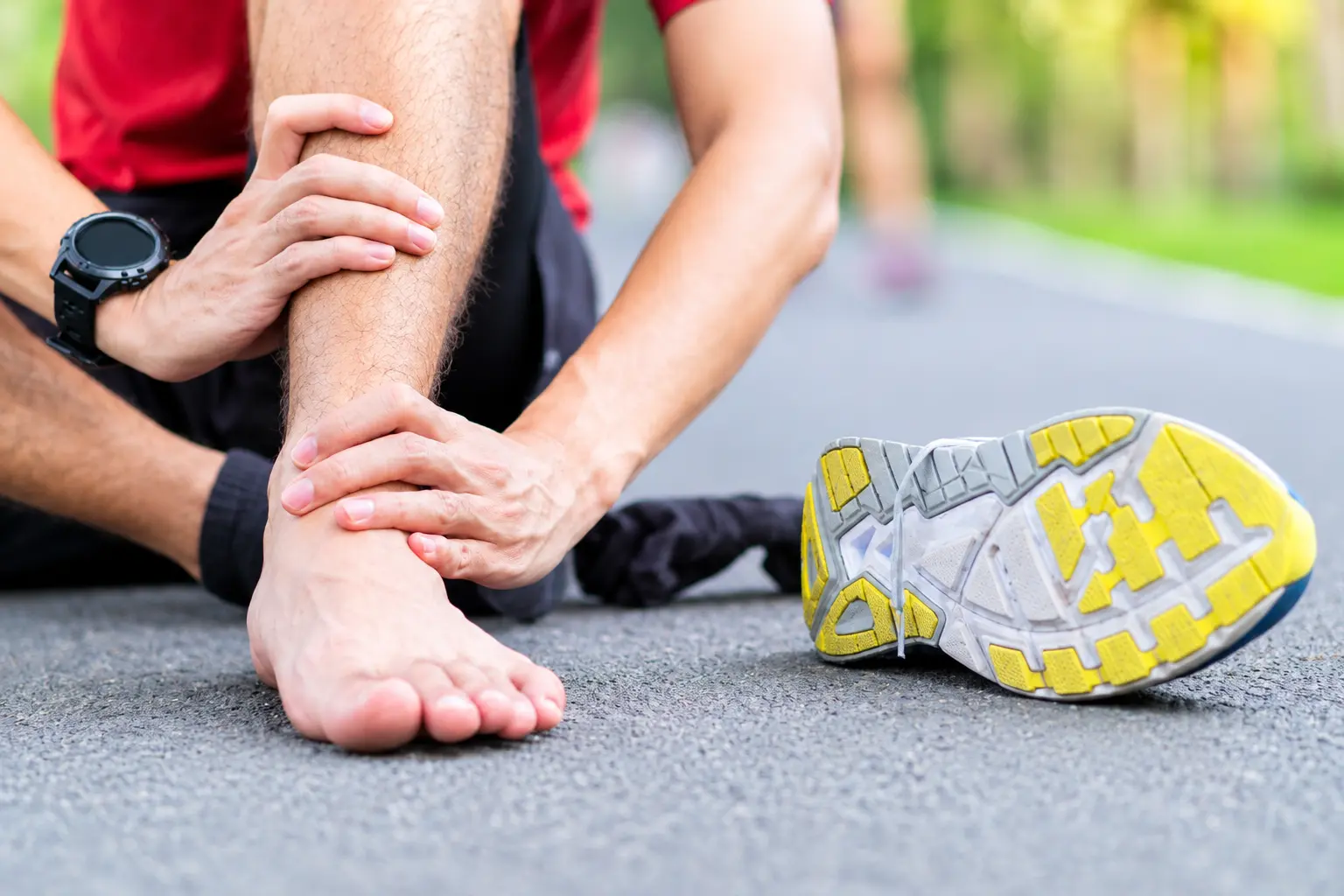
Runner’s heel is the everyday name for plantar fasciitis, pain where the thick band of tissue under your foot meets your heel bone. It is common in people who run, and it usually shows up as sharp heel pain on your first steps in the morning. Many cases settle with time and a sensible loading plan, but some do not, and weeks of guessing can turn into months of pain. At RRMG, we work out exactly what is hurting before we suggest anything, so you are not treating the wrong problem.
Pain in heel after running often comes from the plantar fascia, a strong band of tissue that runs from your heel bone to your toes and supports the arch of your foot. Every stride loads it. When your mileage, pace or terrain changes faster than the tissue can adapt, small areas become irritated, and the heel end is where it most often gives way, according to Bupa.
That pattern is what we mean by runner’s heel. Our page on tendon injuries describes the same picture, with pain as you start walking in the morning. The pain can also spread into the arch, so many runners describe heel and foot pain after running rather than one exact spot. It can ease as you get moving, then return later in the day or after long periods on your feet, which is why people keep running through it for weeks before they look for help.
Sore heels after running the next morning are one of the most telling signs. The pain tends to catch you as you get out of bed, and it can feel stabbing. Pain that is worst after rest and then settles as you move points towards the plantar fascia, although other structures behave similarly, so we examine the whole heel. We ask about this pattern first, along with how your weekly mileage has changed and which shoes you run in.
Causes of heel pain in runners almost always come back to load. The tissue is asked to do more than it has adapted to, and it falls behind. Several factors raise that risk:
Bupa also links it to age, with most cases between 40 and 60, and about one in three people have it in both feet. Having these risk factors does not mean you will develop it, and a runner’s heel injury can have more than one driver. Tightness through the calf is another clue, and tight heels after running can point to a stiff calf or Achilles tendon feeding extra strain into the fascia. We look at your training week, your footwear and how you move before we decide what matters most.
Swelling or warmth around the heel is worth having examined, because several heel and tendon problems look alike, including those affecting the Achilles tendon and the soft tissue around the heel. A swollen heel after running deserves a proper look instead of more rest and trial and error. We feel along the tendon and fascia, and use ultrasound where it helps, so you know which structure is involved before any plan is made.
A heel spur is a small bony growth on the heel bone, and it can show up on an X-ray. Runners are often told the spur explains their pain, but a scan finding needs explaining and is not a diagnosis on its own. If a runner’s heel spur turns up on a scan, we assess the plantar fascia and the surrounding tissue before deciding how much the spur matters. We go through what the finding means in plain terms, and we ask you to bring any previous scan report.
Plantar fasciitis or heel pain from another cause is the question most runners are really asking. Where you feel it is the most useful clue.
| Condition | Where you usually feel it | Typical pattern |
|---|---|---|
| Plantar fasciitis | Under the heel, sometimes into the arch | Sharp pain on first steps after rest, often easing as you move |
| Achilles tendinopathy | Back of the heel, along the tendon | Often worse after activity or first thing in the morning |
| Other heel problems | Varies | Needs an examination, and sometimes a scan, to tell apart |
You can have more than one problem at once, which is why we examine the whole heel and calf instead of the sore spot alone. Our page on ankle and foot pain lists the conditions we assess.
Plantar fasciitis is a heel and foot problem, so leg pain is not its main symptom. It can go hand in hand with a tight calf or Achilles tendon, though, and favouring a sore heel can change how you walk and load the lower leg. If calf or leg pain is your main complaint, or it keeps returning, the source may be elsewhere, and an examination sorts out which. Telling us exactly where you feel it, and when, helps us separate the two.
Many runners can keep running with mild plantar fasciitis if they reduce how much and how hard they run, but pushing through pain that is getting worse rarely helps. How much you can do depends on how irritated the tissue is, so your pain pattern matters more than any fixed rule.
Bupa says improvement usually takes at least six to eight weeks to appear, and recovery can take up to 12 months, though it is often quicker. If you have cut back and you are still no better after several weeks, that is the point to stop waiting it out. Noting your pain during runs and the morning after gives us useful detail at your appointment. Signs it is time for an assessment include:
Our article on Tenex return to sport covers how running is built back up after treatment.
How to diagnose plantar fasciitis starts with listening and examining. We ask where it hurts, when it is worst and how your running has changed. We then press along the fascia and heel, check your calf and Achilles tendon, and watch how you stand and walk. Bupa notes that diagnosis is usually made from your symptoms and an examination alone, with imaging kept for when the cause is unclear.
Where it helps, we use ultrasound during your appointment, drawing on founder Dr Ralph Rogers’s MSc in musculoskeletal ultrasound, so we can see the fascia and tendon in real time. A scan elsewhere is arranged only when the result will change your plan. It helps to bring details of your usual weekly mileage, your running shoes and any previous scans or injections. Most people leave the first visit knowing which structure is sore, what is driving it and what the options are.

Runner’s heel pain treatment starts with the least invasive step that fits your heel. Options we may discuss include:
Which of these suits you depends on how long the pain has lasted, what the examination shows and how your running week looks.
Exercise-based rehabilitation stays at the centre of every plan. A St George’s NHS leaflet from 2025 describes exercise as the most effective first-line option, and advises that shockwave is only used alongside it, never on its own. We build a loading plan around your running, then work with your physiotherapist so everyone follows the same programme. Progress is gradual, so we agree checkpoints with you and adjust the plan if your heel is not responding.
Shockwave therapy sends sound-wave pulses through the skin to treat persistent heel pain, without injections. It is not right for every diagnosis, so we talk through the likely benefits and alternatives first. The evidence is still limited. The same NHS leaflet says it may be considered after physiotherapy and other conservative care, and Bupa describes it as a specialist option once six to twelve months of other treatment have not helped. We are open about that, instead of presenting it as a promise.
PRP therapy uses a concentrate of your own platelets, injected under ultrasound guidance. Tenex treatment uses a fine ultrasonic needle, guided by ultrasound and done under local anaesthetic, to remove damaged tissue, and plantar fasciitis is one of the conditions it is used for. Both are options for selected people whose pain has lasted despite rehabilitation, not a first step, and results vary between patients. We explain the evidence and your alternatives before any injection, so you decide with the full picture. A loading plan follows either one, because the tissue still has to be brought back up to running load gradually.
We are cautious with steroid injections in the heel. Bupa says they can give short-term relief, but the pain may return within a month, and the St George’s leaflet does not recommend them because of side effects and evidence that they may contribute to ligament rupture. If you have already had one, tell us, because it changes what we suggest next. We would rather explain the trade-offs honestly than offer a quick option that may not last.

We are a private regenerative orthopaedics and sports medicine clinic at 1 Blythe Road, London, and we personally run every case, drawing on founder Dr Ralph Rogers’s years in sports medicine. You can read more about our clinic. We work with a wide range of insurance providers, as well as self-funding patients.
If your heel is still hurting weeks after you cut back, booking privately means no long wait for a specialist assessment, and we see patients from across London, including Kensington, Chelsea and Chiswick. At your first visit, we aim to give you a clear diagnosis instead of more guesswork, answer your concerns directly, and explain what we would do next and why. If a procedure suits you, we explain which of our non-surgical treatments fit, and you can see the wider range of conditions we treat. Indicative self-pay prices are below.
| Service | Indicative Price |
|---|---|
| Initial consultation | £300 |
| Diagnostic ultrasound | From £360 |
| PRP therapy, per injection | From £1,020 |
| Tenex treatment, one area | From £3,840 |
Please visit our fees page for current, exact pricing, as figures can change. To book, request an appointment or contact us directly:
A heel hurting after running most often comes from irritation of the plantar fascia, the band of tissue under your foot, but the Achilles tendon and other heel structures can cause similar pain. Pain that is worst after rest points towards the fascia. If it lasts more than a few weeks, an examination sorts out the cause.
It can settle without treatment, but it can be slow. Bupa says improvement usually takes at least six to eight weeks to appear, and recovery can take up to 12 months, though many people recover sooner. If your pain has lasted longer than that, or keeps returning, an assessment is a sensible next step.
Yes. Runner’s heel is the everyday name for plantar fasciitis, irritation of the plantar fascia at the heel. The name comes from how often runners get it, but it affects people who never run too. Clinicians sometimes use the term plantar fasciopathy for the same condition.
Not always. Heel pain is often diagnosed from your symptoms and an examination alone, and imaging is mainly used when the cause is unclear. Ultrasound, which we can do in clinic, or MRI helps when another structure may be involved or when treatment is not working as expected.
Dr Rogers has had a rich and illustrious career so far, which is continuing to grow and develop. Everything Ralph has been involved in since qualifying has added value to his knowledge and experience, but there have been some impressive highlights to note:
2018 – Present Founder Medical Director: Rogers Regenerative Medical Group (RRMG)
2012 – 2024 Medical Advisor – National Basketball Association
2008 – 2018 Medical Director: The London Sports Injury Clinic London
2010-2011 First Team Doctor, Chelsea Football Club
2007- 2010 The Football Association (Team Physician for England under 19 and development squads)
2005-2006 Medical Advisor: Trinidad & Tobago World Cup Football Team
2002 – 2008 Club Doctor: Walsall Football Club, West Midlands England
1998 – 2009 Medical Director: Medical & Orthopaedic Sports Therapy,
2000 – 2005 Sports Physician: Warwickshire County Cricket Club, Birmingham