Reading Time: mins
Quick answer: Regenerative medicine is a field that looks for ways to support the body’s own healing response. For joint and tendon pain, the treatments most often offered are PRP, A2M and cell-based injections made from your own blood or fat. National guidance and a Cochrane review describe the evidence as limited, so it is an option to discuss after a scan and a clear diagnosis, not a proven fix.
The research is smaller and less certain than many websites suggest, so we explain what these treatments can and cannot do before you decide anything. At RRMG, we scan the painful area with ultrasound, talk through your history and only then discuss whether any regenerative option is worth considering.
Our approach to regenerative medicine comes from more than 25 years of sports medicine experience, international involvement and teaching, and from training with Carlo Tremolada more than ten years ago. This guide explains what regenerative medicine is, which treatments apply to joints and tendons, what the evidence shows, how to spot overselling and what it costs.
UKRI describes regenerative medicine as a field of science and medicine that works on ways to repair or replace damaged or diseased cells and tissue, so that the body can function normally again. That covers a very wide area. At one end is laboratory and hospital research on stem cell transplants, tissue engineering and gene therapy. At the other end are clinic treatments that use material from your own body, such as platelets from a blood sample or cells from a small amount of fat, to support the body’s natural healing response in a painful joint or tendon.
The label is used loosely online, which is part of why people feel confused. A clinic using the term does not tell you what it actually does, what evidence sits behind it or what it costs. That is why we start with the definition and then say exactly where our treatments fit. If you want the wider picture of how we approach joint and spine care, our post on regenerative orthopaedics in London covers it.
Conventional care for joint and tendon pain usually focuses on managing symptoms or correcting the structure surgically. That means pain relief, physiotherapy, steroid injections and, when needed, an operation. Regenerative medicine takes a different angle. It aims to influence the environment inside the joint or tendon by using the body’s own materials, in the hope that the tissue responds. Hope is the right word, because no outcome can be promised and the research is still developing. For many people the two approaches are not rivals, because physiotherapy and a sensible loading plan usually continue alongside any injection.
We work with the body’s own materials. PRP injections use concentrated platelets from a blood sample, and Lipogems uses a small amount of your own fat. We do not offer donor stem cell transplants, tissue-engineered products or gene therapy, and we do not describe our treatments as doing what those do. Our non-surgical treatments page shows how these options sit alongside physiotherapy and standard injections, which is where most people start.
Most regenerative medicine therapy offered for joint and tendon pain falls into a few groups. We place each one under ultrasound guidance, so we can see where the material goes. The table gives the short version, and the sections below explain each option and where it stands.
| Option | What it is | Where the evidence stands |
| PRP | Concentrated platelets from your own blood | Mixed and limited |
| A2M | A protein found naturally in blood plasma | Early-stage research |
| Lipogems | Your own fat, processed and injected | Limited and still developing |
| Cellular Matrix | PRP combined with hyaluronic acid | Limited |
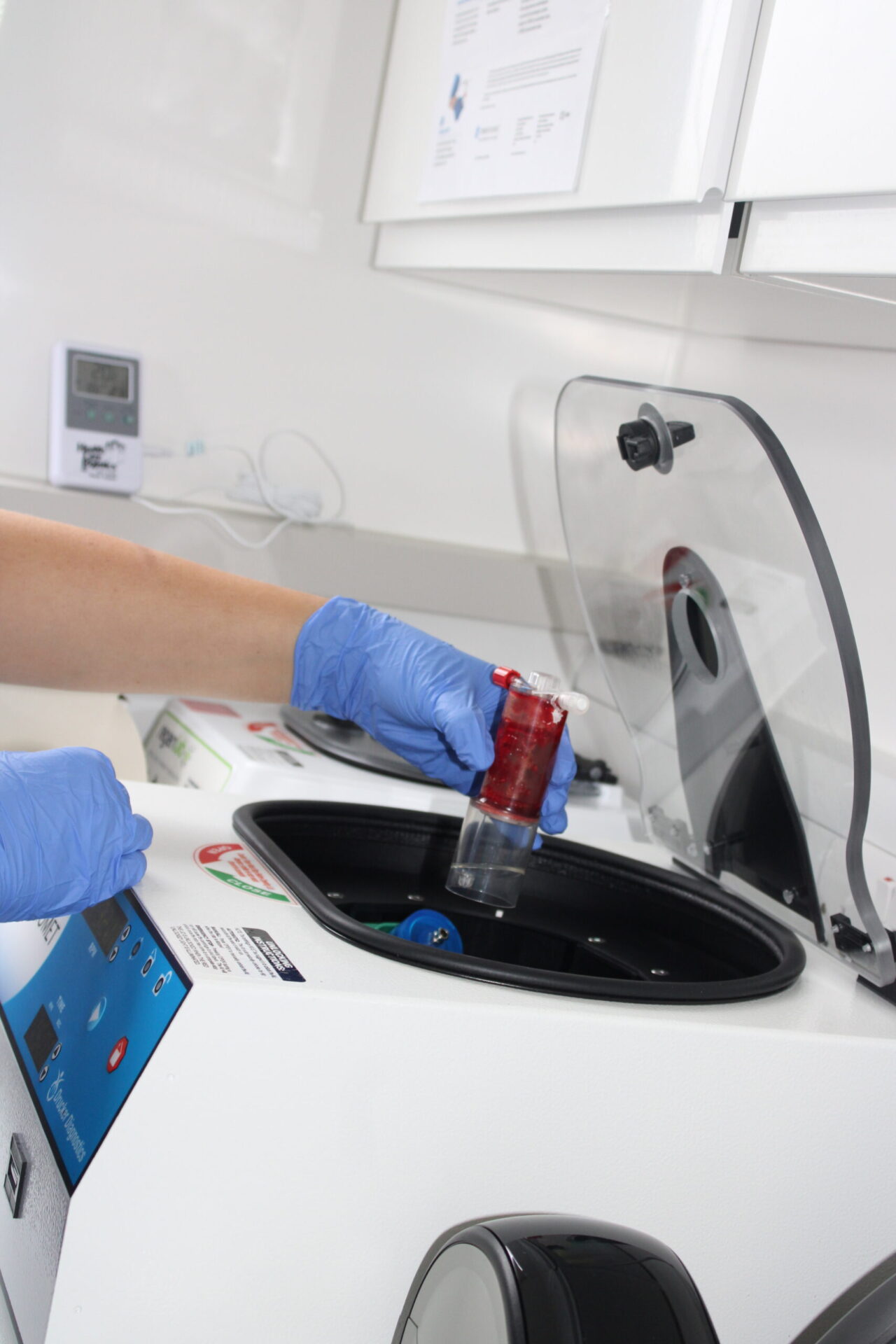
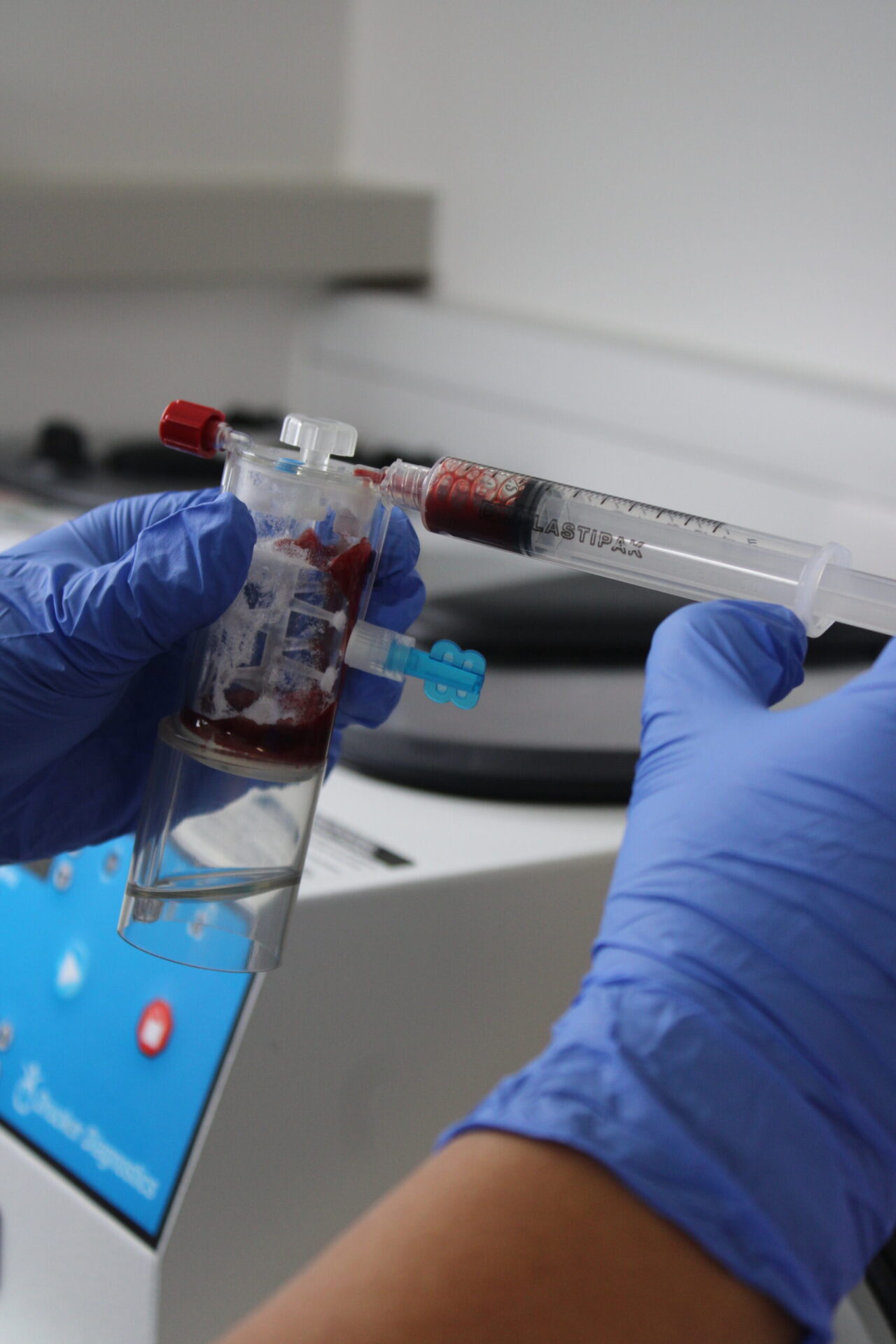
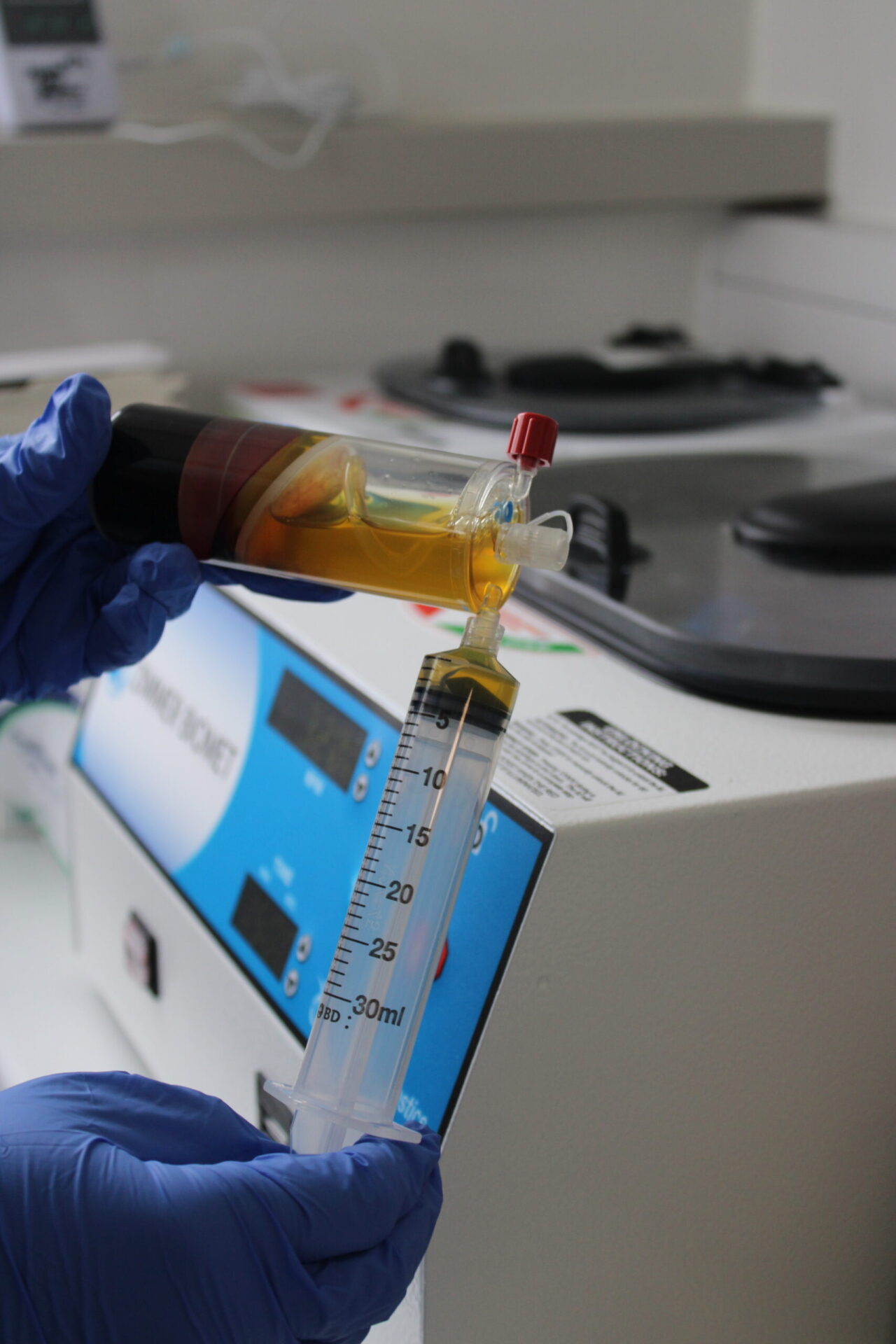
PRP stands for platelet-rich plasma. We take a small sample of your blood, concentrate the platelets and inject them into or around the painful joint or tendon. Platelets carry signals involved in the body’s healing response, which is the thinking behind the treatment. It is not a proven way to rebuild tissue, and results vary from person to person. A typical visit involves a scan, a blood sample, a short wait while the sample is prepared and then the injection under ultrasound guidance. Some people notice soreness for a few days afterwards, and we explain what to expect at your consultation. Our PRP injections page covers the process in more detail.
Alpha-2 macroglobulin, usually shortened to A2M, is a protein found naturally in blood plasma, and it is used in some joint injections. We may discuss it for joint pain as an alternative or an addition to PRP. Research on A2M is at an earlier stage than the research on PRP, so we do not quote results, and we explain the limits of the evidence before you decide. We confirm the cost at your consultation.
Stem cell is a term for cells that can develop into several other types of cell. In orthopaedic clinics it usually refers to cell-rich material taken from a patient’s own body, most often fat. Lipogems is one such system. We take a small amount of fat, process it and inject it into the joint under ultrasound. The thinking is that the tissue contains cells and supporting material that may influence the joint environment. That is a proposed mechanism and not a proven one, and we do not claim it rebuilds cartilage. Because a small amount of fat has to be collected first, the appointment is longer than a PRP visit, and we go through the steps and aftercare with you beforehand.
Our founder’s training included working directly with Carlo Tremolada, the physician behind Lipogems, more than ten years ago. Training with someone is not proof that a treatment works, so we pair that experience with plain talk about the evidence. Lipogems is a branded system, and other methods exist, so it is worth asking any clinic exactly what it uses. For a wider explanation, see our guide to stem cell injections explained.
Cellular Matrix combines PRP with hyaluronic acid, a substance found naturally in joint fluid. Cellular Matrix is one option we may discuss when PRP alone is not the best fit. We also offer ultrasound-guided steroid injections and hyaluronic acid injections such as Ostenil. These are not regenerative therapies, and they work differently. A steroid injection can ease pain for a time without changing the tissue underneath, which is why we compare the options with you and do not default to one.
Where regenerative medicine is considered depends on the tissue involved and how long the problem has lasted. We scan first, because pain in the same place can come from different causes, and the right plan follows the diagnosis. The sections below cover the areas people ask about most.
Knee osteoarthritis is the condition most often linked to regenerative injections. NICE advises that PRP injections for knee osteoarthritis are used only under special arrangements for governance, consent and audit, because the evidence on how well they work is limited in quality, although it raised no major safety concerns. We tell you that plainly, because it affects whether the cost feels worth it to you. Many people with knee osteoarthritis improve with exercise, weight management and sensible pain relief, and those steps usually come first. Our knee pain and arthritis page explains the condition and the other options, including physiotherapy, steroid injections and surgery. We may discuss regenerative medicine for knee pain when simpler steps have not helped enough, and we are clear that it is not a way of replacing a worn joint.
For the shoulder, the options we may discuss include PRP into a painful tendon, Lipogems for selected cases of joint wear, shockwave therapy, hyaluronic acid and steroid injections for short-term relief. Our shoulder pain page explains the causes. For the hip, we may discuss steroid or hyaluronic acid injections, PRP for tendon problems or early joint wear, and shockwave therapy for tendon-related hip pain, and our hip pain and arthritis page covers them. Heel, Achilles and ankle problems are covered on our ankle and foot pain page. For the elbow, our post on PRP for tennis elbow looks at that option. The same rule applies everywhere: we scan first, we start with simpler steps, and we say plainly how limited the evidence is.
Long-standing tendon pain, such as tennis elbow, Achilles tendinopathy or rotator cuff problems, is another common reason people ask about regenerative medicine. NICE guidance on injecting a patient’s own blood for tendinopathy also describes the evidence on how well it works as inadequate, and recommends further trials. Tendons recover slowly, often over months, and the basics, such as graded loading exercises and changes to activity, matter whichever injection is used. Our tendon injuries page explains the problems we see, and we scan the tendon first so we can tell a worn tendon from a tear. Depending on the tendon, we may also discuss shockwave therapy or the Tenex procedure, which work in different ways.
Back pain has many causes, and regenerative medicine is relevant to only some of them, for example pain from irritated joints or worn discs that has not settled with physiotherapy. The evidence is limited here too, so we explain the options and costs at assessment and say when another route may suit you better. Back pain also often improves with time, movement and physiotherapy, which is why a regenerative injection is rarely the first step. Our post on PRP for low back pain covers one approach in more detail.
This is the part many websites skip. We would rather you hear the limits from us than discover them later.
The best sources are national guidance and systematic reviews, and they point the same way. NICE guidance on PRP for knee osteoarthritis finds no major safety concerns but limited evidence on how well it works, and asks that it is used with proper consent and audit. NICE guidance on autologous blood injection for tendinopathy describes the evidence on effectiveness as inadequate. A Cochrane review from 2014 pooled 19 trials with 1,088 people, covering tendon, ligament and rotator cuff injuries, and rated the certainty of the evidence very low. It concluded there was not enough evidence to support platelet-rich treatments for these injuries, and called for standard ways of preparing PRP. It is an older review, so we treat it as one piece of the picture and not the final word. We compare PRP with cell-based options in our post on PRP versus stem cells.
Several things make the research difficult to read. Studies often treat different conditions in the same trial, and PRP is prepared in different ways, which is why the Cochrane authors asked for standard methods. Many trials are small, follow people for a short time and rely on pain scores, which can improve for reasons unrelated to the injection. Cell-based treatments add another layer, because the material differs between people and between systems. None of this proves the treatments do not work. It means the studies cannot yet tell us, with confidence, who is likely to benefit and by how much, and we say so at assessment.
People who choose regenerative medicine usually hope for less pain and easier movement. Some people report that, and others notice little change. Nobody can tell you in advance which group you will be in, and no study lets us quote a success rate. The limits matter just as much. These treatments do not reverse arthritis and do not rebuild a torn tendon, and the cost can run into thousands of pounds. Results may also depend on how long the problem has lasted, how much the tissue has changed and how well you follow a loading or physiotherapy plan afterwards. For these reasons, we treat regenerative medicine as one option among several, and we discuss it only after a scan and a clear diagnosis.
The two are not direct rivals. Surgery may suit a large tear, a badly worn joint or a problem that stops the joint working, and no injection replaces it in those cases. Regenerative medicine is usually discussed earlier, when pain continues despite physiotherapy and standard care. We do not claim either is safer or better than the other, and we tell you when we think you need a surgical opinion.
Because the field is new and the label is loosely used, some providers promise more than the research supports. In 2025, European regulators warned that unregulated cell, gene and tissue-based products are being sold directly to patients, often with little or no evidence that they work or are safe. Their advice was to discuss any offer with qualified clinicians and to get a second opinion, which is advice we would give too.
Be cautious if a provider:
In the UK, the MHRA regulates gene therapy, cell therapy and tissue-engineered products as advanced therapy medicines, and these generally need a marketing authorisation or a specific exemption before they are supplied. Where a particular treatment sits depends on how it is prepared and used. That is why it is worth asking any clinic what it injects and how it is regulated, and why we encourage you to ask us the same questions.
We may discuss a regenerative option with you if:
We also tell you when it is not the right fit. A large tear, a badly worn joint that may need a surgical opinion, or pain that a scan suggests comes from somewhere else may call for a different route. If you have not yet had a scan or a clear diagnosis, that comes first. Our job at the assessment is to match the treatment to your problem, not the other way round.
We start by listening. We ask when the pain began, what makes it better or worse, what you have already tried and what you want to get back to doing. We then examine the area and use ultrasound to look at the joint or tendon, so the discussion is based on what we can see. Dr Ralph Rogers carries out the assessment and any treatment personally. If a regenerative option looks reasonable, we explain how it would work, what it would cost, how the evidence applies to your problem and what the alternatives are. If it does not, we say that too. A follow-up consultation starts from £215, and we agree the next steps with you before anything is booked.
Most people go home after the appointment, although the exact plan depends on the treatment and the area. Soreness, stiffness or mild swelling around the injection site is common for a few days, and we advise on pain relief and activity that suit you. We usually combine treatment with a graded exercise or physiotherapy plan, because a joint or tendon that is loaded sensibly tends to cope better than one that is rested for too long. Changes, if they come, are usually gradual, so we do not quote a date by which you should feel different. We review your progress at follow-up and adjust the plan as your joint or tendon responds.

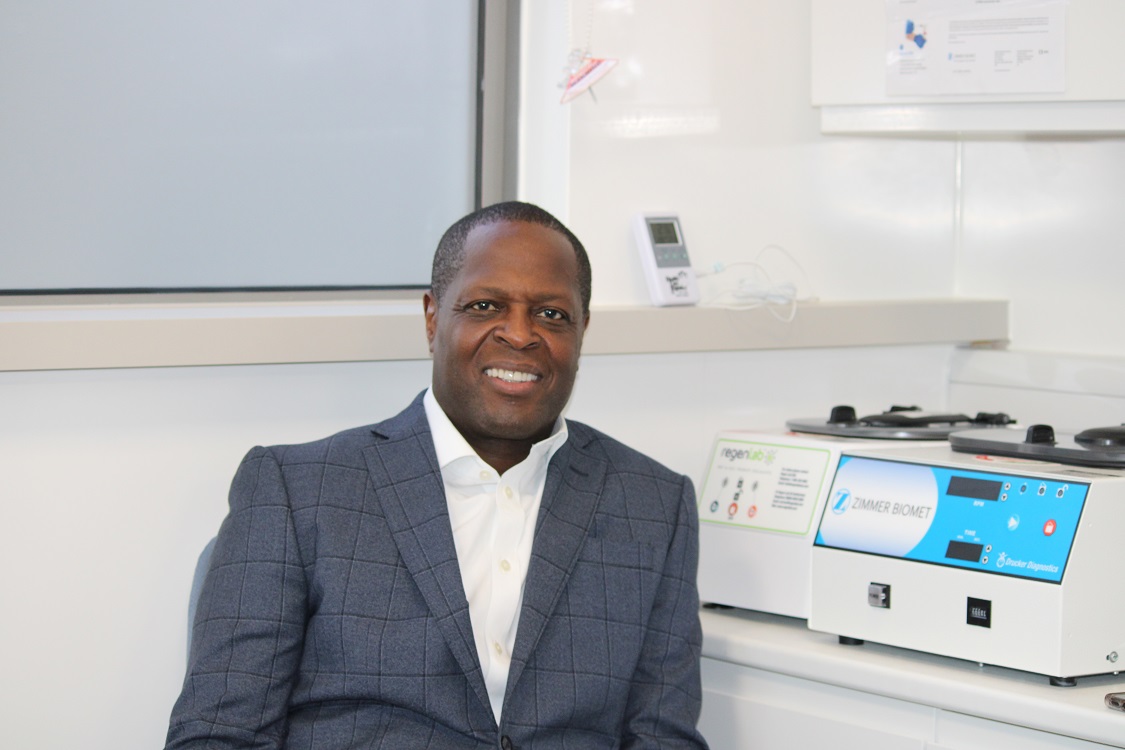
Dr Ralph Rogers founded RRMG in 2018 and personally delivers every treatment using image-guided technique. Credentials do not guarantee a result, so we encourage you to ask any clinician about their training, and we are happy to answer the same questions about ours.
Dr Rogers holds a medical degree, a PhD in exercise physiology and an MSc in musculoskeletal ultrasound imaging. He is a Fellow of the American College of Sports Medicine and a Fellow of the Faculty of Sports and Exercise Medicine (UK and Ireland), where he also serves as an examiner. His training in regenerative medicine included working directly with Carlo Tremolada, the physician behind Lipogems, more than ten years ago.
Dr Rogers has more than 25 years of experience in sports medicine. He was a medical advisor to the NBA from 2012 to 2024 and first-team doctor at Chelsea Football Club, and he has also worked with the Football Association. His involvement in regenerative medicine spans many years, with international involvement, teaching and publications in the field. That background shapes how we work: a careful diagnosis first, an honest view of the evidence and a plan built around what you want to get back to doing. You can read more on his about page.
We are a private regenerative orthopaedics and sports medicine clinic on Blythe Road, London, and we run every case personally using image-guided technique. Our experience in regenerative medicine spans many years of clinical work, international involvement and teaching, and we bring it to every assessment. We work with a wide range of insurance providers, as well as self-funding patients, although cover varies by treatment.
If joint or tendon pain keeps limiting your work, sport or sleep, you do not have to keep guessing. We offer quick access to a specialist assessment without a long waiting list, and a clear, scan-based diagnosis. You get an honest conversation about whether regenerative medicine, a standard injection, physiotherapy or a different route suits you. If we do suggest a regenerative option, we go through the evidence, the steps and the cost first, and booking is simple.
| Service | Indicative price |
| Initial consultation | From £300 |
| Follow-up consultation | From £215 |
| PRP, per injection | From £1,020 |
| PRP, pack of 3 | From £2,500 |
| Cellular Matrix | From £1,200 |
| Lipogems, one joint | From £6,500 |
These are starting figures only. Please see our current fees page for exact pricing. You can also learn more about RRMG on our site.
To book, request an appointment online or contact us directly.
The evidence is uncertain. Some people report less pain after treatments such as PRP, but national guidance and a Cochrane review describe the evidence as limited, and results vary from person to person. We cannot say in advance how your joint or tendon will respond, so we assess it first and tell you if another route suits you better.
National guidance on PRP for knee osteoarthritis found no major safety concerns, but any injection carries risks such as soreness, bruising and infection. Safety also depends on who treats you and how the material is prepared. We explain the risks that apply to you at consultation, and we use ultrasound guidance so the material goes where it is intended.
At RRMG, a consultation starts from £300. PRP starts from £1,020 per injection, Cellular Matrix from £1,200 and Lipogems from £6,500 for one joint. These are starting prices, so please check our fees page for current figures, and we confirm the figures that apply to you at your consultation.
Regenerative medicine covers a wide range of research and treatment, from stem cell science to tissue engineering. In our clinic, it means treatments such as PRP and Lipogems, which we may discuss for long-standing joint and tendon pain, including knee osteoarthritis, once simpler steps such as physiotherapy have not helped enough.
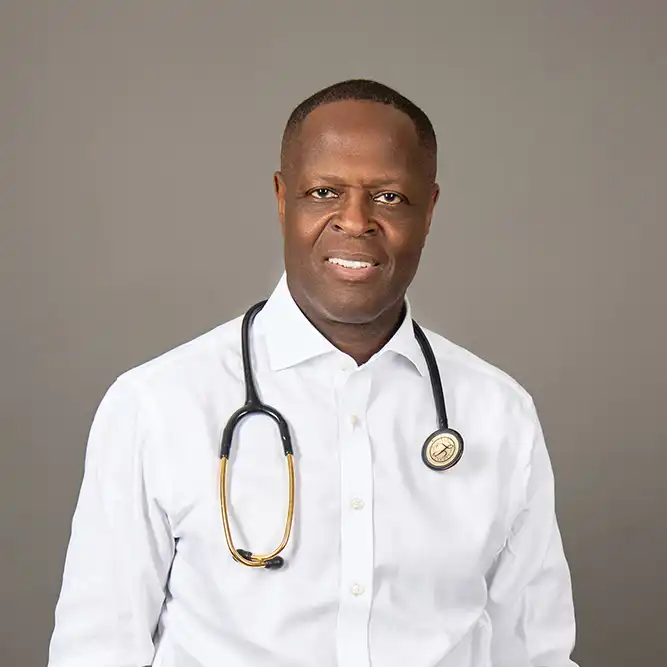
Dr Ralph Rogers, our founder, personally carries out every treatment at RRMG using image-guided technique. He holds a medical degree, a PhD in exercise physiology and an MSc in musculoskeletal ultrasound imaging, and he is a Fellow of the American College of Sports Medicine and of the Faculty of Sports and Exercise Medicine (UK and Ireland).
Dr Ralph Rogers has been involved in regenerative medicine for many years. He trained directly with Carlo Tremolada, the physician behind Lipogems, more than ten years ago, and has international involvement, teaching and publications in the field. He also has more than 25 years of experience in sports medicine, including work with the NBA and Chelsea Football Club.
PRP uses concentrated platelets from a blood sample. Stem cell therapy in orthopaedics usually uses cell-rich material taken from your own fat or bone marrow. Both are designed to support the body’s healing response, and the evidence for both is limited, so we explain which option, if either, suits your problem.
Nobody can give a reliable figure, because follow-up in the research is limited and results vary by person, condition and treatment. Changes, if they come, are usually gradual. We review your progress after treatment and agree a plan with you, and we do not quote a duration we cannot support.
Cover varies by insurer, policy and treatment, so please check with your provider before treatment. We work with a wide range of insurance providers, as well as self-funding patients, and our fees page lists self-pay starting prices. We talk through costs and cover with you at your consultation.
Any injection can be uncomfortable, and soreness or stiffness around the site for a few days is common. We use ultrasound guidance and explain what to expect before we start, and we advise on the pain relief that suits you afterwards.
Dr Rogers has had a rich and illustrious career so far, which is continuing to grow and develop. Everything Ralph has been involved in since qualifying has added value to his knowledge and experience, but there have been some impressive highlights to note:
2018 – Present Founder Medical Director: Rogers Regenerative Medical Group (RRMG)
2012 – 2024 Medical Advisor – National Basketball Association
2008 – 2018 Medical Director: The London Sports Injury Clinic London
2010-2011 First Team Doctor, Chelsea Football Club
2007- 2010 The Football Association (Team Physician for England under 19 and development squads)
2005-2006 Medical Advisor: Trinidad & Tobago World Cup Football Team
2002 – 2008 Club Doctor: Walsall Football Club, West Midlands England
1998 – 2009 Medical Director: Medical & Orthopaedic Sports Therapy,
2000 – 2005 Sports Physician: Warwickshire County Cricket Club, Birmingham