Reading Time: mins
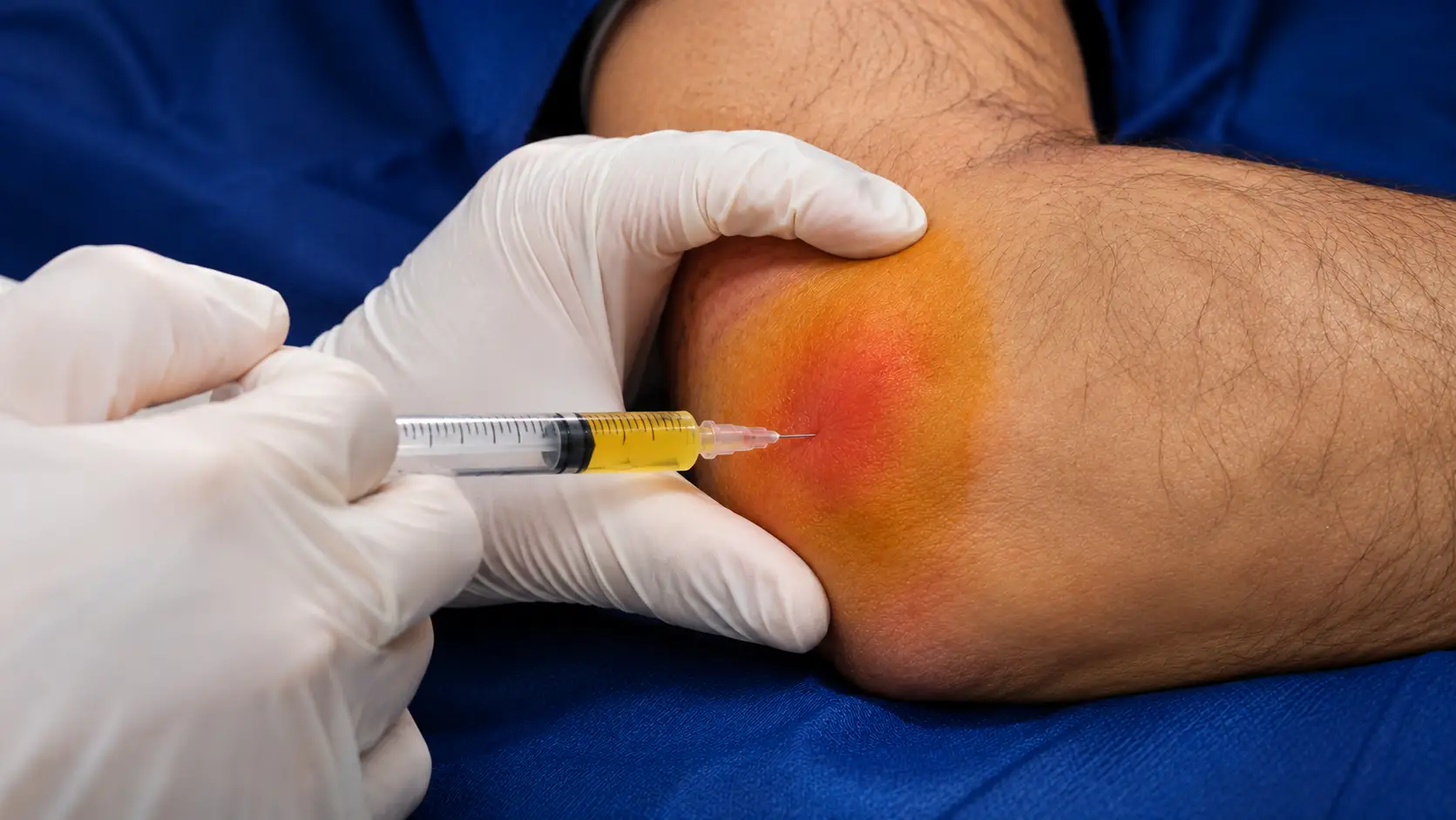
PRP injections for tennis elbow are an option some people discuss after rest, exercise and other care have not settled their pain. The research on them is mixed, and you should hear that before you decide anything. Large reviews have found little clear benefit compared with a placebo injection, so we see PRP as one possible part of a wider recovery plan and not a quick fix.
At RRMG, we assess and treat tendon injuries using image-guided techniques. This guide explains what tennis elbow is, how PRP works, what the evidence says, how it compares with other options and what recovery involves.
What is tennis elbow pain? It is pain on the outside of the elbow, where the tendons that help you lift your wrist and grip attach to the bone. It usually comes from repeated gripping, lifting or twisting that overloads those tendons. Doctors often call it lateral epicondylitis, and it is generally described as a tendinopathy, meaning a painful tendon that has lost some of its normal strength.
Tennis elbow causes are not limited to tennis. Typing and mouse work, using a screwdriver, sewing, playing an instrument and many manual jobs can all overload the same tendons. The NHS says it is more common between 35 and 54, and that anyone can get it. For many people it settles with rest over weeks, although it can sometimes last longer than a year. Our post on golfer’s elbow covers the same kind of problem on the inner side of the elbow.
The tennis elbow treatment symptoms that most often lead people to seek a specialist opinion are:
If pain has lasted for weeks and is not improving with rest, a specialist assessment can confirm the diagnosis. Other problems can cause similar elbow pain, so a clear diagnosis matters before any injection is considered.
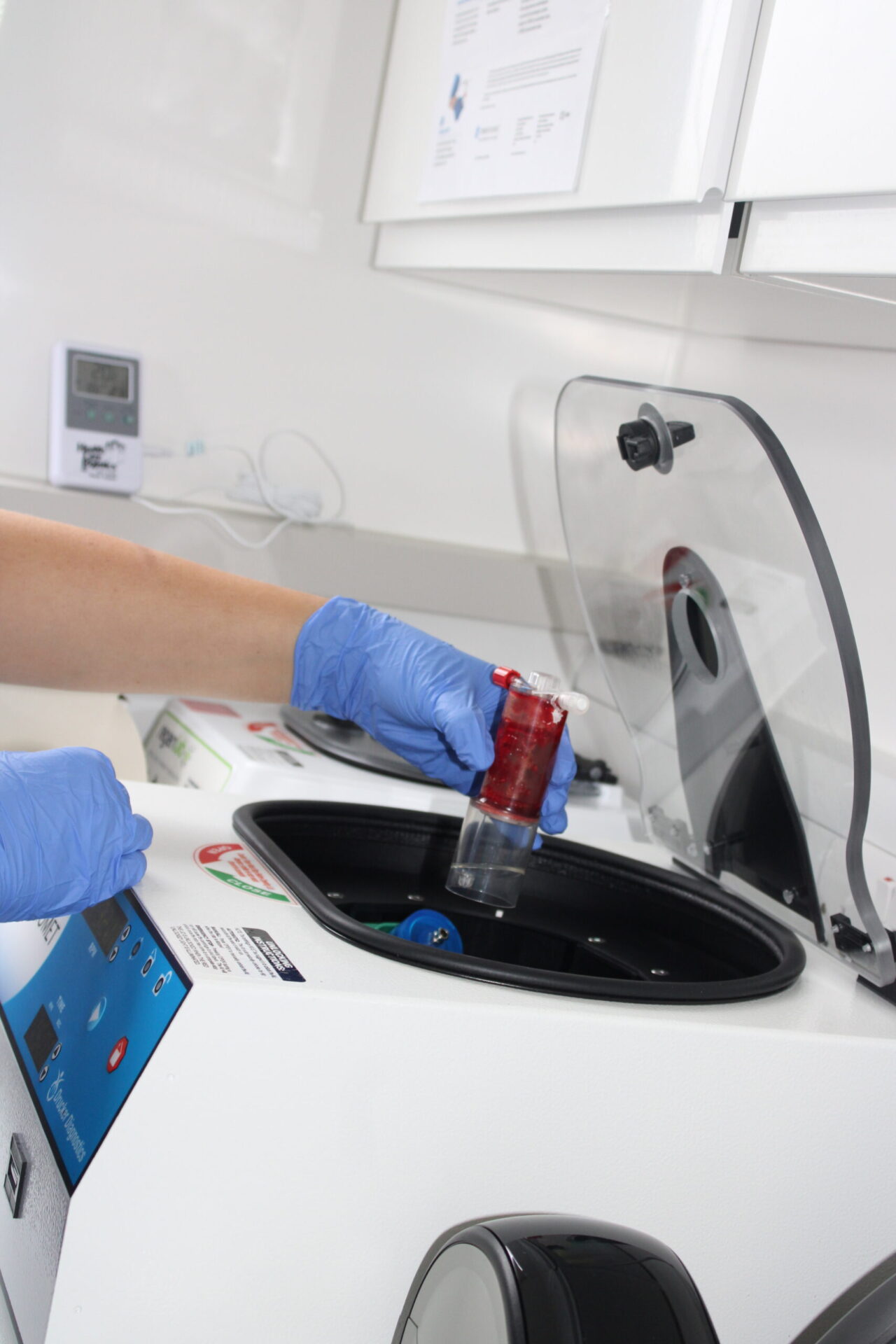
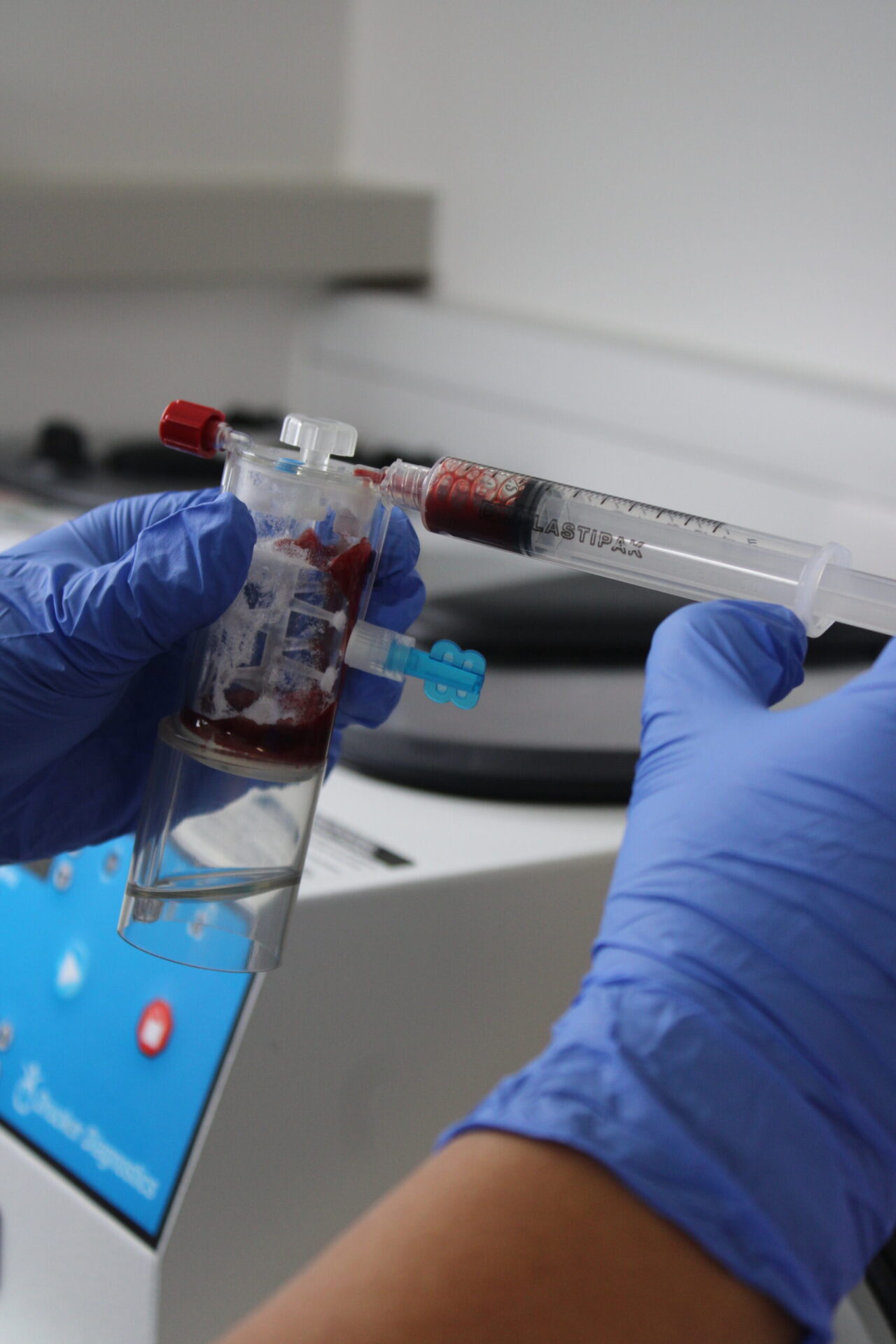
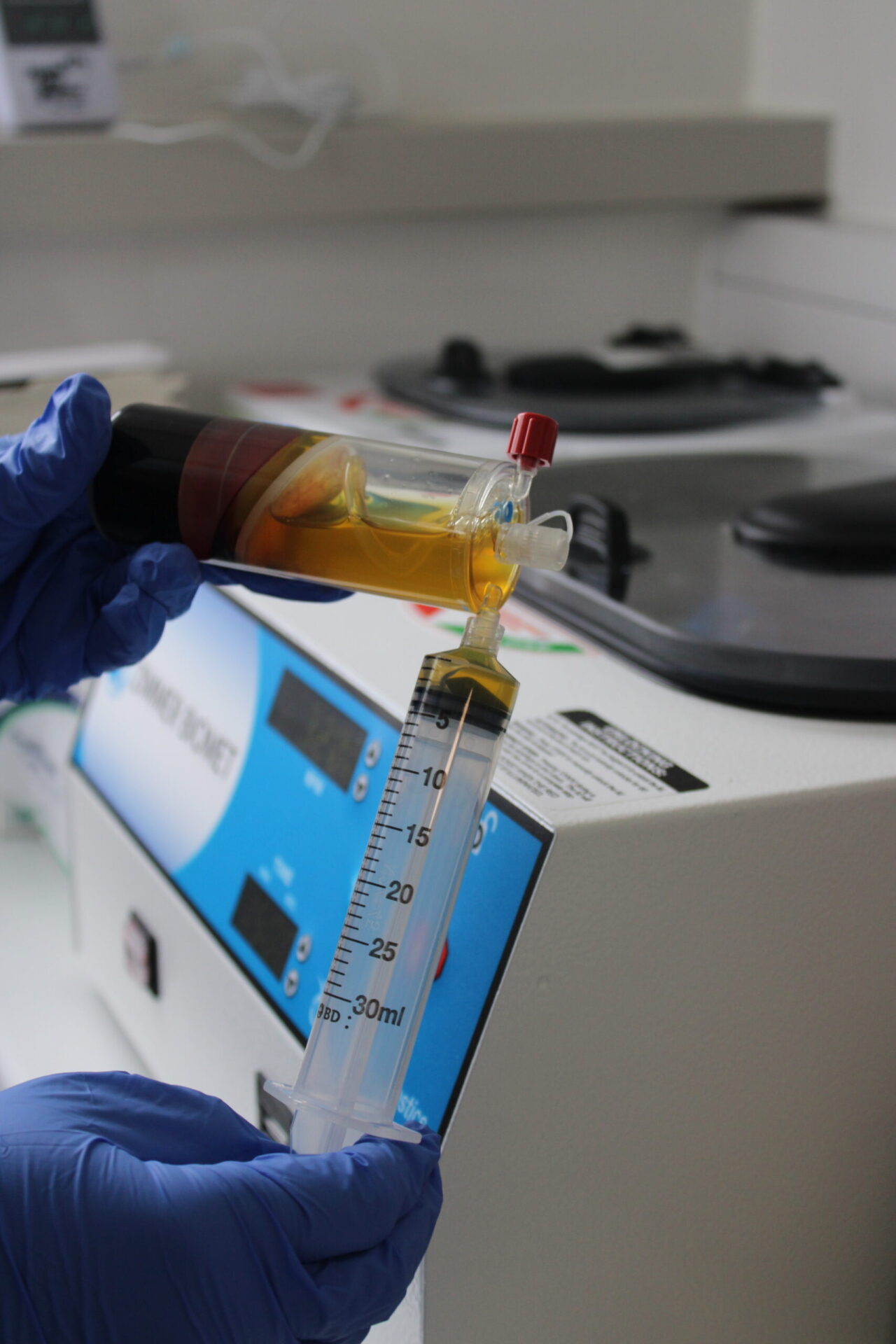
PRP tennis elbow treatment uses a concentrated sample of your own blood platelets, injected into the painful tendon area. Platelets carry growth factors, and the idea is that they may support the body’s natural healing response, although this has not been proven for tennis elbow. It is an outpatient procedure, and we use ultrasound guidance to place the injection.
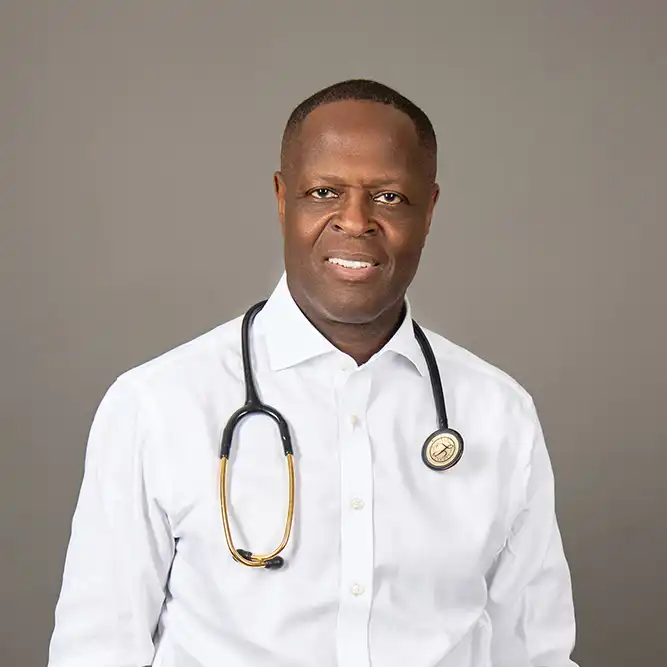
We perform every injection ourselves, drawing on founder Dr Ralph Rogers’s master’s-level training in musculoskeletal ultrasound. You can read more about our PRP service on its own page.
Platelet rich plasma tennis elbow treatment follows a short series of steps.
Most people report mild discomfort during the injection, and some soreness afterwards is common. NICE found no major safety concerns, and because the sample comes from your own blood, the risk of a reaction to the PRP itself is low. We explain the possible risks before you decide.
The research does not clearly support PRP injections for tennis elbow. A large Cochrane review found little or no clinically important benefit compared with a placebo injection, and NICE describes the efficacy evidence as inadequate. Side effects appear similar to placebo, but the benefit remains uncertain.
The Cochrane review, published in 2021, pooled 32 trials involving 2,337 people. At three months, pain and function scores in people given blood or PRP injections were not clinically important improvements over scores in people given a placebo injection, and the authors rated this evidence as moderate certainty. Side effects were reported by 19% of the blood or PRP group and 17% of the placebo group, so they appeared similar.
NICE’s guidance on autologous blood and PRP injections for tendon problems, which treats whole blood and PRP as equivalent, found no major safety concerns. It describes the efficacy evidence as inadequate. It advises that the procedure is used only with special arrangements for clinical governance, consent and audit or research, and that patients understand the uncertainty, along with the alternatives.
The picture is not entirely one-sided. Trials comparing PRP with steroid injections have sometimes favoured PRP over longer follow-up. One trial summarised in NICE’s evidence review found a 76% success rate at two years with PRP against 43% with a steroid injection. A comparison with steroid is not the same as a comparison with placebo, and trials differ in how PRP is prepared and injected, so we treat these results as a reason for an open conversation and not as proof.
That is why we explain the uncertainty to you before any injection, and why we only suggest PRP when it makes sense for your situation.
Chronic tennis elbow treatment usually starts with the basics. Most people improve with rest from aggravating activities, simple pain relief and, if needed, physiotherapy, and the NHS suggests physiotherapy when symptoms have not improved after about six weeks of self-care. A specialist assessment becomes useful when pain has lasted many months and is limiting your work, sport or sleep.
PRP sits within our wider range of non-surgical treatments. You might want to discuss it with us if:
An assessment always comes first, because we need to confirm the diagnosis and rule out other causes of elbow pain before suggesting an injection.
| Treatment | What it involves | What to know |
| PRP injection | Your own concentrated platelets injected into the tendon area under ultrasound guidance | Cochrane found little or no clinically important benefit over placebo, although one trial favoured it over steroid |
| Steroid injection | Anti-inflammatory medicine injected around the painful area | Trials summarised by NICE report good early results, with a lower success rate at two years in one PRP comparison |
| Tenex | Ultrasound-guided procedure using a fine ultrasonic needle to remove scarred, degenerated tendon tissue | Relief typically builds over 4 to 8 weeks, according to our Tenex page |
| Shockwave | A non-invasive device passes shockwaves through the skin to the painful tendon | NICE’s evidence summary describes mixed trial results |
PRP uses your own platelets, injected under ultrasound guidance, with the aim of supporting the tendon’s natural healing response. The research is mixed, as covered above, so we treat it as one option among several and never as a sure fix.
Steroid injections place anti-inflammatory medicine around the painful area. They can settle pain in the short term, and the PRP comparison summarised by NICE found a lower success rate at two years, so we discuss repeat injections carefully. Our page on ultrasound-guided steroid injections explains how we use them.
Tenex treatment is a minimally invasive procedure that removes scarred and degenerated tendon tissue using a fine ultrasonic needle under ultrasound guidance. It is done under local anaesthetic through a very small incision and takes around 20 to 30 minutes. Our return-to-sport timeline explains what follows.
Shockwave therapy uses a non-invasive device to pass shockwaves through the skin to the painful tendon, in one or several sessions. NICE’s evidence summary describes mixed trial results, including one large trial where shockwave and a sham treatment gave similar outcomes at three months, so we explain this plainly when we discuss it with you.
Recovery after PRP is usually short, but getting the tendon working well again takes patience.
How many PRP injections for tennis elbow you need depends on the condition and how the tendon responds, and many people are planned for between one and three. We agree a plan with you at your consultation. NICE notes that the procedure can be repeated. Because the evidence is uncertain, we review your progress before suggesting another injection.
PRP injection for tennis elbow recovery time starts short. Most people return to normal daily activities within 24 to 48 hours, and we advise limiting strenuous activity for a few days. Improvement is gradual, often beginning within a few weeks, with fuller results over four to six weeks, and some people keep improving for up to three months.
NICE describes patients avoiding strenuous use of the arm for a few weeks before starting physiotherapy, so we match your return to gripping, lifting and sport to how the tendon feels. We use the same staged thinking after other tendon procedures, as our post on returning to sport after Tenex shows.

We are a private regenerative orthopaedics and sports medicine clinic on Blythe Road, London, and we run every case personally, drawing on founder Dr Ralph Rogers’s years of image-guided musculoskeletal work. We work with a wide range of insurance providers, as well as self-funding patients, although cover varies by policy and treatment.
If your elbow pain has dragged on, you do not have to keep guessing. We offer quick access to a specialist assessment without a long waiting list. You get a clear diagnosis of where the pain is coming from, and an honest conversation about whether PRP, another injection or a different approach suits you. If we do suggest PRP, we explain the evidence, the steps and what recovery looks like before you decide.
| Service | Indicative price |
| Initial consultation | From £300 |
| Follow-up consultation | From £215 |
| Image-guided injection (one side) | From £600 |
| PRP, per injection | From £1,020 |
| PRP, package of three | From £2,500 |
These are starting figures only. Please see our current fees page for exact pricing. You can also learn more about RRMG and the full range of conditions we treat on our site.
To book, request an appointment online or contact us directly.
The evidence is uncertain. A 2021 Cochrane review found little or no clinically important benefit over a placebo injection at three months, while one trial comparing PRP with steroid injections favoured PRP. We explain this openly, and we only suggest PRP when it makes sense after a full assessment of your elbow.
It depends on what you need. Steroid injections can give good short-term relief, while one trial summarised by NICE found PRP had a higher success rate at two years. Trials differ, so neither is clearly better for everyone, and we recommend based on your history, your goals and how long you have had symptoms.
Most people report mild discomfort during the injection, and local anaesthetic may be used to reduce it. Some soreness afterwards is common, and we advise limiting strenuous activity for a few days. We explain what to expect before the injection, so you can decide with the full picture.
Rehabilitation is usually part of recovery, because the tendon needs gradual loading to regain strength. NICE describes starting physiotherapy after a few weeks of avoiding strenuous use. We advise on a staged return to gripping, lifting and sport, and we adjust the pace to how your elbow responds over the following weeks.
No. Tennis elbow affects the outer side of the elbow, while golfer’s elbow affects the inner side. Both involve overloaded forearm tendons and can be assessed and treated in similar ways. We examine the elbow carefully to confirm which tendons are involved before recommending any treatment plan.
Cover depends on your insurer and your policy, and PRP is covered for some injuries but not others. We work with a wide range of insurance providers, as well as self-funding patients, and we can explain your options at your appointment. Please check your cover with your provider before treatment.
A specialist assessment is sensible when elbow pain has lasted several weeks, keeps returning or limits your work, sport or sleep. The NHS suggests seeing a doctor if pain persists after resting the arm for about two weeks. We can confirm the diagnosis and talk through your options without a long wait.
Dr Rogers has had a rich and illustrious career so far, which is continuing to grow and develop. Everything Ralph has been involved in since qualifying has added value to his knowledge and experience, but there have been some impressive highlights to note:
2018 – Present Founder Medical Director: Rogers Regenerative Medical Group (RRMG)
2012 – 2024 Medical Advisor – National Basketball Association
2008 – 2018 Medical Director: The London Sports Injury Clinic London
2010-2011 First Team Doctor, Chelsea Football Club
2007- 2010 The Football Association (Team Physician for England under 19 and development squads)
2005-2006 Medical Advisor: Trinidad & Tobago World Cup Football Team
2002 – 2008 Club Doctor: Walsall Football Club, West Midlands England
1998 – 2009 Medical Director: Medical & Orthopaedic Sports Therapy,
2000 – 2005 Sports Physician: Warwickshire County Cricket Club, Birmingham