
Reading Time: mins
Frozen shoulder pain and stiffness can make even small movements difficult, and once you’ve decided to try an injection, the next question is usually how soon it will actually help. Steroid injections for frozen shoulder are one of the most commonly used treatments for the painful early stage of the condition, and most people want a straight answer about timing rather than a vague “it varies.” A frozen shoulder treatment steroid injection does not work instantly, but it also isn’t something you need to wait months to feel. In this guide we explain what the injection does, how fast steroid injections for frozen shoulder work in practice, how long the relief tends to last, and when this treatment isn’t the right next step. This is general information, not a diagnosis, and your own timeline may differ from the averages below.
A steroid injection for frozen shoulder places a small amount of corticosteroid, usually combined with local anaesthetic, into or around the shoulder joint to calm the inflammation that builds up inside the joint capsule. Frozen shoulder, also called adhesive capsulitis, happens when this capsule thickens and tightens, which is what causes both the pain and the loss of movement. The steroid doesn’t loosen the tight tissue directly. Instead, it reduces the inflammation driving the pain, which is often what’s limiting how much you can move and stretch the shoulder day to day. This distinction matters for timing too: pain tends to ease once inflammation settles, but the physical tightness in the capsule takes longer to resolve, which is why movement and pain don’t improve on the same schedule.
We aim the injection at the point in the condition where it tends to help most, the early, pain-predominant phase, before stiffness has become the main problem. Getting the timing and the target right matters as much as the injection itself, which is why we examine the shoulder and confirm the stage of the condition before suggesting one.
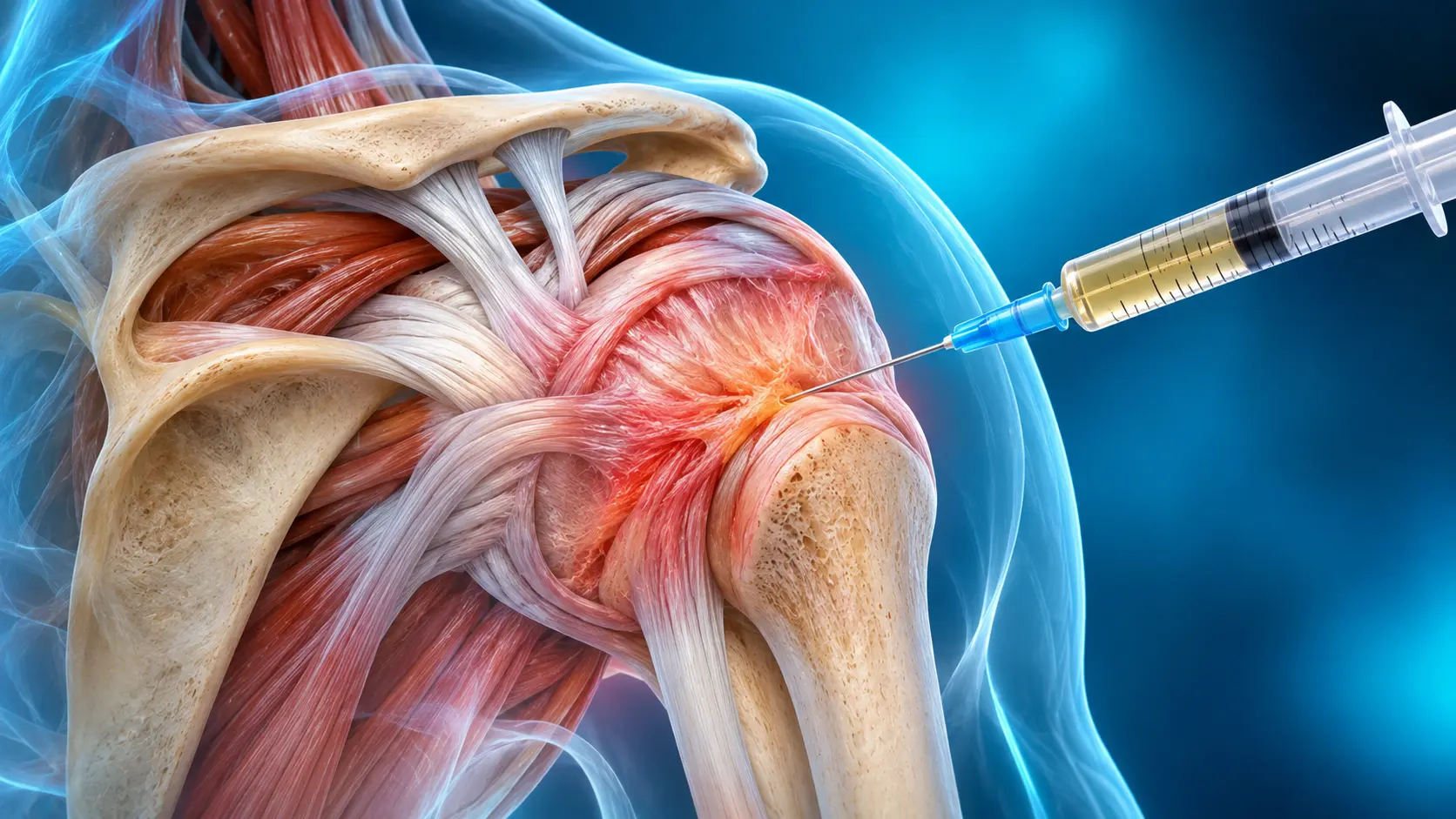
An intra-articular steroid injection for frozen shoulder means the medicine is placed directly inside the main shoulder joint, the glenohumeral joint, rather than into a surrounding structure such as a bursa or tendon sheath. This matters because frozen shoulder is a problem of the joint capsule itself, so the medicine needs to reach that specific space to have its full effect.
We give this injection under ultrasound guidance, watching the needle in real time to confirm it has actually reached the joint before any medicine is given. A typical mix includes a corticosteroid such as triamcinolone alongside a local anaesthetic, and the injection itself usually takes only a few minutes. You may notice some temporary numbness from the anaesthetic within the first hour, which is separate from the steroid’s own effect and wears off well before the steroid starts working.
Most people begin to notice less pain within the first three to five days after a steroid injection for frozen shoulder, with the fuller effect usually building over one to two weeks rather than appearing all at once. Shoulder movement typically takes longer to improve than pain does.
The early hours after the injection can be misleading. Any relief you feel in the first few hours usually comes from the local anaesthetic, which wears off within a day, and a short-lived flare of extra soreness in the next day or two is common before the steroid’s anti-inflammatory effect takes over. This doesn’t mean the injection has failed. It typically means the steroid hasn’t fully taken effect yet.
By around the two-week mark, most people have a reasonable sense of whether the injection has helped. If pain is still severe with no improvement at all by then, it’s worth telling us rather than waiting it out, since the plan may need reviewing. Movement tends to improve more gradually than pain does, often over several weeks, because stiffness from a tightened capsule takes longer to ease than inflammation does.
Injections for frozen shoulder treatment are rarely used alone. Frozen shoulder typically moves through three recognised phases: a painful freezing phase, a stiffer frozen phase where pain often eases but movement stays limited, and a slowly improving thawing phase as the capsule loosens again. Each phase can last months rather than weeks, and the condition as a whole commonly takes one to three years to fully resolve, which is consistent with what the evidence on its natural course shows. A steroid injection doesn’t shortcut that overall timeline.
What it can do is reduce pain enough, during the worst of the freezing phase, for you to move the shoulder and take part in physiotherapy more comfortably. We build a loading and movement plan around the injection rather than treating it as a stand-alone fix, usually working alongside your physiotherapist so everyone follows the same programme. A structured exercise course often runs for several weeks before being reviewed. Expecting one injection to resolve the condition on its own tends to lead to disappointment, which is why we’re upfront about what a single injection can and can’t do before you have one.
A steroid shot for frozen shoulder is not a one-off cure, and the relief it provides varies from person to person. A systematic review and meta-analysis of randomised trials found that, compared with no injection, steroid injections reduce pain and improve mobility for up to 6 months, with the clearest pain improvement in the first four to six weeks. That benefit tends to fade gradually rather than stopping abruptly, and for some people a second injection later in the course of treatment is reasonable to discuss.
How long relief lasts depends on several things:
We’re open that a steroid injection is a tool for managing a flare, not a guaranteed fix for the whole condition, so we talk through what else may help alongside it rather than presenting the injection as the end of the conversation.
Placing the needle accurately matters more in frozen shoulder than people often expect, because the glenohumeral joint space narrows as the capsule tightens, which can make a landmark-guided injection harder to land precisely. Ultrasound lets us watch the needle reach the joint in real time rather than relying on feel alone, so we can confirm placement before any medicine is given rather than after.
This approach reflects founder Dr Ralph Rogers’s training in musculoskeletal ultrasound, which shapes how every injection at RRMG is delivered, not only this one. We scan the shoulder as part of the same appointment, which also lets us check for other possible contributors to your pain, such as the rotator cuff, before deciding an injection is the right next step.
Accuracy affects more than comfort. In a narrowed, tightened capsule specifically, a needle placed by feel alone can miss the true joint space and end up in the surrounding soft tissue instead. When that happens, the medicine never reaches the tissue it was meant to treat, so the visit ends with the discomfort of an injection but little of its intended benefit, and it can look like the treatment “didn’t work” when the real issue was placement.
Steroid injections for frozen shoulder aren’t automatically the right choice for everyone, and we’d rather tell you that plainly than offer an injection by default. A few situations call for caution or a different plan first:
If several of these apply to you, or your diagnosis isn’t yet confirmed, the right next step is usually a proper assessment rather than booking an injection on the strength of your symptoms alone.
The injection most often used for frozen shoulder is a corticosteroid, commonly triamcinolone, combined with a local anaesthetic and placed directly into the shoulder joint. We give this under ultrasound guidance to confirm accurate placement. Other approaches such as hydrodilatation exist and are used in some settings, though a corticosteroid injection remains the more established first option.
An injection can be helpful during the early, painful stage of frozen shoulder, where evidence shows it reduces pain and improves movement for several months compared with no treatment. It works best alongside physiotherapy rather than as a stand-alone fix, and it suits some people and stages of the condition more than others.
There’s no single injection that’s best for everyone, since this depends on which stage of frozen shoulder you’re in and what else has already been tried. A corticosteroid injection is the most established option for the early painful stage specifically. We assess your shoulder before recommending any particular approach rather than defaulting to one option for every patient.
Most people feel noticeably less pain within three to five days of a steroid shot for frozen shoulder, with fuller relief building over the following one to two weeks. A brief increase in soreness during the first day or two is common and isn’t a sign the injection hasn’t worked. Shoulder movement typically takes longer to recover than pain does, often improving gradually over several weeks.

At RRMG, we’re a private regenerative orthopaedics and sports medicine clinic at 1 Blythe Road, London, and we personally run every case, drawing on founder Dr Ralph Rogers’s years of image-guided musculoskeletal work. We work with a wide range of insurance providers, as well as self-funding patients.
If your shoulder pain has lasted more than a few weeks, is disturbing your sleep, or hasn’t responded to rest and simple measures, booking an assessment makes sense rather than waiting it out. We examine your shoulder, confirm which stage of frozen shoulder you’re in, and talk through whether a steroid injection fits your situation, as one option among the wider range of conditions we treat and non-surgical treatments we offer. You can read more About RRMG and our approach.
| Service | Indicative Price |
|---|---|
| Initial consultation | From £300 |
| Image-guided injection (unilateral) | From £600 |
Please visit our fees page for current, exact pricing, as figures can change. To book, request an appointment or contact us directly:
Dr Rogers has had a rich and illustrious career so far, which is continuing to grow and develop. Everything Ralph has been involved in since qualifying has added value to his knowledge and experience, but there have been some impressive highlights to note:
2018 – Present Founder Medical Director: Rogers Regenerative Medical Group (RRMG)
2012 – 2024 Medical Advisor – National Basketball Association
2008 – 2018 Medical Director: The London Sports Injury Clinic London
2010-2011 First Team Doctor, Chelsea Football Club
2007- 2010 The Football Association (Team Physician for England under 19 and development squads)
2005-2006 Medical Advisor: Trinidad & Tobago World Cup Football Team
2002 – 2008 Club Doctor: Walsall Football Club, West Midlands England
1998 – 2009 Medical Director: Medical & Orthopaedic Sports Therapy,
2000 – 2005 Sports Physician: Warwickshire County Cricket Club, Birmingham