Reading Time: mins
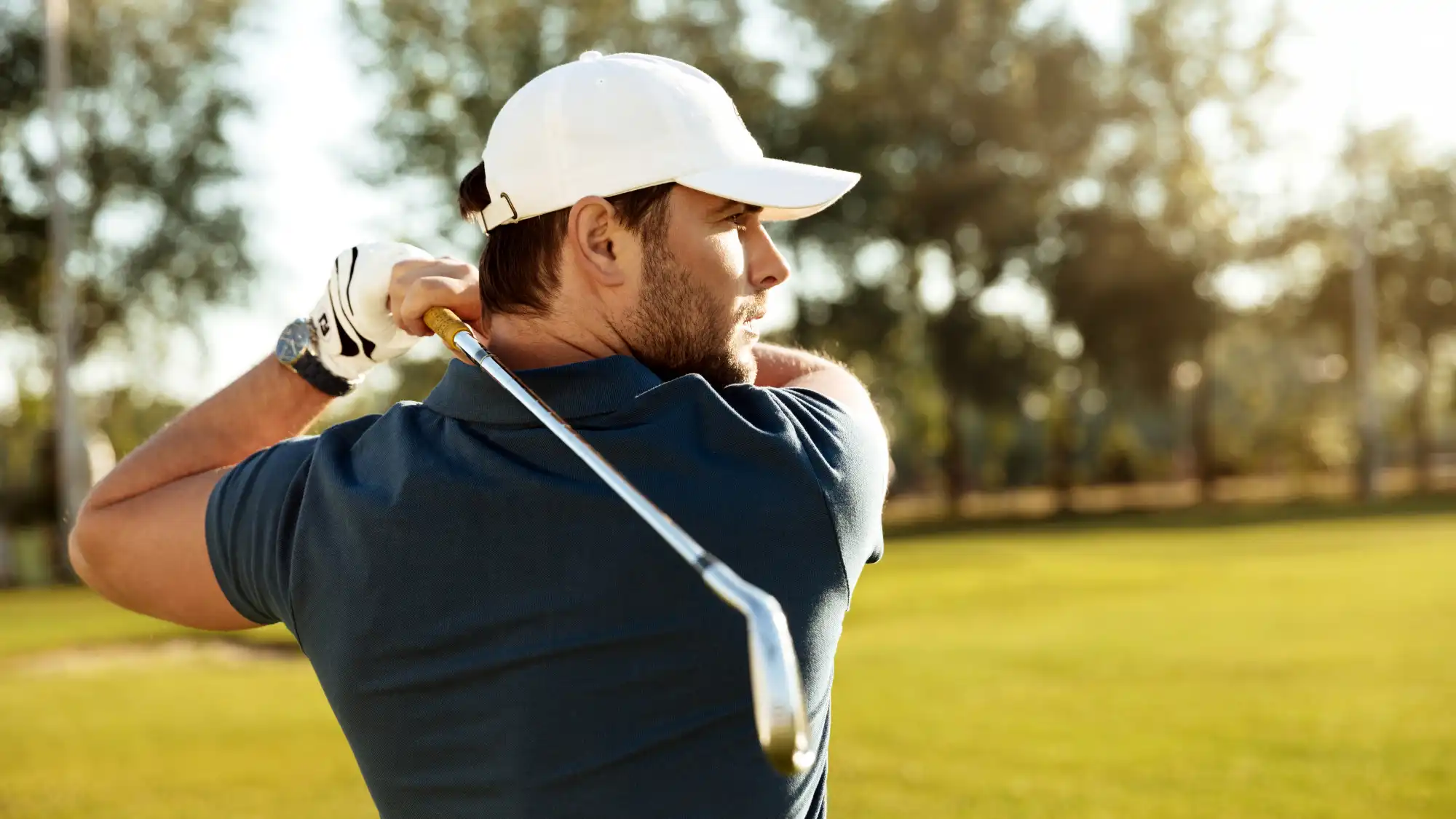
A nagging ache on the inside of your elbow can make even simple things, like shaking hands or lifting a coffee cup, uncomfortable. If you play golf, tennis, or spend time in the gym pulling weight, a golfer’s elbow injury can feel like it is standing between you and the activities you enjoy most. It can creep up slowly over weeks of training, or seem to appear overnight after one heavy session, and either way it tends to get worse before it gets better if it is left alone.
The good news is that golfers elbow is one of the more treatable tendon conditions we see at Rogers Regenerative Medical Group, and most people do not need to give up their season to deal with it. In this guide, we will walk through what golfers elbow actually is, what causes it, how to spot the symptoms early, how it is diagnosed, and the treatment options that can get you back to full strength without surgery.
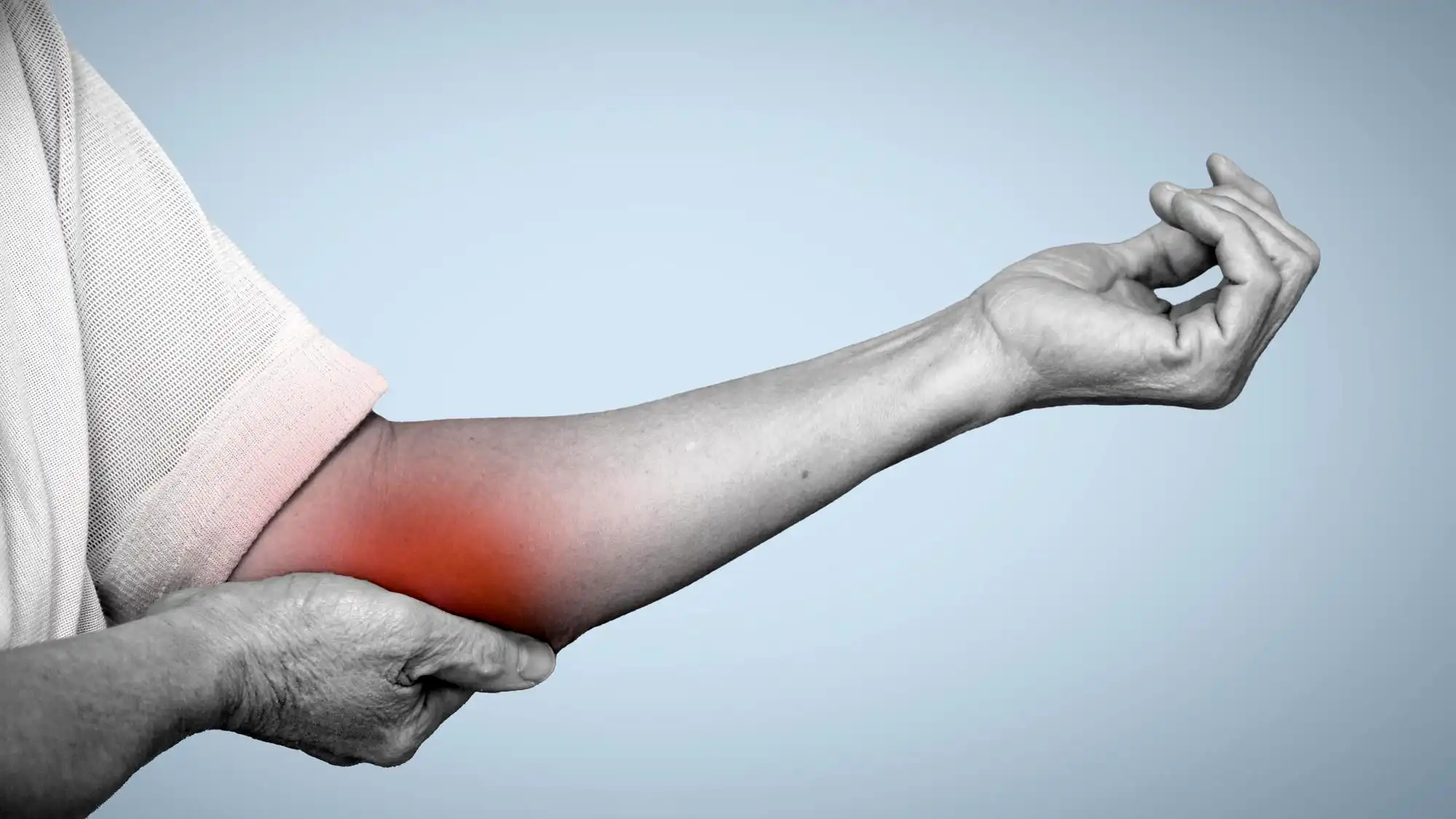
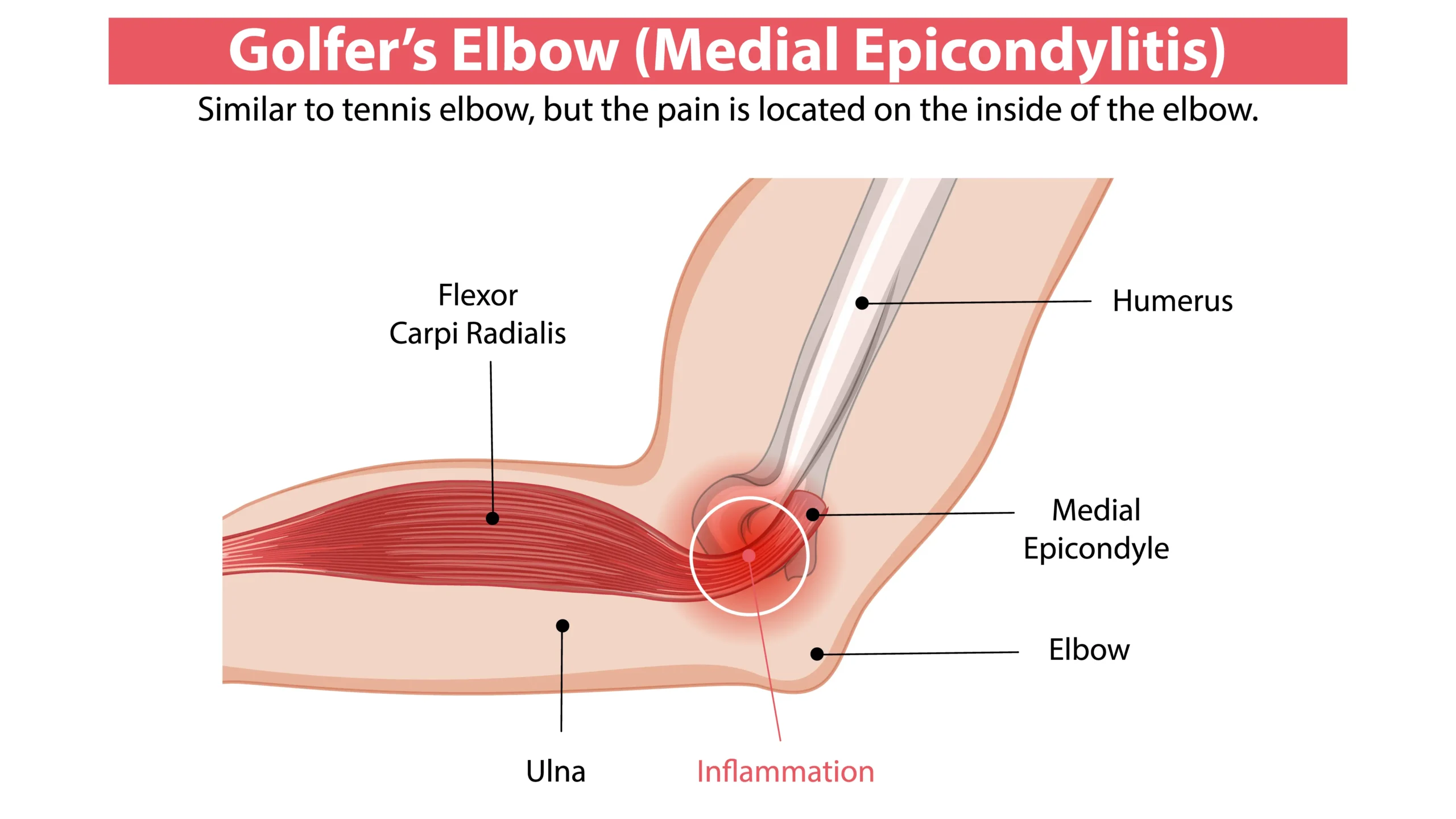
Golfers elbow, known medically as medial epicondylitis, is an injury to the tendons that connect your forearm muscles to the bony bump on the inside of your elbow. Despite the name, you do not need to play golf to get it. The condition develops from repeated strain on the wrist flexor tendons, the ones you use every time you bend your wrist or grip something firmly.
The inside of the elbow is where these tendons attach to a small bony landmark called the medial epicondyle. When that area becomes irritated and inflamed from overuse, the result is the pain, stiffness, and weakness that people describe as golfers elbow.
In practice, we see this condition just as often in weightlifters, tradespeople, parents who spend all day lifting young children, and office workers who type for hours, as we do in golfers. Anyone whose daily routine repeatedly loads the wrist flexor tendons is a candidate, which is part of why golfers elbow is far more common than the name suggests.
Understanding exactly where the strain is coming from matters beyond curiosity. Two people can share the same diagnosis for very different reasons, one from years of golf swings and another from months of heavy gym pulling work, and the activity behind the injury often shapes which changes and treatments make the biggest difference during recovery.
Most cases of golfers elbow come down to repetitive strain rather than a single injury. Common causes include:
Any activity that puts the wrist flexor tendons through the same motion again and again can gradually wear down the tissue. Small strains build up over weeks or months until the tendon can no longer keep up with the demand being placed on it.
Certain factors make this build-up more likely. Age plays a role, since tendons naturally lose some of their elasticity from the late thirties onward, which is why golfers elbow is most common in people in their forties, fifties, and sixties. A sudden jump in training volume, poor grip or lifting technique, and skipping warm-ups before heavy pulling or gripping work all add extra strain on tendons that are already working close to their limit. None of these factors guarantee you will develop golfers elbow, but they do raise the odds.
A few simple habits lower the risk without requiring you to give anything up. Building up training load gradually rather than jumping straight into heavier weights or a longer round of golf gives tendons time to adapt. Warming up the forearm and wrist properly before gripping-heavy activity, and paying attention to grip size and technique on a golf club or barbell, both reduce unnecessary strain. None of this guarantees you will never develop golfers elbow, since some cases happen regardless of how careful you are, but it does noticeably lower how often we see it in people who make these changes.
The main sign of golfers elbow is pain and tenderness on the inner side of the elbow, often spreading down into the forearm. Grip strength tends to suffer too, so tasks like opening a jar or shaking hands can feel noticeably weaker than usual.
Other symptoms of golfers elbow include:
Symptoms usually build gradually rather than appearing all at once. Many people notice a mild ache after activity to begin with, which fades with rest, before it starts lingering longer and eventually becomes noticeable during everyday tasks. Grip strength is one of the simplest clues clinicians use during an examination, since a weaker grip on the affected side compared with the other arm is a strong indicator that the wrist flexor tendons are under strain.
If these symptoms sound familiar, it is worth getting the elbow properly assessed rather than guessing. Golfers elbow shares some features with other elbow conditions, so an accurate diagnosis makes a real difference to how quickly you recover.
The right golfer’s elbow treatment depends on how long you have had symptoms, how severe they are, and what you need your arm to do day to day. At Rogers Regenerative Medical Group, Dr Ralph Rogers begins every case with a physical examination and diagnostic ultrasound imaging, so treatment is based on what is actually happening inside the tendon rather than guesswork. Patients travel to our Blythe Road clinic from across London, including Kensington, Chelsea, and Notting Hill, for this same image-guided approach. Ultrasound imaging can show exactly where the tendon fibres are damaged and how severe the strain is, which helps decide whether conservative care is enough or whether a more targeted procedure is likely to work faster.
For many people, treatment starts conservatively, with activity changes, targeted stretching and strengthening exercises, and short-term use of a brace or splint to rest the tendon. When symptoms persist beyond this stage, RRMG offers a range of non-surgical options built around regenerative and image-guided technique, usually alongside a rehabilitation programme rather than instead of one, since strengthening the tendon properly is part of what keeps golfers elbow from coming straight back.
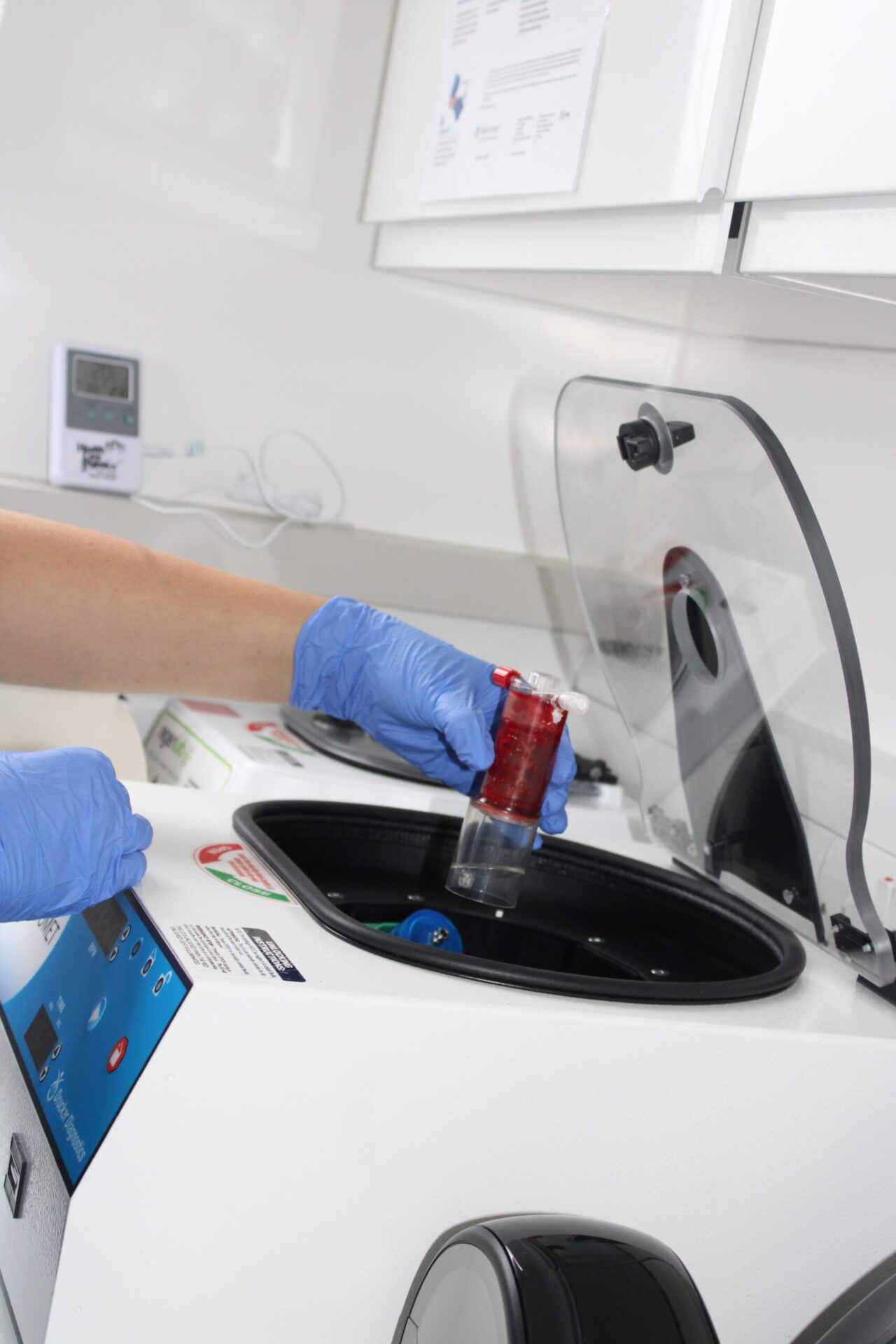
This combined approach, treating the tendon directly while also building it back up through exercise, is the main reason most patients do not end up needing surgery. Procedures like PRP and Tenex give the tendon a better environment to heal in, but the strengthening work afterwards is what teaches it to cope with the same loads that caused the problem in the first place.
If you are searching for how to fix golfer’s elbow or how to get rid of golfer’s elbow after home treatment has not worked, the next step is usually a more targeted, image-guided procedure. These are delivered under ultrasound guidance so treatment reaches exactly the right spot in the tendon.
| Treatment | How It Works | What to Expect |
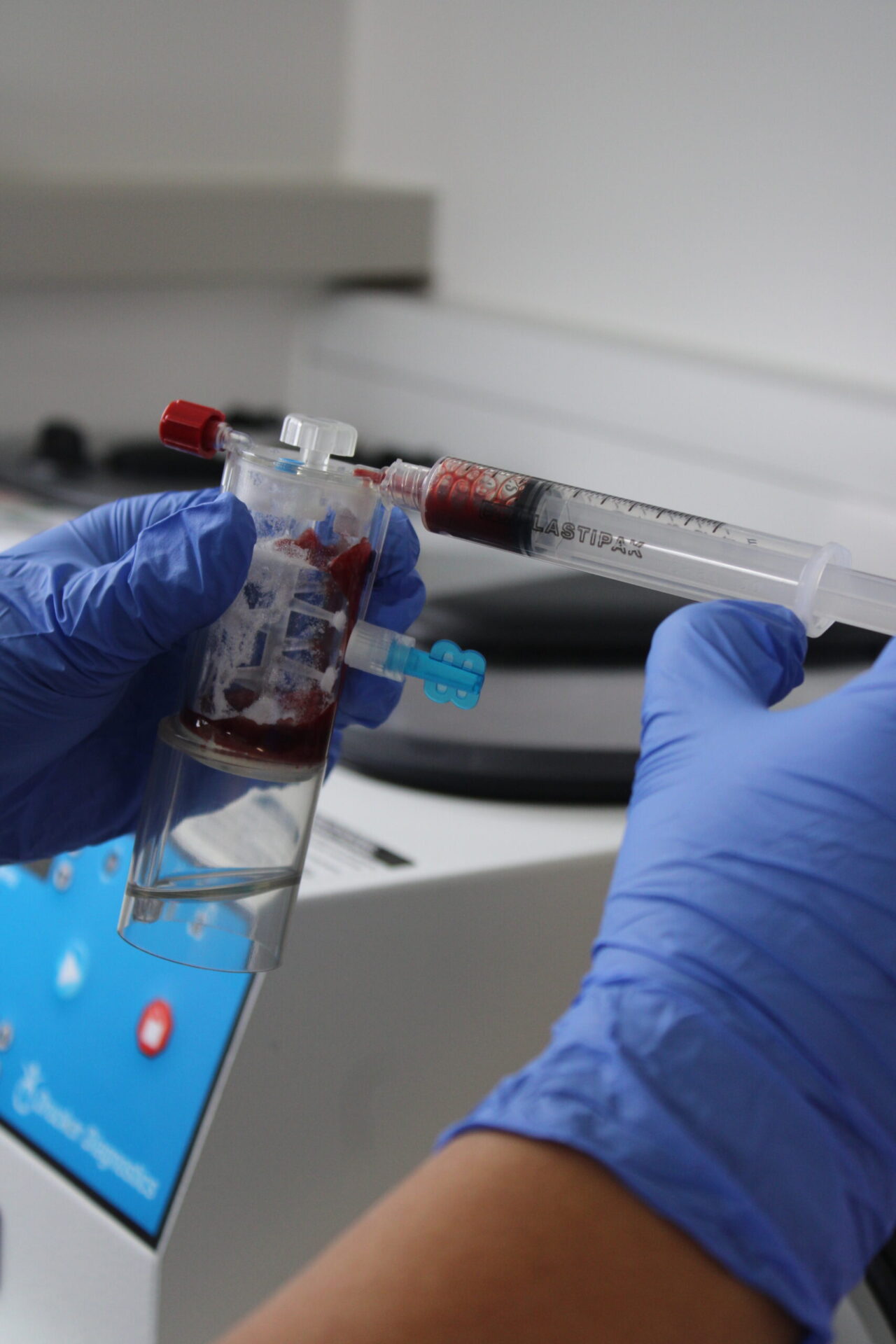
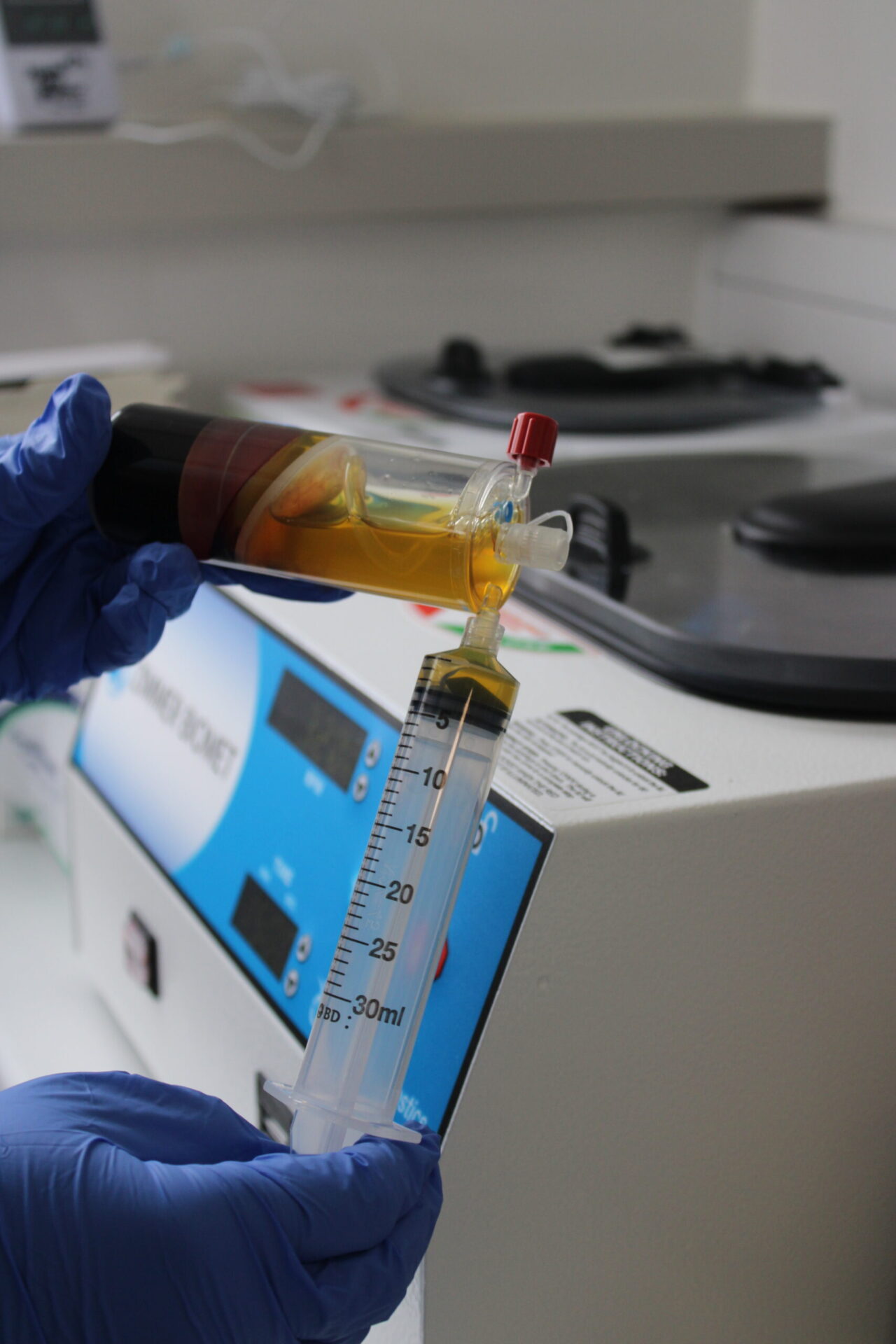
| PRP injections | Platelets are concentrated from a small sample of your own blood and injected into the damaged tendon to encourage natural healing | A short outpatient procedure, with many people easing back into activity over several weeks |
| Tenex | Ultrasonic energy breaks down and removes damaged tendon tissue while leaving healthy tissue in place | A quick procedure, done in around 20 minutes without stitches |
| Shockwave therapy | Pulses of sound wave energy are directed at the affected tendon to stimulate the body’s repair process | Usually delivered across a short course of sessions rather than a single visit |
| Ultrasound-guided steroid injection | An anti-inflammatory medication is guided precisely into the affected area under live ultrasound | Can ease pain within days, with relief typically lasting weeks to months |
Tenex in particular has a strong track record for chronic tendon pain like golfers elbow, with a success rate above 85 percent reported by RRMG. None of these treatments can promise the same result for every patient, since tendon damage varies from person to person, but they give most people a workable non-surgical path forward.
Which option Dr Rogers recommends usually comes down to what the ultrasound scan shows, how long symptoms have been present, and what the patient actually needs from treatment. A professional athlete a few weeks from a competition may prioritise fast pain control, while a recreational golfer with a longer-standing problem might prefer a treatment like Tenex or PRP that addresses the underlying tendon damage rather than just calming the symptoms.
When pain relief is the main goal rather than long-term tendon repair, golfer’s elbow pain treatment can be adjusted accordingly. A single ultrasound-guided steroid injection is often used to calm inflammation and reduce pain quickly, buying time for rehabilitation exercises to strengthen the tendon underneath. This is usually paired with a structured stretching and strengthening programme, since pain relief on its own rarely fixes the underlying strain on the tendon.
This distinction matters when you are weighing up your options. Steroid injections are well suited to short-term flare-ups or a specific event you need to get through, while treatments like PRP and Tenex are aimed more at resolving the tendon problem itself over the following weeks. Dr Rogers will usually talk through both goals with you before recommending a plan, rather than assuming pain relief and tendon repair are always the same priority.
Costs vary depending on which treatment suits you best. Image-guided injections at RRMG start from £600, and Dr Rogers will confirm your recommended plan and its price at consultation. Full details are on our treatment fees page.
Most mild cases of golfers elbow begin easing within four to six weeks of rest and activity changes, though full recovery from a more established case can take several months. Some cases settle on their own, but according to the NHS, without proper management this can take months or even years, which is exactly why getting an early, accurate diagnosis matters.
Recovery tends to happen in stages rather than all at once. Pain and inflammation usually settle first, often within days to a couple of weeks after a targeted treatment, followed by a longer period where the tendon itself rebuilds strength and tolerance to load. Return to full activity, whether that is golf, gym work, or manual labour, is usually introduced gradually during this second stage, since going back too hard too soon is one of the more common reasons golfers elbow flares up again.
Recovery speed also depends on how long the tendon had been irritated before treatment started and how strictly activity is changed during healing. People who catch golfers elbow early and follow a structured rehabilitation plan generally see faster, fuller recovery than those who try to push through the pain and hope it settles on its own.
Age and general tendon health play a smaller but real part too. A tendon that has been under repeated strain for years, alongside general wear from age, will usually take longer to settle than one that has been irritated for a few weeks. None of this means older patients or long-standing cases cannot recover well, only that the expected timeline should be set honestly from the start rather than promised as identical for everyone.
That is really the idea behind the title of this piece. Golfers elbow does not have to end your season, but it does need to be taken seriously and treated properly rather than ignored, according to the NHS.
Rogers Regenerative Medical Group is a private regenerative orthopaedics and sports medicine clinic on Blythe Road in London, founded and personally run by Dr Ralph Rogers. Every patient is seen and treated directly by Dr Rogers, using the same image-guided technique he has used with elite athletes for over 25 years. We work with a wide range of insurance partners as well as self-funding patients, so cost should not stand in the way of finding out what is really going on with your elbow.
If golfers elbow, or any tendon injury, is holding you back, we are here to help. A typical first appointment includes a detailed conversation about your symptoms and goals, a physical examination, and diagnostic ultrasound imaging, so you leave with a clear picture of what is happening and a treatment plan built around it.
You can request an appointment directly, or read more about how we approach non-surgical tendon repair more broadly.
The lump most people feel on the inner elbow with golfers elbow is usually the medial epicondyle itself, the bony landmark where the wrist flexor tendons attach, becoming more noticeable as the surrounding tissue swells and tightens. It is not usually a new growth, though a golfers elbow lump that feels soft, unusually large, or that appears suddenly is worth having checked with imaging, since a handful of other conditions can also cause swelling in this area, and RRMG’s ultrasound scanning can tell the difference quickly rather than leaving you to guess.
Yes, for the vast majority of people golfers elbow does improve, though how quickly depends on how it is managed. Mild cases can start settling within a matter of weeks once the aggravating activity is reduced, while more established cases can take several months of structured treatment. Left untreated, some cases can drag on for a year or more, so early, targeted treatment tends to shorten the timeline considerably rather than leaving it to chance. The single biggest factor we see influencing how long recovery takes is how early someone seeks treatment after symptoms start.
No, they are related but different conditions. Golfers elbow affects the tendons on the inner side of the elbow, while tennis elbow affects the tendons on the outer side, and the two involve different muscle groups even though both come from similar repetitive strain patterns. They are treated with many of the same non-surgical options, including PRP and Tenex, but an accurate diagnosis matters because the exercises and injection sites differ between the two, and treating the wrong side of the elbow will not resolve the problem.
Surgery is rarely the first option for golfers elbow, and most people never need it at all. RRMG’s approach focuses on non-surgical, image-guided treatments such as PRP, Tenex, and ultrasound-guided injections, reserving surgical referral for the small number of cases that do not respond after a genuine course of conservative and regenerative treatment. Even then, surgical referral is discussed as one possible next step rather than presented as inevitable, and it is only considered once non-surgical options have had a fair chance to work.
Dr Rogers has had a rich and illustrious career so far, which is continuing to grow and develop. Everything Ralph has been involved in since qualifying has added value to his knowledge and experience, but there have been some impressive highlights to note:
2018 – Present Founder Medical Director: Rogers Regenerative Medical Group (RRMG)
2012 – 2024 Medical Advisor – National Basketball Association
2008 – 2018 Medical Director: The London Sports Injury Clinic London
2010-2011 First Team Doctor, Chelsea Football Club
2007- 2010 The Football Association (Team Physician for England under 19 and development squads)
2005-2006 Medical Advisor: Trinidad & Tobago World Cup Football Team
2002 – 2008 Club Doctor: Walsall Football Club, West Midlands England
1998 – 2009 Medical Director: Medical & Orthopaedic Sports Therapy,
2000 – 2005 Sports Physician: Warwickshire County Cricket Club, Birmingham