
Reading Time: mins
Last Updated: 09/28/25

Two techniques that can help understanding your pain and reducing it
Persistent pain might seem tricky to manage but there are a number of things you can do to help yourself, depending on the type of pain and the other symptoms you are living with.
Two techniques for self-management of pain: breathing exercises and progressive muscle relaxation.
As with any new technique, it will take practice to master, so don’t give up if something does not work for you the first time.
Research has also suggested that graded exercises and certain manual therapies such as osteopathy may stimulate the body to produce strong natural painkillers (endorphins) that can be of benefit. Finally, pacing your activities can also help to reduce the likelihood of a flare-up of symptoms.
Where over the counter medications are ineffective in persistent pain conditions, GP referral to a specialist pain management team may be appropriate. There you can expect your current medication to be reviewed and the team of clinicians will try to identify something that is more likely to work for you.
Breathing exercises:
When we are in pain, our breathing often becomes more shallow and we can develop tension in our shoulders, chest and upper back. However, if we purposefully concentrate on doing deep breathing exercises, it can reduce our physical tension and help us to feel calmer. Breathing exercises are going to work on your diaphragm, influencing your heart rate, your blood pressure, your muscle tensions and so on.
What I always remember to my patients is how deep the effect of diaphragm movement is, here is an example related to the pelvic floor connection.
Try the below exercise and see if it works for you:
You can practice deep breathing for a few minutes (15-20) every day and once you feel confident, you can use the techniques to calm yourself in other situations.
The aim of this exercise is to concentrate on reducing tension in specific parts of the body, by consciously tensing and then relaxing the muscles in each area in turn.
Lie down or sit comfortably in a chair. Your body should be as relaxed as possible. Close your eyes if it helps you to relax.
Hope this can help you in managing your pain and stress, to enjoy your life. See you around!
Don’t be scared of pain, understand it!
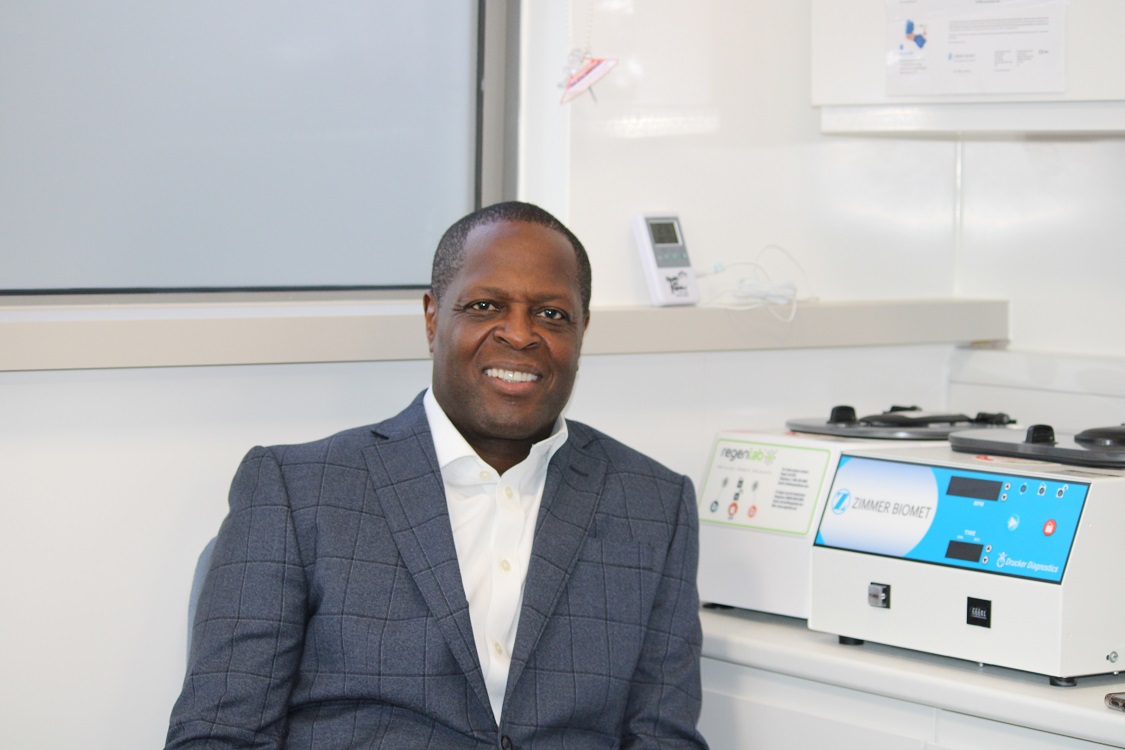
Dr Rogers has had a rich and illustrious career so far, which is continuing to grow and develop. Everything Ralph has been involved in since qualifying has added value to his knowledge and experience, but there have been some impressive highlights to note:
2018 – Present Founder Medical Director: Rogers Regenerative Medical Group (RRMG)
2012 – 2024 Medical Advisor – National Basketball Association
2008 – 2018 Medical Director: The London Sports Injury Clinic London
2010-2011 First Team Doctor, Chelsea Football Club
2007- 2010 The Football Association (Team Physician for England under 19 and development squads)
2005-2006 Medical Advisor: Trinidad & Tobago World Cup Football Team
2002 – 2008 Club Doctor: Walsall Football Club, West Midlands England
1998 – 2009 Medical Director: Medical & Orthopaedic Sports Therapy,
2000 – 2005 Sports Physician: Warwickshire County Cricket Club, Birmingham