













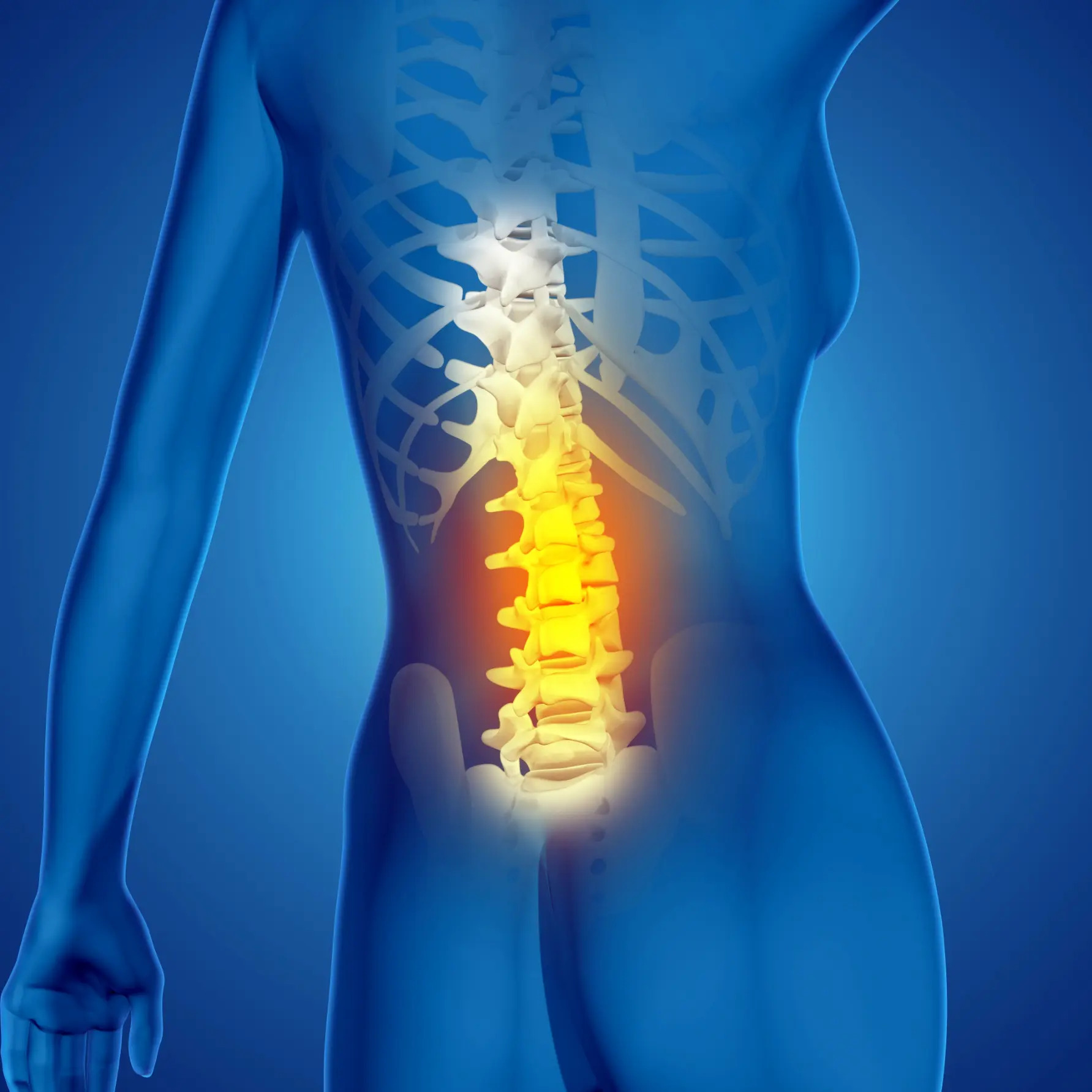
Axial low back pain refers to pain felt mainly in the lower back rather than pain primarily travelling down the leg. It describes a pattern of symptoms, not a single diagnosis, and can involve different spinal or surrounding structures.
Axial back pain is generally centred around the lower back. Sciatica involves nerve-related pain that travels into the buttock and leg and may be accompanied by tingling, numbness or weakness. The two can occur together, so assessment is important when symptoms overlap.
Facet joints can contribute to localised lower back pain in some people, but the pattern of pain alone cannot confirm that they are the source. When radiofrequency denervation is being considered, a diagnostic medial branch block is used to determine whether the relevant nerves are likely to be involved.
Not necessarily. Disc and joint changes can be seen in people who have no symptoms. Imaging findings need to be interpreted alongside your symptoms, examination and clinical history to determine whether they are relevant to the pain.
Many cases can be managed without surgery through advice, continued activity and exercise-based rehabilitation. The appropriate approach depends on the cause and severity of symptoms. Persistent pain should be reviewed if it is not improving or continues to limit everyday life.
Standing, twisting or extending the back can aggravate some types of mechanical pain. However, these movements do not identify one specific pain source by themselves. A clinical assessment helps establish which factors may be contributing to your symptoms.
Radiofrequency denervation uses heat to interrupt pain signals from selected nerves. It may be considered for some people with chronic, localised back pain when conservative treatment has failed and a diagnostic medial branch block has been positive. It is not suitable for everyone.
Not always. An MRI may be considered when the result is expected to change management, but routine imaging is not recommended for every person with low back pain.
This site is protected by reCAPTCHA and the Google Privacy Policy and Terms of Service apply.
Dr Rogers has had a rich and illustrious career so far, which is continuing to grow and develop. Everything Ralph has been involved in since qualifying has added value to his knowledge and experience, but there have been some impressive highlights to note:
2018 – Present Founder Medical Director: Rogers Regenerative Medical Group (RRMG)
2012 – 2024 Medical Advisor – National Basketball Association
2008 – 2018 Medical Director: The London Sports Injury Clinic London
2010-2011 First Team Doctor, Chelsea Football Club
2007- 2010 The Football Association (Team Physician for England under 19 and development squads)
2005-2006 Medical Advisor: Trinidad & Tobago World Cup Football Team
2002 – 2008 Club Doctor: Walsall Football Club, West Midlands England
1998 – 2009 Medical Director: Medical & Orthopaedic Sports Therapy,
2000 – 2005 Sports Physician: Warwickshire County Cricket Club, Birmingham