












SPECIALIST BACK PAIN CARE

Facet Joint Pain Treatment in London

Persistent lower back pain can make sitting, standing, twisting and everyday movement difficult. We help you investigate the possible source of your symptoms and explore appropriate treatment options based on our clinical assessment.

At Rogers Regenerative Medical Group (RRMG), we provide specialist assessment for persistent mechanical back pain, including suspected facet joint pain. Our approach focuses on understanding your symptoms, considering alternative causes and discussing the most appropriate next steps.
4.9/5 92 reviews · verified by

List of Our Insurance Partners

RECOGNISE THE SIGNS

How Does Facet Joint Pain Feel?

Facet joint-related pain varies between individuals. You may experience:
  • An aching pain centred in the lower back.
  • Discomfort when twisting or leaning backwards.
  • Stiffness after sitting or periods of inactivity.
  • Pain after prolonged standing or particular activities.
  • Discomfort extending into the buttock or upper thigh.
  • Pain when turning to reach something or standing up from a chair.
  • Recurring episodes of lower back pain.
  • Reduced tolerance for exercise, work or everyday movement.
UNDERSTANDING THE CAUSE

What Can Contribute to Facet Joint Pain?

Several factors may contribute to pain around the facet joints. More than one spinal structure may be involved, so we consider the wider clinical picture when assessing your symptoms.

Facet Joint Degeneration

Changes to the cartilage and bone within the facet joints can develop over time. However, degenerative changes on a scan do not automatically mean that these joints are causing your pain.

Repeated Loading and Movement

Repeated twisting, leaning backwards or physically demanding activities may aggravate your symptoms, particularly when these movements repeatedly trigger discomfort.

Other Spinal Changes

Disc degeneration and changes affecting other spinal joints may occur alongside facet joint changes. Several structures can contribute to persistent lower back pain at the same time.

Muscle and Movement Factors

Muscle function, physical conditioning and activity tolerance can influence how your lower back responds to daily demands. We consider these factors when planning appropriate treatment and rehabilitation.
Treatment options

How We Treat Facet Joint Pain

Before You Decide on Treatment, Understand What’s Causing Your Symptoms

Pain, stiffness or restricted movement can have different causes. Arrange a specialist assessment with Dr Ralph Rogers to review your symptoms and discuss appropriate treatment options.
Your care pathway

From First Consultation to Recovery

Every condition is different. We assess your symptoms, explain our findings and discuss suitable treatment options, with costs explained before treatment begins.

Initial Consultation

Meet Dr Ralph Rogers to discuss your symptoms and medical history.

Assessment

Examine your condition and review imaging where appropriate.

Treatment Plan

Explore suitable treatments, benefits, risks and costs.

Follow-Up & Rehabilitation

Monitor progress and support your return to daily activities.
Meet OUr Founder

Dr Ralph Rogers

MD PhD MBA FACSM FFSEM FFSEM (UK) CEO RRMG
Specialist in Sports Medicine, Regenerative Medicine and Human Performance
Watch Our Introduction Video
Frequently asked questions

Most Common Asked Questions by our Patients

Facet joint pain may cause an ache in the lower back, sometimes extending into the buttock or upper thigh. You may notice discomfort when twisting, leaning backwards or standing for extended periods. These symptoms are not specific to facet joint pain, so an assessment is important.

Yes. Facet joint-related pain can spread into the buttock and upper thigh. Pain travelling further down the leg, particularly with tingling, numbness or weakness, may indicate nerve involvement or another condition.

No. An MRI may show degenerative changes in the facet joints, but these findings do not prove that the joints are causing your symptoms. We interpret imaging alongside your clinical history and examination.

A diagnostic medial branch block involves injecting local anaesthetic around nerves that carry pain signals from the facet joints. We may use the response to help assess whether these joints contribute to your pain when radiofrequency denervation is being considered.

Radiofrequency denervation uses heat to interrupt pain signals from selected nerves supplying the facet joints. We consider it for carefully selected patients with chronic localised back pain when appropriate non-surgical treatment has not worked and a diagnostic medial branch block has been positive.

No. The procedure does not remove the underlying joint changes, and the nerves may recover over time. Pain relief and its duration vary, so we discuss the potential benefits, limitations and alternatives before treatment.

Yes. Exercise, appropriate activity, self-management and rehabilitation can help many people manage lower back pain. We consider a procedure only when the clinical findings and treatment history support it.

Let's Talk

Get in Touch with Us

Have a question or want to learn more about what we do? We're here to help you.

This site is protected by reCAPTCHA and the Google Privacy Policy and Terms of Service apply.

Any Questions, We Can Help You?

Any Specific Queries? Get In Touch

Email Us On:
pa@rrmg.com

Rogers Regenerative Medical Group (RRMG)

Dr Ralph Rogers is internationally recognised as a leader in Sports & Exercise Medicine, with over 25 years of experience treating elite athletes, world-class performers, and patients seeking life-changing non-surgical care.
Newsletter
Get expert insights on injury recovery, regenerative medicine, and wellness, delivered straight to your inbox.
Rogers Regenerative Medical Group (RRMG) © 2026 All Rights Reserved.

Webdesign by EyeMedia Creative

Some of my highlights

Dr Rogers has had a rich and illustrious career so far, which is continuing to grow and develop. Everything Ralph has been involved in since qualifying has added value to his knowledge and experience, but there have been some impressive highlights to note:


  • 2018 – Present Founder Medical Director: Rogers Regenerative Medical Group (RRMG)

  • 2012 – 2024 Medical Advisor – National Basketball Association

  • 2008 – 2018 Medical Director: The London Sports Injury Clinic London

  • 2010-2011 First Team Doctor, Chelsea Football Club

  • 2007- 2010 The Football Association (Team Physician for England under 19 and development squads)

  • 2005-2006 Medical Advisor: Trinidad & Tobago World Cup Football Team

  • 2002 – 2008 Club Doctor: Walsall Football Club, West Midlands England

  • 1998 – 2009 Medical Director: Medical & Orthopaedic Sports Therapy,

  • 2000 – 2005 Sports Physician: Warwickshire County Cricket Club, Birmingham
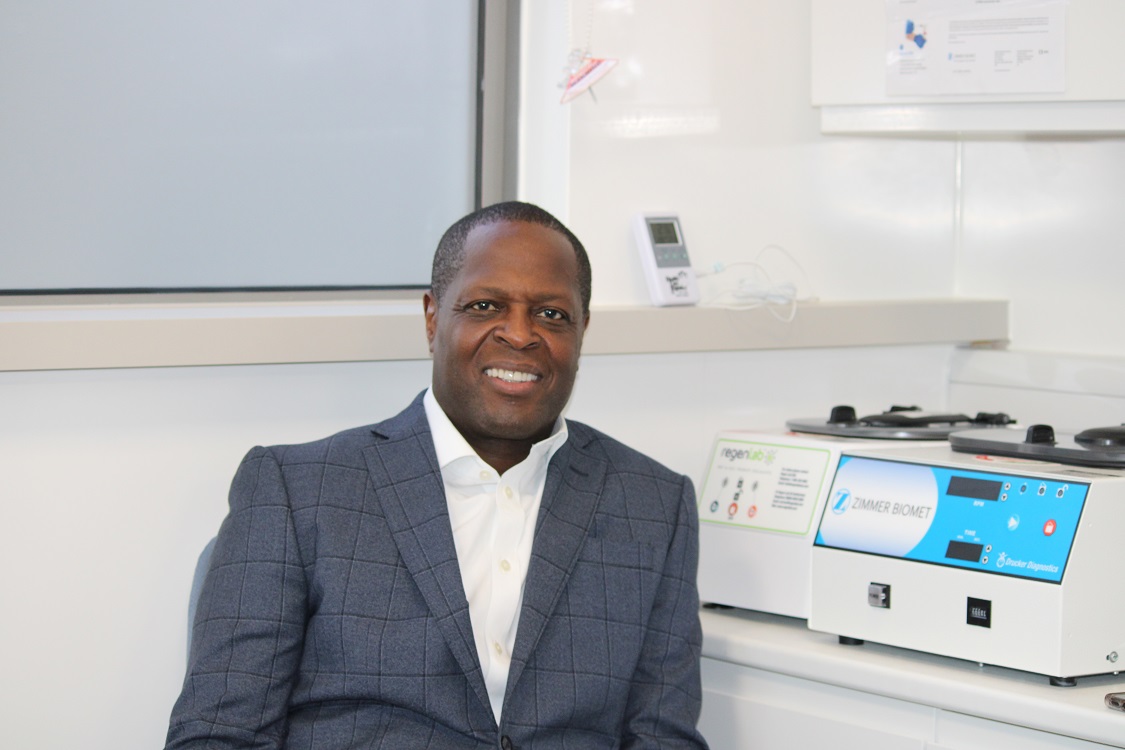
My Philosophy

Your body is the greatest tool you’ll ever have; it’s vital to treat it like that. The intricacies and capabilities of the human body are nothing short of astounding, and that is true for everyone from elite sports stars to weekend warriors. Athletes, amateurs and the general public alike have a responsibility to seek out the best sports and orthopaedic medicine when injury strikes, Dr Rogers offers a combination of world-class qualifications, reams of experience and a distinctive sense of style to ensure your treatment is the best.

Dr. Ralph Rogers' Biography
​

Dr Ralph Rogers is a renowned Consultant in Regenerative Orthopaedics and Sports Medicine, helping patients overcome chronic pain and injury with advanced regenerative treatments. As Founder and CEO of Rogers Regenerative Medical Group (RRMG), he leads clinics across London, providing elite care to both athletes and the general public.

​His academic journey began with a degree in Psychology from the University of Delaware, followed by a Medical Degree from the Catholic University of Leuven in Belgium. Dr Rogers expanded his expertise with a PhD in Exercise Physiology at the University of Maryland, supported by a prestigious NIH Research Fellowship. He also holds a Sports Medicine Fellowship from the Free University of Brussels, an MSc in Musculoskeletal Ultrasound Imaging from Bournemouth University, and an MBA from the University of Leicester.

​Dr. Rogers’ career highlights include serving as First Team Doctor for Chelsea Football Club and over a decade as Medical Advisor to the NBA, where he developed medical protocols for major events including NBA Global Games, Basketball Without Borders, and the Basketball Africa League. During the COVID-19 pandemic, he played a key role in implementing the NBA’s “Bubble” in Orlando, ensuring player safety through rigorous protocols.

​Specialising in non-surgical treatments, Dr Rogers uses cutting-edge therapies like Platelet Rich Plasma (PRP) and alpha-2 macroglobulin (A2M) injections to support joint health and mobility, minimising recovery times.

​He is a Fellow of the American College of Sports Medicine (FACSM) and The Faculty of Sports & Exercise Medicine in the UK and Ireland (FFSEM UK, IRE), where he also serves as an examiner. His dedication to innovation, excellence, and patient-centred care ensures that Dr Ralph Rogers remains at the forefront of regenerative sports medicine.

Phone

Address

Social