













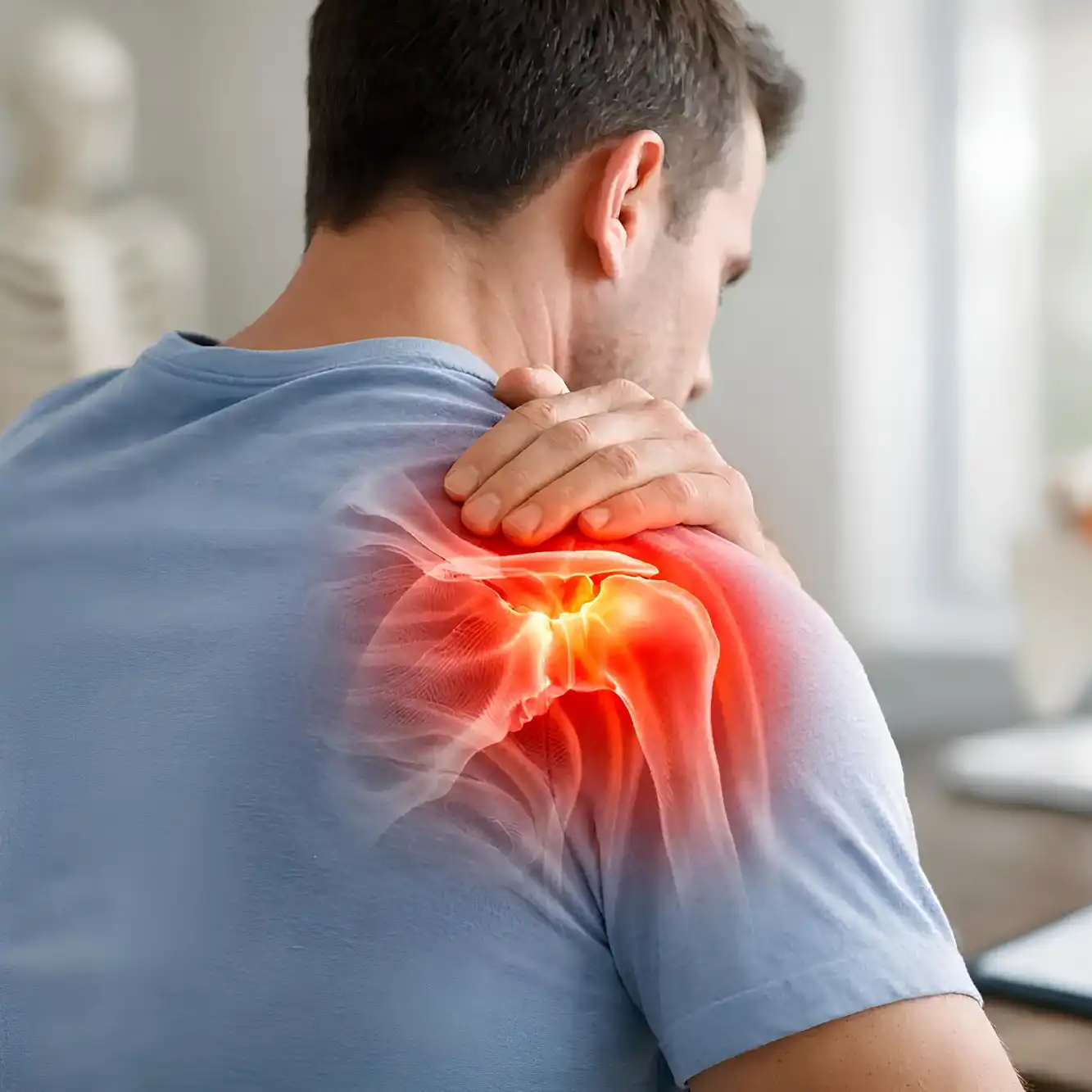
Pain when raising your arm can be associated with rotator cuff tendinopathy, a rotator cuff tear or other shoulder conditions. The cause cannot be confirmed from this symptom alone, so persistent pain or weakness should be assessed.
Rotator cuff problems often cause pain and sometimes weakness during lifting or overhead movements. Frozen shoulder typically causes progressive stiffness that restricts both active and passive movement. An examination helps distinguish between the two.
Night pain can occur with several shoulder conditions, including rotator cuff problems and frozen shoulder. Sleeping on the affected side or moving the arm into certain positions may aggravate symptoms. Persistent night pain or pain that repeatedly disrupts sleep should be assessed.
Yes. Problems involving the neck can refer pain towards the shoulder and may also cause symptoms such as tingling, numbness or weakness in the arm. Your clinician may assess the neck as well as the shoulder when investigating the source of your symptoms.
Not always. Many shoulder problems can initially be assessed through a clinical history and examination. Ultrasound or MRI may be useful when a tendon tear or other soft-tissue problem is suspected, while X-rays may help assess bone and joint changes. The choice depends on the clinical findings.
Many people manage frozen shoulder without surgery. Treatment may include pain management, appropriate exercises and physiotherapy. Hydrodilatation or selected injections may be considered in some cases. Recovery can take months or longer, and improvement varies between individuals.
Some injections can provide short-term symptom relief for selected shoulder conditions, but their effects and risks vary. The appropriate approach depends on the diagnosis, and an injection should be considered alongside other options such as rehabilitation where relevant.
Arrange an assessment if your shoulder pain persists, worsens or interferes with sleep or daily activities. Seek urgent medical advice if you have sudden severe pain, cannot move your arm, have significant swelling or a change in shoulder shape following injury, or develop a hot shoulder with fever or feel unwell.
This site is protected by reCAPTCHA and the Google Privacy Policy and Terms of Service apply.
Dr Rogers has had a rich and illustrious career so far, which is continuing to grow and develop. Everything Ralph has been involved in since qualifying has added value to his knowledge and experience, but there have been some impressive highlights to note:
2018 – Present Founder Medical Director: Rogers Regenerative Medical Group (RRMG)
2012 – 2024 Medical Advisor – National Basketball Association
2008 – 2018 Medical Director: The London Sports Injury Clinic London
2010-2011 First Team Doctor, Chelsea Football Club
2007- 2010 The Football Association (Team Physician for England under 19 and development squads)
2005-2006 Medical Advisor: Trinidad & Tobago World Cup Football Team
2002 – 2008 Club Doctor: Walsall Football Club, West Midlands England
1998 – 2009 Medical Director: Medical & Orthopaedic Sports Therapy,
2000 – 2005 Sports Physician: Warwickshire County Cricket Club, Birmingham